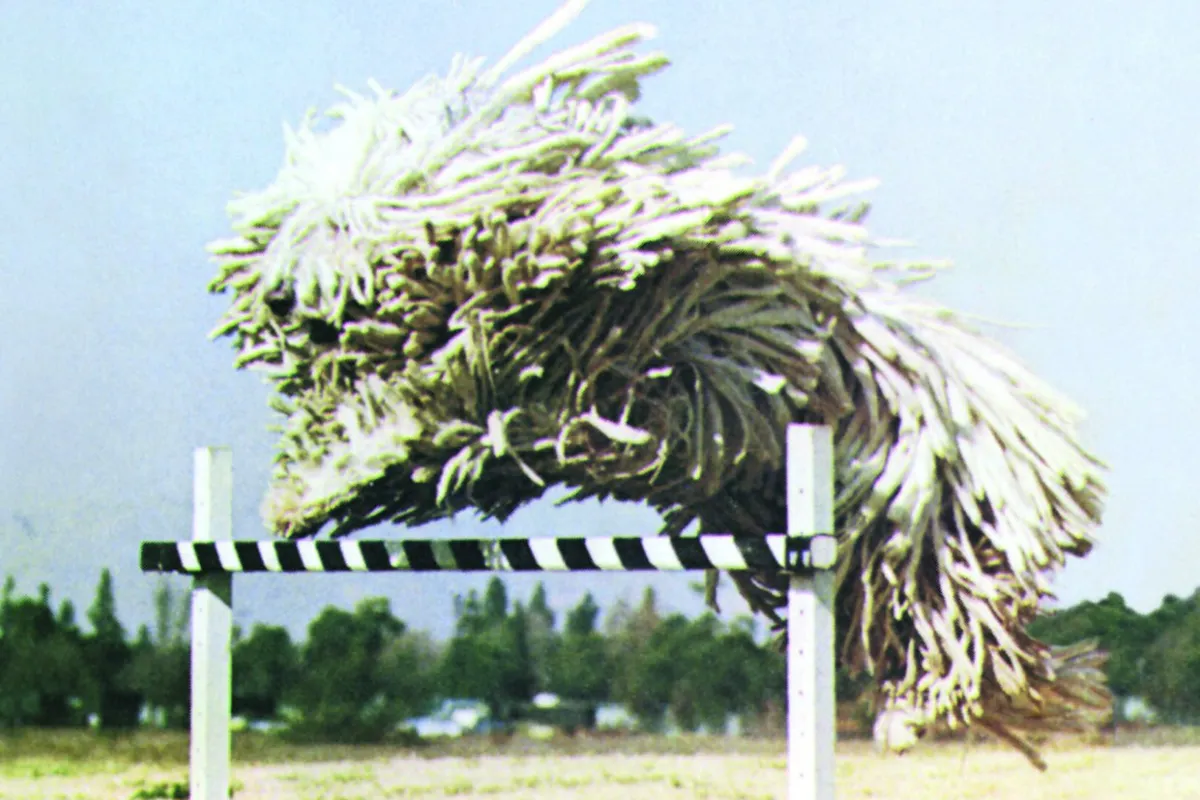
I was seventeen, sitting through Rage on a Saturday morning waiting for the "Devil's Haircut" video to come on, and the following week I walked into my local record store and picked up Beck's Odelay album off the shelf without having the faintest idea what it was telling me. There was a shaggy, matted creature mid-leap over what looked like a fence, rendered so rough and grainy it looked photocopied, with a title stamped across the top in a font that belonged on a wanted poster. I turned it over in my hands, genuinely stumped. Not put off, just baffled. Turns out that was rather the intended effect.
Album Anatomy
| Album | Odelay |
| Artist | Beck |
| Released | June 18, 1996 |
| Label | DGC |
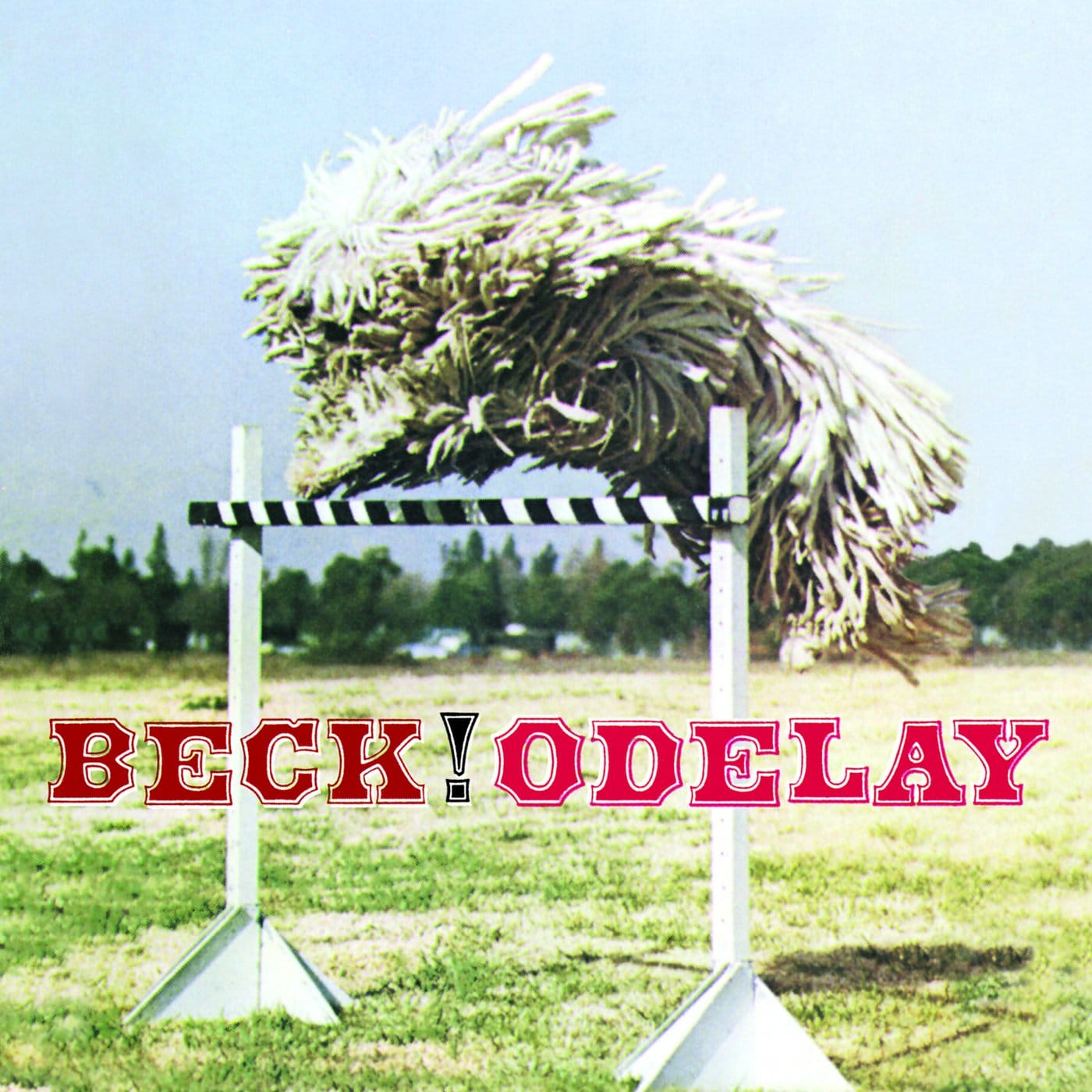
| On the cover | A Komondor (Hungarian sheepdog) mid-leap over an agility hurdle, photographed by Joan Ludwig and originally published in a 1977 issue of the American Kennel Club's Gazette |
| Design | Beck Hansen and Robert Fisher |
| Decade | 1990s |
| Grab It | Amazon |
Meet The Dog
That mop-like animal is a Komondor, a Hungarian herding breed known for a coat that grows in thick white cords, less like fur and more like dreadlocks. It's a strange-looking dog even when it's standing still. Caught mid-jump, cords flying, it looks less like a photograph and more like a special effect, which is the reaction Beck himself has described having the first time he saw it. He later told Rolling Stone it looked like a bundle of flying udon noodles trying to clear a hurdle, and once he'd started laughing at it he couldn't stop.
The Girlfriend's Book
Here's the part that makes the whole thing better: nobody photographed that dog for Beck. The image is a decade-old piece of dog-show ephemera. It was taken by Joan Ludwig, an American photographer known in kennel-club circles for her show-dog portraits, and it first ran in the July 1977 issue of the American Kennel Club's Gazette magazine. Beck wasn't hunting through dog magazines himself. His girlfriend at the time, Leigh Limon, found it while flicking through a book on dog breeds. He was stuck for a cover with a deadline closing in, she showed him the photo, and that was that.
Finding The Original
"That was that" undersells how chaotic the actual process was. Art director Robert Fisher has said that once they'd settled on the image, he tried to track down a clean copy of the original photograph rather than reproduce it straight from a book page. That meant finding Joan Ludwig, then in her late seventies, and turning up at her house, where she kept boxes of dog photographs in the garage. Fisher spent hours going through them and never found the print. In the end he scanned the picture directly out of the book. The resulting graininess; soft, a little blown out, nothing like a clean studio shot is the exact texture that ended up on millions of CDs and record sleeves. It's a strange echo of what Beck was doing with the music itself: Odelay is an album built out of other people's samples and off-cuts, deliberately lo-fi, deliberately rough around the edges. The cover got there by the same accident.

Cleaning It Up
It didn't go straight to print as found, either. Whoever handled the final art (accounts point to Fisher) cropped the image square and cleaned up the background. The original 1977 photo has mountains and clouds behind the dog, softened grass underfoot, all of which are gone from the album version. The title lettering came from a book of old Western woodcut typography, which is why it reads like it belongs on a saloon door rather than a mid-'90s alt-rock record.
Chosen Almost At Random
What I find likeable about the whole thing is that nobody involved pretended it meant anything. Beck has said the cover was chosen almost at random, and that the point was letting the listener read into it whatever they wanted. The record label's reported reaction, once they'd seen it, was relief. They didn't love it, but they loved that an album cover finally existed and they could hit their release date. There's no grand statement here, no metaphor to unpack. It's a photo of an unusual dog that made someone laugh so hard they used it.
The Name In The Corner
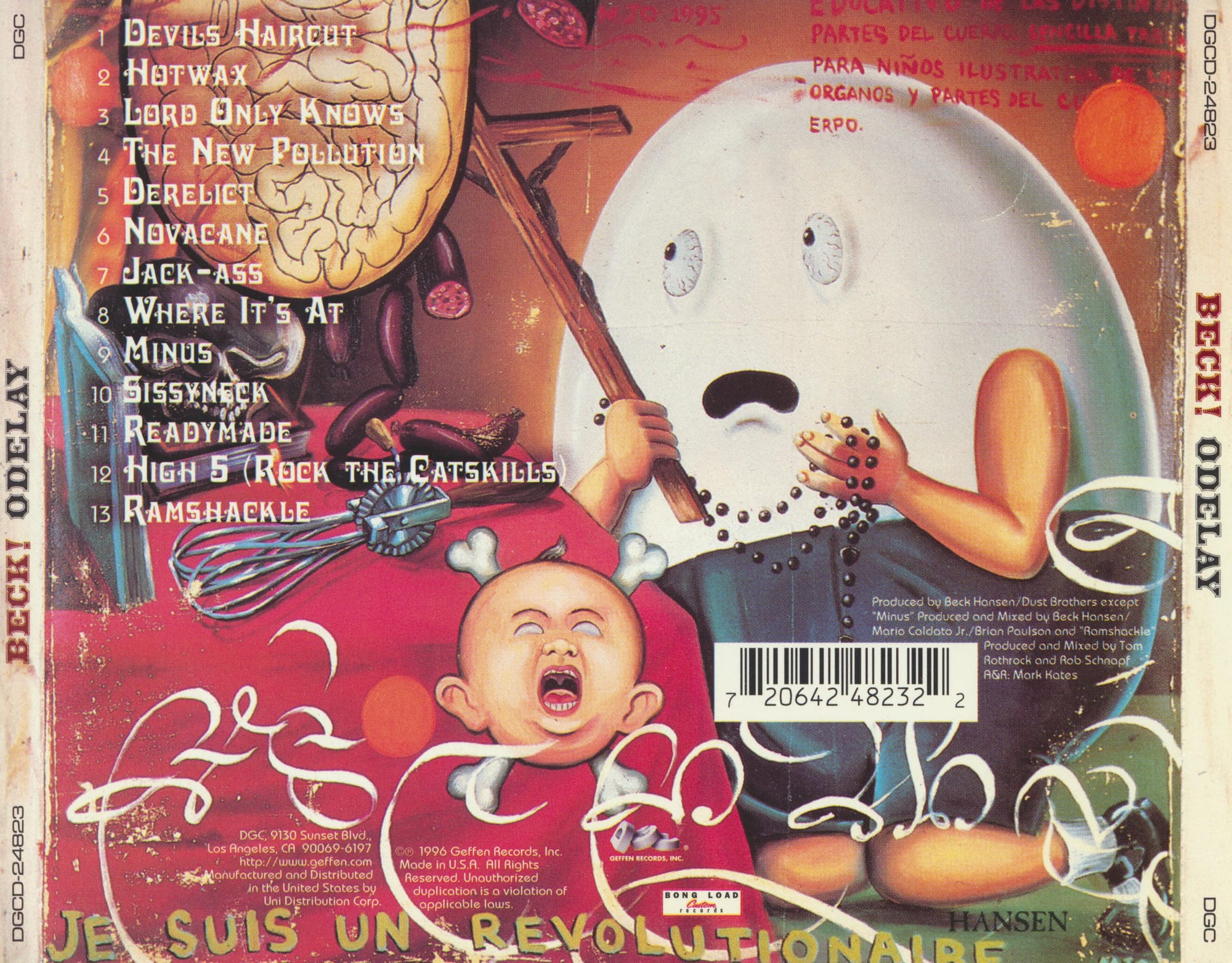
Beck spent years going by a single name, and by his own account it wasn't really by design. Venues and cheques just kept dropping "Hansen" because nobody bothered chasing the whole thing. Odelay was his quiet attempt to correct the record: flip to the back cover and, in type so small you'd need a reason to look for it, his surname is printed in the corner. The front cover shrugs. The back cover, if you squint, tells you who's actually responsible.
What's Actually Inside
The interior packaging is where the album gets more personal, and it's worth a mention even in a piece about the front cover. The booklet weaves in collage work from the Filipino-American painter Manuel Ocampo and artist Zarim Osborn, alongside pieces by Al Hansen; Beck's grandfather, a Fluxus-movement collage artist who had died during the making of the record. None of that is visible from the sleeve. The dog gives you nothing to go on; the booklet, if you actually pull it out and look, gives you rather a lot.
Oh, Delay
Even the title has a similarly slippery quality. Odelay is usually explained as a phonetic spelling of "órale," a Mexican Spanish exclamation Beck grew up hearing in his Los Angeles neighbourhood, roughly meaning "listen up" or "right on." But it's also been passed around, including by his own collaborator Stephen Malkmus as a pun on "oh delay," a joke about how long the record took to make. I don't think you need to pick one. An album about drawn-out delay, wrapped in a cover chosen at the last possible second to avoid yet another delay, feels like the kind of coincidence Beck would have been happy to leave unexplained.
The Most-Seen Photo She Ever Took
Joan Ludwig never set out to make an album cover. She spent her career photographing show dogs for kennel-club publications, the kind of work that gets appreciated by a fairly small, fairly specialised audience. She died in 2004, and by most accounts that leaping Komondor, taken for a magazine most of us will never read, for a readership that wanted to see good structure and a well-groomed coat ended up as the most reproduced photograph of her career, by a very wide margin. It's a strange kind of fame to land on someone secondhand and after the fact, but it's also a fitting one for a cover built almost entirely out of things happening secondhand and after the fact: a photo Beck didn't take, of a dog nobody named, found in a book he didn't buy, cropped by a designer scrambling to hit a deadline.
The cover has had a long afterlife of its own since 1996. It's been parodied, referenced, and stuck on a fair few "greatest album covers" lists over the decades, usually with a caption along the lines of "yes, that's actually a dog." Which is about as much explanation as the cover itself ever gave anyone.
Which brings me back to that record shop in the nineties, turning the case over and getting precisely no information out of it. No band photo, no obvious hook, just a dog I couldn't identify doing something I couldn't explain. I know now that the confusion was the whole idea. Beck wanted something nobody could immediately read, and a scanned photo of a leaping Komondor, found by accident in someone else's book, was apparently the most efficient way to make sure of that. It worked on me for the better part of thirty years. It probably worked on you too.