Why Try Harder
You've Come a Long Way, Baby by Fatboy Slim - The man on the cover has been famous for over twenty-five years. He still doesn't know it.
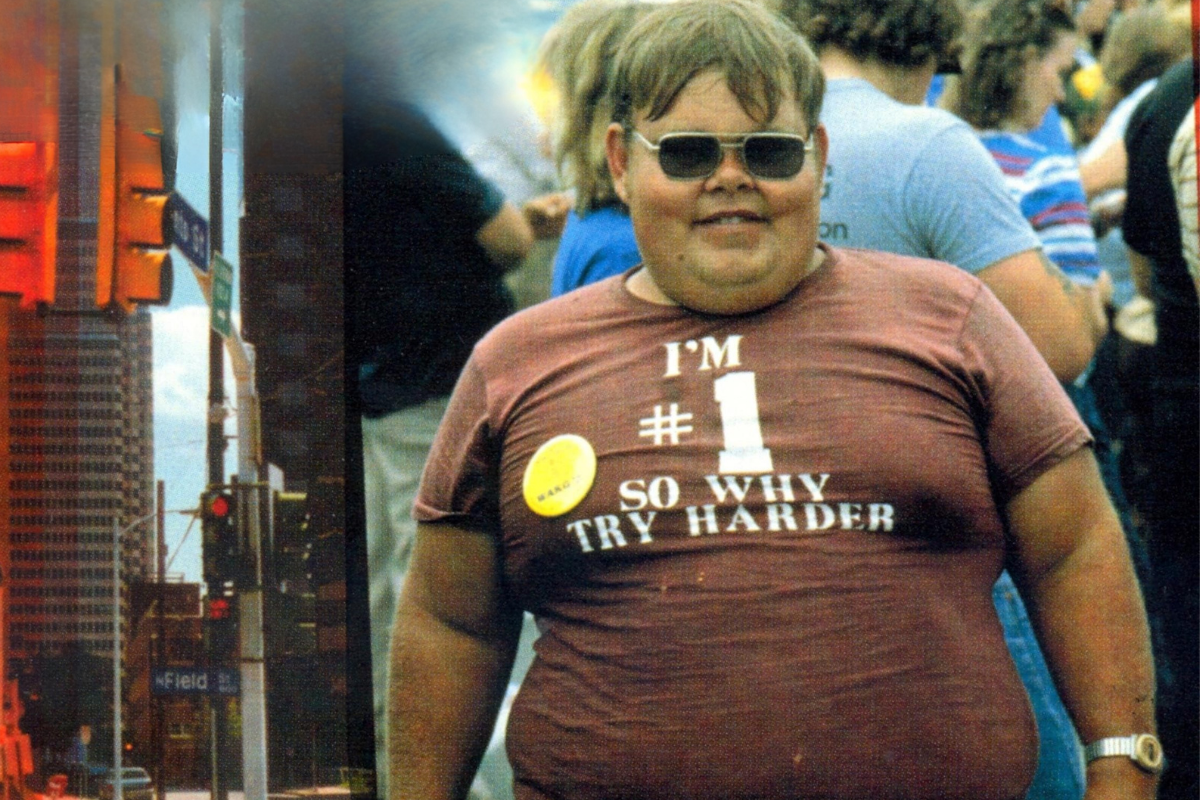

I bought You've Come a Long Way, Baby because of the songs. Here in Australia, Triple J had been playing "The Rockafeller Skank" constantly, and then "Praise You" came along and I was done for. I had to have it. I walked into a record store, grabbed the CD, and honestly barely looked at the cover. It was some bloke. He was happy about something. That was enough. I just wanted to get it home and play it.
It took me years to actually ask the question the cover had been sitting there waiting for me to ask: who the hell is this guy?
Album Anatomy
| Album | You've Come a Long Way, Baby |
| Artist | Fatboy Slim |
| Released | 19 October 1998 |
| Label | Skint Records |
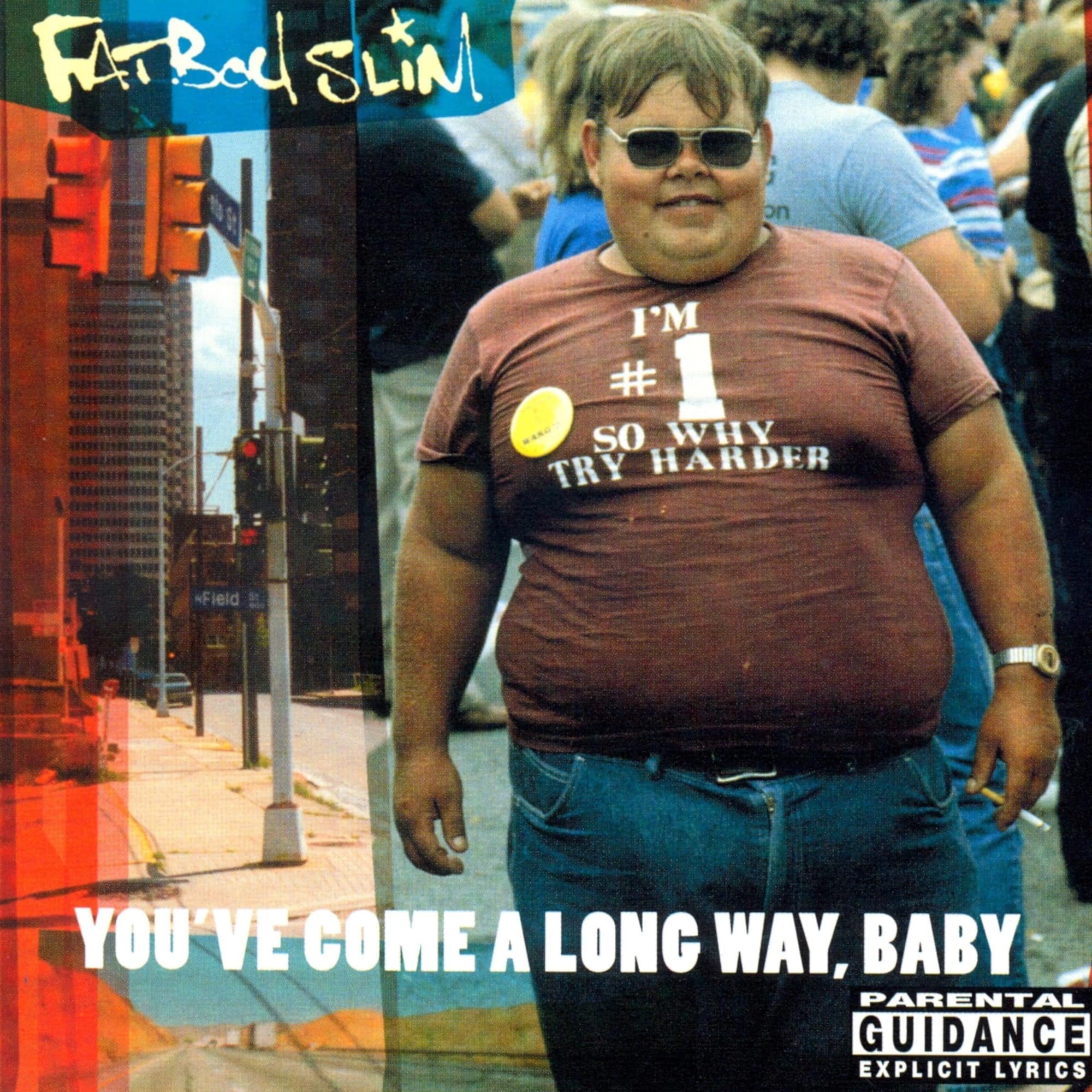
| On the cover | An unidentified, heavyset young man grinning at the camera in a T-shirt reading "I'm #1 so why try harder," holding a cigarette |
| Design | Red Design |
| Decade | 1990s |
| Get It | Amazon |
A Complete Stranger
The album came out in October 1998. Norman Cook, the Brighton DJ who'd been calling himself Fatboy Slim since 1996, had already released Better Living Through Chemistry, but this was the one that broke everything wide open. It went to number one in the UK. It spawned four top-ten singles. It earned Cook a Brit Award. It was, by any measure, one of the biggest records of the decade.
And on the front of it was a complete stranger.
The cover was conceived by Red Design, the Brighton-based studio that worked closely with Cook across his career. The photograph came from Rex Features, a press and stock agency, and it shows a heavyset young man grinning broadly at the camera. He's wearing a T-shirt that reads I'm #1 so why try harder. He's holding a cigarette. He looks completely at ease, delighted even with himself and the world around him.
The photo was taken in 1983 at the Fat People's Festival in Danville, Virginia. Fifteen years before it ended up on a number-one album. Fifteen years before millions of people in the UK, Australia, Europe and beyond would see that face every time they reached for the CD.
Where The Title Came From
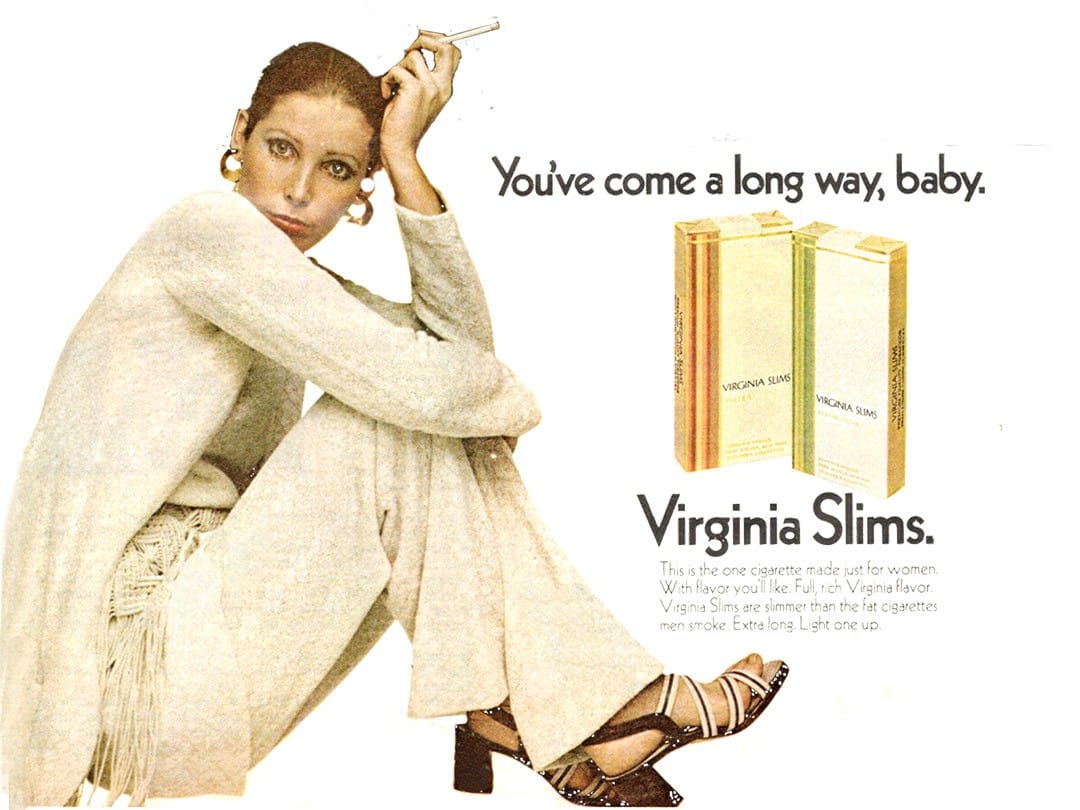
You've Come a Long Way, Baby wasn't something Cook invented. It was a marketing slogan created in 1968 by the Leo Burnett advertising agency for Virginia Slims cigarettes; a brand specifically designed for women, with the pitch that smoking this particular cigarette was an act of liberation. The slogan was meant to evoke the progress of the women's movement. It was, in retrospect, one of the more cynical acts of co-option in advertising history: using feminism to sell cigarettes.
Cook lifted the phrase and stripped it of all that baggage, or at least added new layers on top of it. As a title for a big beat album in 1998, it became something different; triumphant, self-aware, slightly tongue-in-cheek. Look how far we've all come, baby. The irony is that the slogan was created for a brand called Slim and Cook chose to put a heavyset man on the cover. Whether that was deliberate commentary or just a genuinely funny visual coincidence, nobody has ever quite clarified. But the tension between the words and the image is part of what makes this cover so hard to look away from.
The man on the front is also, of course, holding a cigarette. A Virginia Slim, for all we know.
I'm #1 So Why Try Harder
It's a remarkable piece of found text. On one level it's pure bravado, the logic of someone so confident in their position that effort itself becomes unnecessary. On another level it's deadpan absurdism, the kind of slogan that's so committed to its own ridiculousness that it wraps back around to being genuinely funny. And on the level of the album cover, placed beneath the words You've Come a Long Way, Baby, it becomes almost philosophical. Why would you try harder? You're already number one. You've already arrived.
It fit the album perfectly. Cook had made something loose, joyful and almost aggressively unserious. A record stitched together from other people's sounds that somehow felt completely its own. The man on the cover looked like he was living that same energy. Content. Unbothered. Already there.
The visual instinct behind the cover is the same one that drives the best album artwork: find an image that feels like the music without literally illustrating it. Nobody needed a turntable. Nobody needed a photo of Cook. They needed this guy, grinning in Danville, Virginia, in 1983, in a T-shirt that said everything the album wanted to say.
The Wrinkle
There's a wrinkle, though. A significant one.
Cook and Red Design pulled the photo from a stock library. It was a press agency image; the kind of photograph that exists to be licensed. Which means the man in the photo almost certainly had no idea it was being used. He didn't sign off on becoming the face of one of the biggest-selling albums of 1998. He didn't receive a fee. And as far as anyone can tell, he may not have known for years, if ever, that his face was out there, grinning from millions of CD cases and record sleeves around the world.
Cook has spoken about this more than once. He spent years trying to track the man down, genuinely wanting to pay him properly for the use of his image. As of 2025, he still hadn't managed it. The man on the cover of You've Come a Long Way, Baby remains unidentified.
Think about that for a moment. Someone walked into a festival in rural Virginia in 1983, wore a funny T-shirt, smiled for a camera, and became one of the most recognisable faces in 1990s music without ever knowing it happened.
It's unusual in a way that's also faintly uncomfortable. The image works so well because the man looks so genuinely happy, so thoroughly himself. He wasn't performing for an album cover. He was just being a person at a festival. That authenticity is exactly what gives the cover its warmth, and it also means he never chose any of it.

The Boring Version
The cover had a different fate in North America. Astralwerks, the label handling the US release, swapped out the original image entirely. American buyers got a photo of shelves stacked with records; clean, safe, inoffensive. Explanations at the time pointed vaguely at sensitivities around obesity in the US market. The result was one of the blandest album covers of the decade. It tells you nothing about the music, nothing about the artist, nothing at all. It's just records on a shelf.
The contrast says a lot. The original cover has a point of view. It has humour and warmth and a weird, layered meaning that takes a while to unpack. The American replacement has none of that. It's the visual equivalent of someone taking a joke and explaining it very carefully until everyone stops laughing.
Collectors know which one they want.
Somewhere Out There
If you've been reading Art Before Noise for a while, you'll know I've written about covers where the identity of the subject is unknown; where the mystery is part of the appeal. The cover of Unknown Pleasures pulled its image from a scientific catalogue; Peter Saville chose it without fully understanding what it represented, and that ambiguity became part of its power. The You've Come a Long Way, Baby cover works differently. This isn't an abstract image, it's a real man with a real face, but there's a similar sense that the image escaped its context and became something larger than anyone planned.
The difference is that somewhere out there, the man from Danville might still exist. He might be in his sixties now. He might have grandchildren. He might have absolutely no idea that for a solid stretch of the late nineties and early 2000s, his face was on a poster on someone's wall in Melbourne, or Sydney, or London, or Berlin. That Norman Cook is still looking for him feels like the right ending to the story, or rather, the right indication that the story doesn't have an ending yet.
He Wasn't Wrong
I still love this album. More than I did when I bought it without looking at the cover. But these days I always look at the cover. The man in the T-shirt, at ease in the Virginia sun, completely unaware of what was coming fifteen years later.
I still don't know who he is. I don't think anyone does. But I don't need to look away anymore.
I'm #1 so why try harder.
He wasn't wrong.