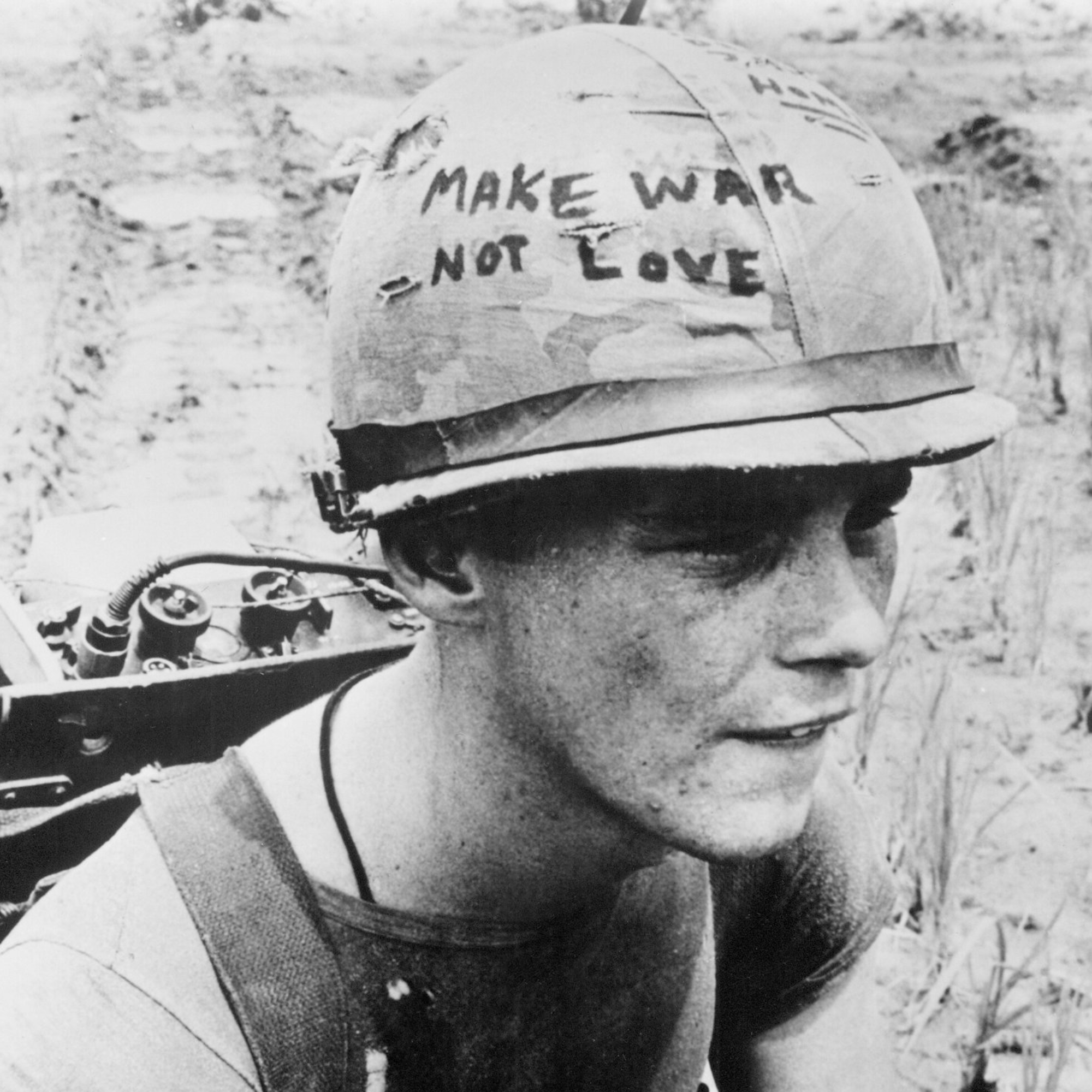
Make War Not Love
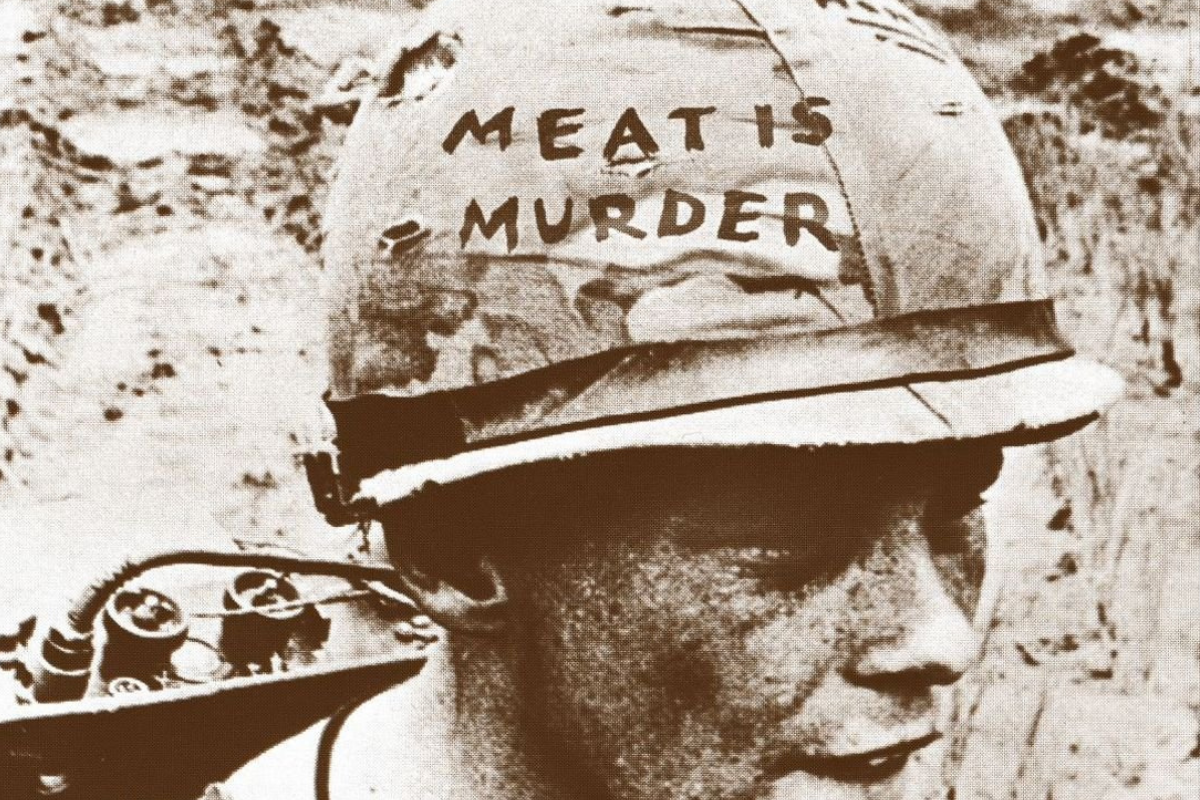
Meat Is Murder by The Smiths - A real Marine's own handwritten words on his helmet, changed without his knowledge, to make a completely different point.

I am not a big fan of The Smiths. Please don't be angry at me, it's just who I am. Morrissey's whole persona has always sat slightly outside my area of taste. But this cover is different. It's not really about the band, it's about a real person's face, and real words he actually wrote himself, altered by someone he'd never met, for a cause he never signed up for. Morrissey's vegetarianism wasn't a passing marketing angle either; he's spent decades as an outspoken animal rights advocate, at one point even banning meat sales at the band's own gigs. The title track's plea against factory farming was sincere. The way the cover delivered that message is where things get more complicated.
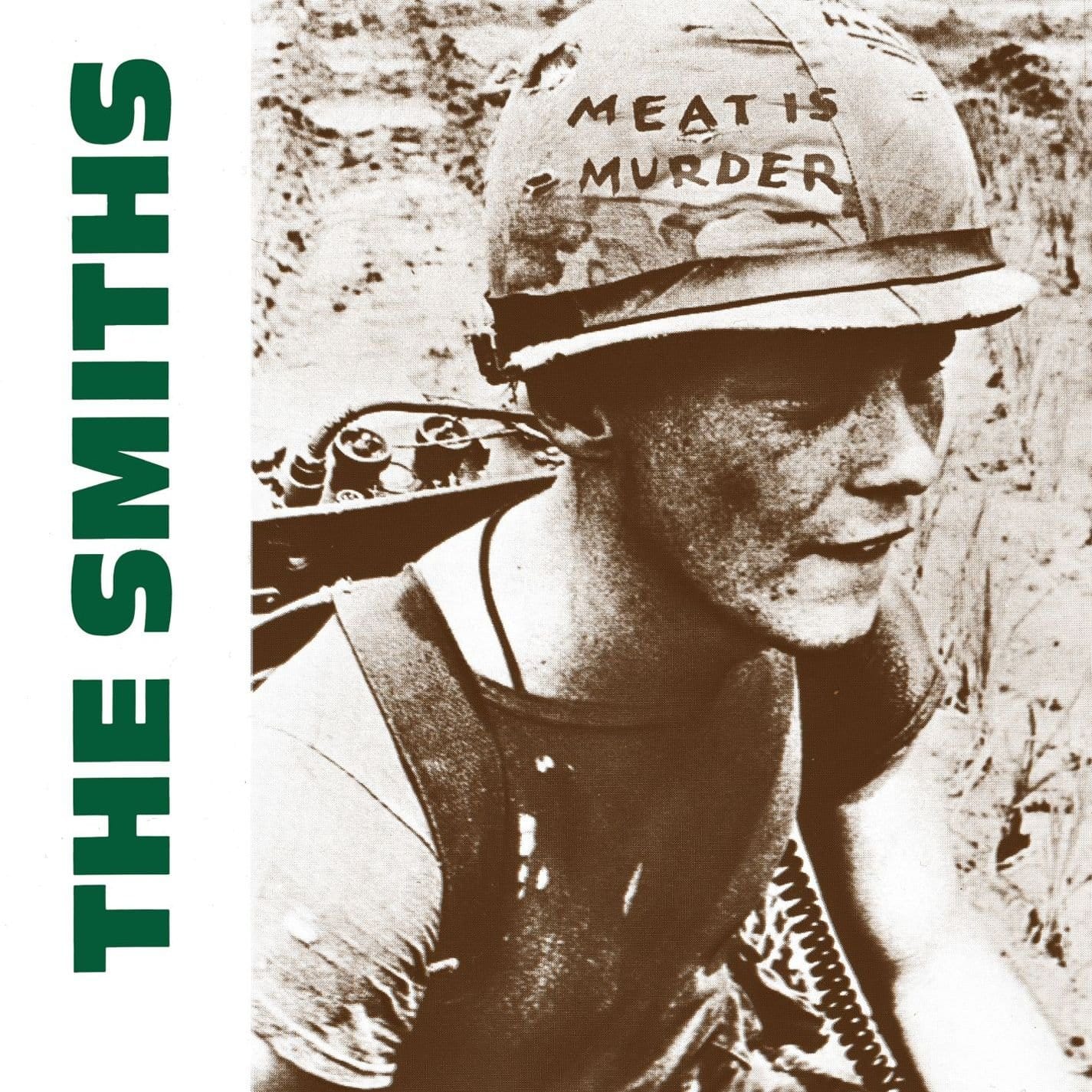
| Album | Meat Is Murder |
| Artist | The Smiths |
| Released | February 11, 1985 |
| Label | Rough Trade Records |
| On the cover | An altered 1967 Vietnam War photograph of Marine Corporal Michael Wynn, with the handwritten slogan on his helmet changed from "Make War Not Love" to "Meat Is Murder" |
| Format | Photograph (hand-altered/retouched) |
| Design | Morrissey (art direction/concept), Caryn Gough (layout design) |
| Decade | 1980s |
| Buy | Amazon / eBay |
A Real Photograph, A Real Marine
The man on the cover is Corporal Michael Wynn, a 20-year-old American Marine photographed on September 21, 1967, during Operation Ballistic Charge in Da Nang, South Vietnam. It's a real wartime photograph, not a studio shot or a stand-in. It first surfaced publicly in Emile de Antonio's 1968 Oscar-nominated documentary In the Year of the Pig, one of the earliest major films to seriously question the war while it was still being fought. De Antonio's film was built almost entirely from existing news footage and archival material rather than new interviews. This is presumably how a candid photo taken mid-operation in Da Nang ended up circulating widely enough, nearly two decades later, for a British art director to stumble across it and decide it said something useful about a completely different subject.
The Words That Weren't His
In the original photo, Wynn had written "Make War Not Love" across his own helmet. A bit of dark, sarcastic soldier's humour riffing on the era's peace-movement slogan. Morrissey, who oversaw most of the band's sleeve art, and layout designer Caryn Gough physically cut, pasted and airbrushed over that real handwriting, replacing it with "Meat Is Murder" to match the album's vegetarian, anti-cruelty message. This was 1985, where there was no software shortcut here, just scalpels, paste and a steady airbrush hand, altering a real man's own words into something he never wrote. The irony almost writes itself: an album protesting the exploitation of living creatures used the genuine likeness and genuine words of a living person, without ever pausing to ask whether he'd be comfortable becoming the face of it.
Nobody Asked Him
Wynn wasn't contacted before any of this happened, and he had no idea his face and altered words were on a record sleeve until a family member spotted the album in a shop. When later asked directly about it, he said plainly that he wasn't happy the band had changed his wording. That is a fairly understated reaction, all things considered, to finding out a stranger had rewritten something you'd actually lived through. It's worth remembering that Wynn served through a war that treated its own veterans badly on their return; he's spoken publicly since about how long it took him to feel any pride in his service, given how Vietnam war veterans were often received back home. Having his real words swapped out for someone else's cause, without so much as a phone call, fits an uncomfortably familiar pattern for a lot of Vietnam veterans: used, symbolically, without much thought for what they'd actually say if anyone asked.
An Accidental Australian Connection
Wynn emigrated to Australia in 1982, three years before Meat Is Murder was even released; meaning by the time his altered image became an indie-rock icon on the other side of the planet, he was already living quietly on the opposite side of the world far from where it was happening, with no idea any of it was going on.
One Image, Two Layouts
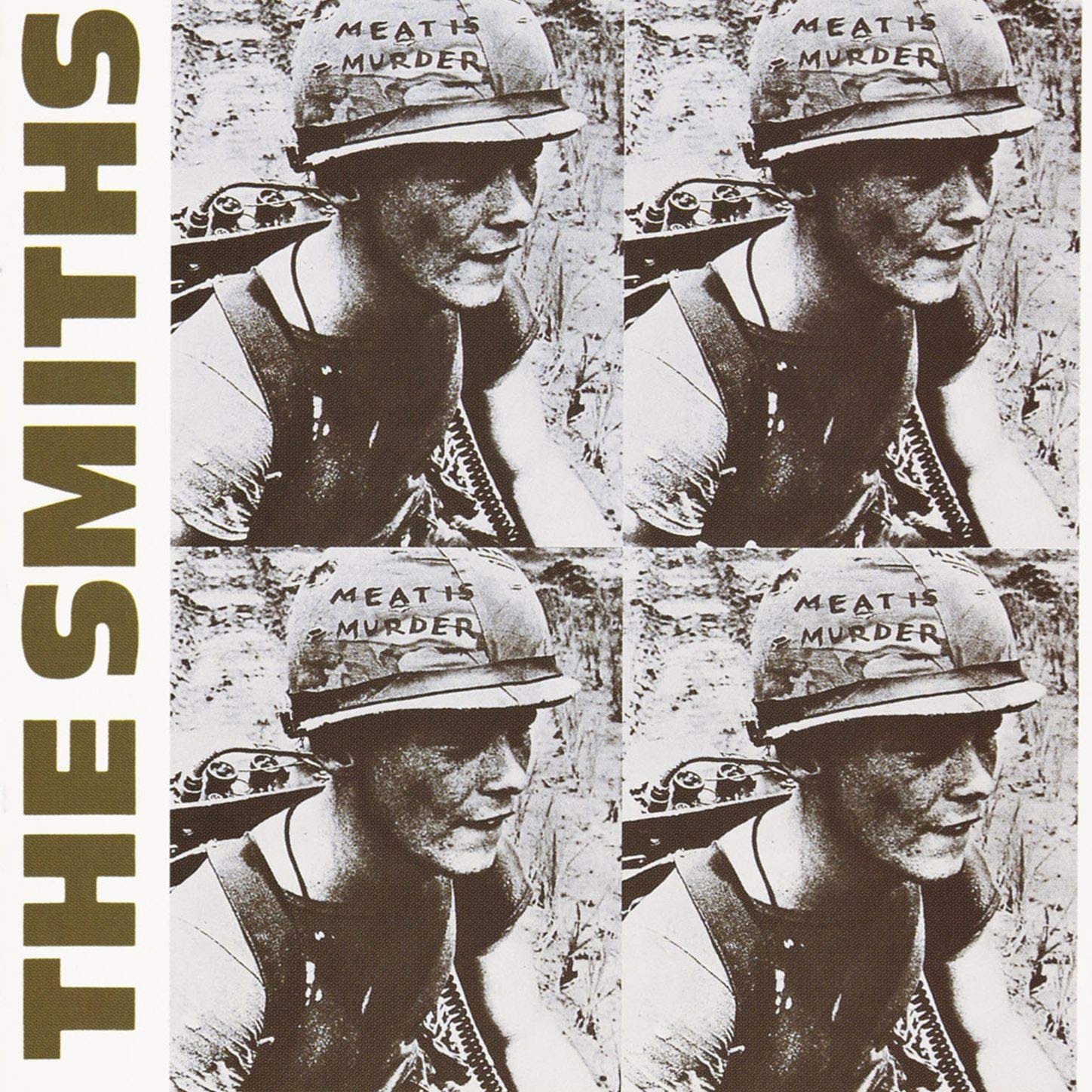
The way the photo was actually used differed by market, too. UK pressings ran a single large version of the image across the sleeve, while American pressings repeated it four times in a grid, the version most people picture today, even though it wasn't how British fans originally saw it.
A Hit, Regardless
None of this controversy hurt the record commercially or critically. Meat Is Murder became The Smiths' only album to reach number one on the UK charts during the band's lifetime, later earned a place on Rolling Stone's list of the 500 greatest albums ever made, and turned up in the book 1001 Albums You Must Hear Before You Die. The cover's ethics never seem to have factored much into any of that acclaim. It's mostly been written up as a clever piece of provocation rather than a real person's story that got borrowed without asking.
I still don't think this cover needed me to like the band. Somewhere out there was a young man who'd survived a war, written a dark joke on his own helmet, and had that joke quietly rewritten into someone else's protest without ever being asked. That's not really a story about The Smiths. It's a story about how easily somebody else's real words can get replaced with your own, if nobody happens to be looking.