Childish. Gambino.
Five albums. A name from a Wu-Tang generator. The full visual story of Childish Gambino from Camp to Atavista and the music video that changed everything in between.
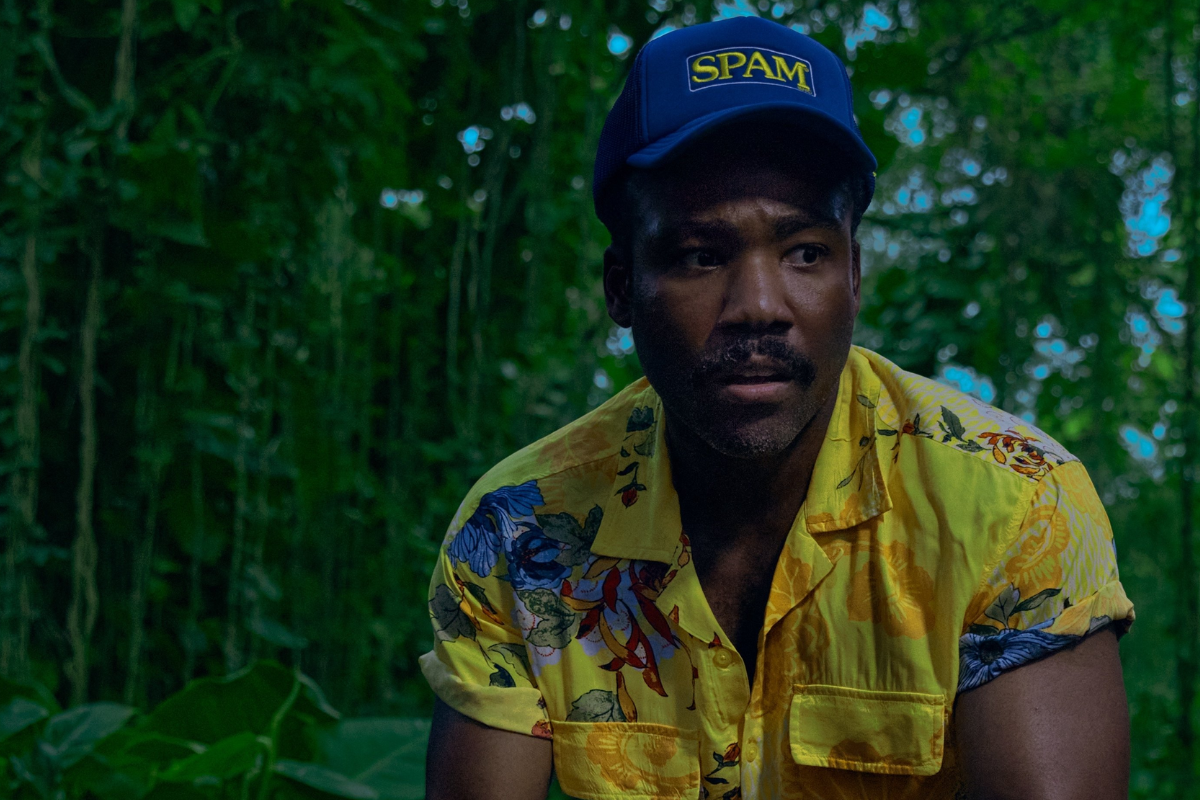

Let me tell you something you might not know about the name Childish Gambino.
Donald Glover didn't come up with it. A website did.
In a 2011 interview with Jimmy Fallon, Glover revealed that he got the name from the online Wu-Tang Clan name generator during his college years. He and his friends were all putting their names in, laughing at the results, and then his came up. "I was like, 'You guys, it's not funny anymore. This is something big.'"
Glover later reflected: "If I had known it was going to be something for real, I wouldn't have used it."
He used it. And it became something for real. A Grammy winning, culturally defining, genuinely singular artist, named by an internet joke that stopped being funny the moment it generated two specific words.
Childish. Gambino.
Camp (2011)
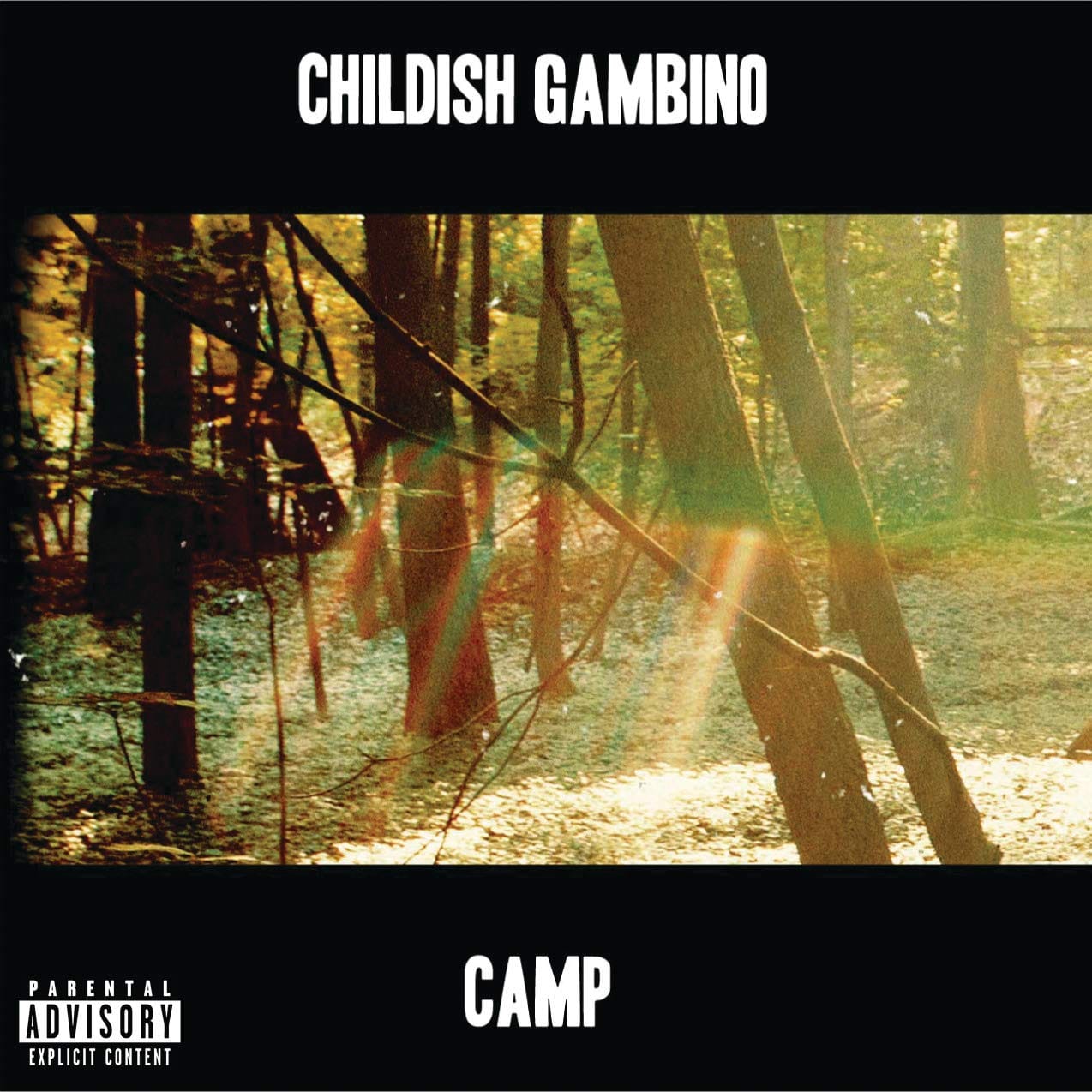
There's no photo of Glover anywhere on this cover, just a sunlit forest, tall bare trunks catching the light, with a prism-like streak of colour cutting diagonally across the frame like light refracting through a lens. The whole image is letterboxed in black, with the band name and album title set in a blunt, stencil-style font above and below. For a rap debut, leaving the artist entirely out of frame is a genuinely unusual choice. No pose, no persona, nothing to look at except an empty, quiet woodland scene, letting the "Camp" of the title do all the talking instead.
Because the Internet (2013)
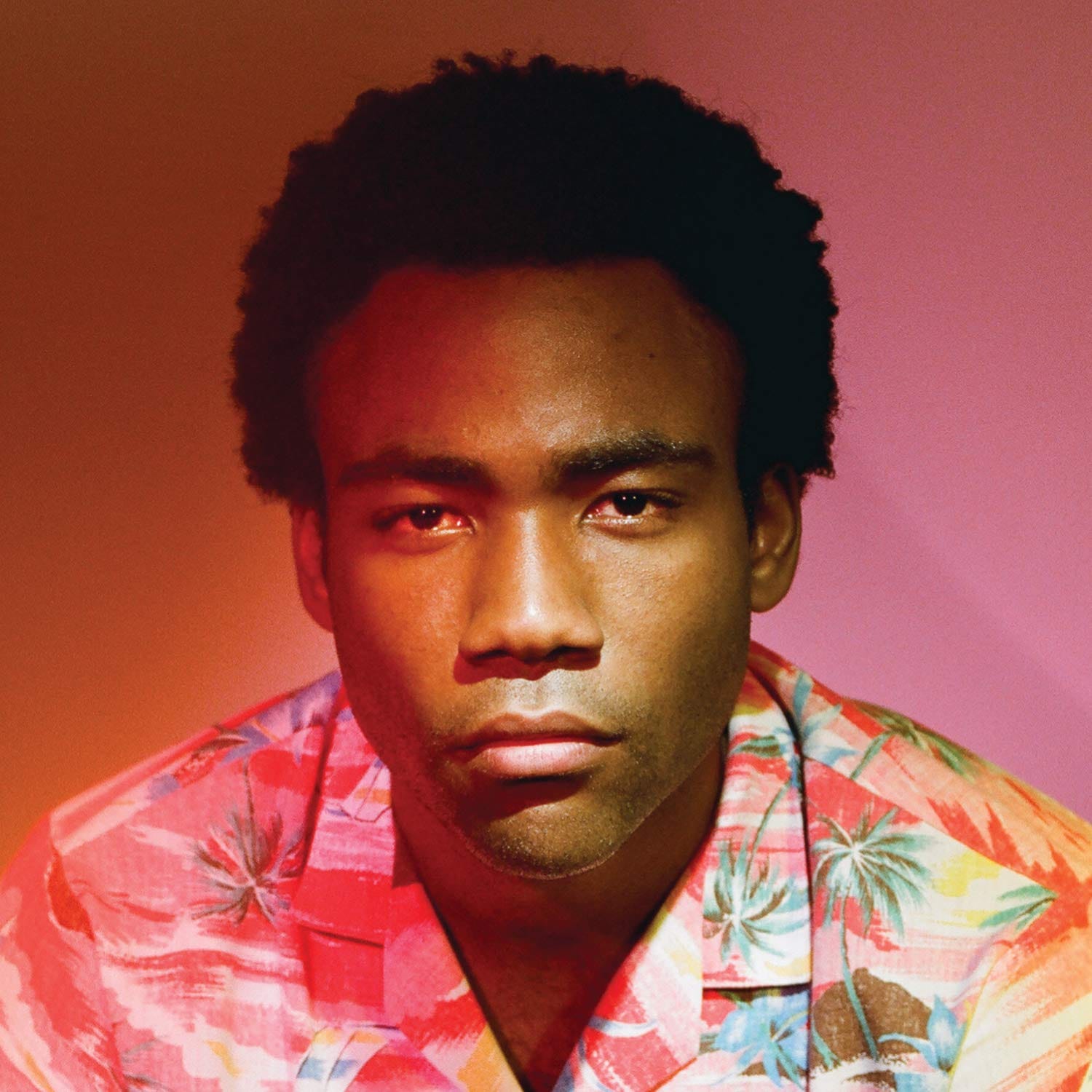
Now we're talking. The second album cover is one of the most deceptively simple images in modern hip hop.
Donald Glover in a Hawaiian shirt, sitting in a chair, staring at you against a plain background. No grand concept. No elaborate staging. Just a person. Present. Unavoidable.
Because the Internet serves as commentary on society's relationship with technology and how it affects our ability to connect with one another on a deeper level. By portraying himself as just another figure sitting in front of a screen, Gambino highlights the dehumanising effects that social media can have.
The album came with an accompanying screenplay; a full written narrative that expanded the album's themes into a cinematic world. Director Hiro Murai, who would go on to direct This Is America, made a short film called Clapping for the Wrong Reasons as a companion piece. The cover, the album, the screenplay and the film were all part of the same interconnected creative statement resulting in one of the most ambitious album rollouts of the decade.
Awaken My Love! (2016)
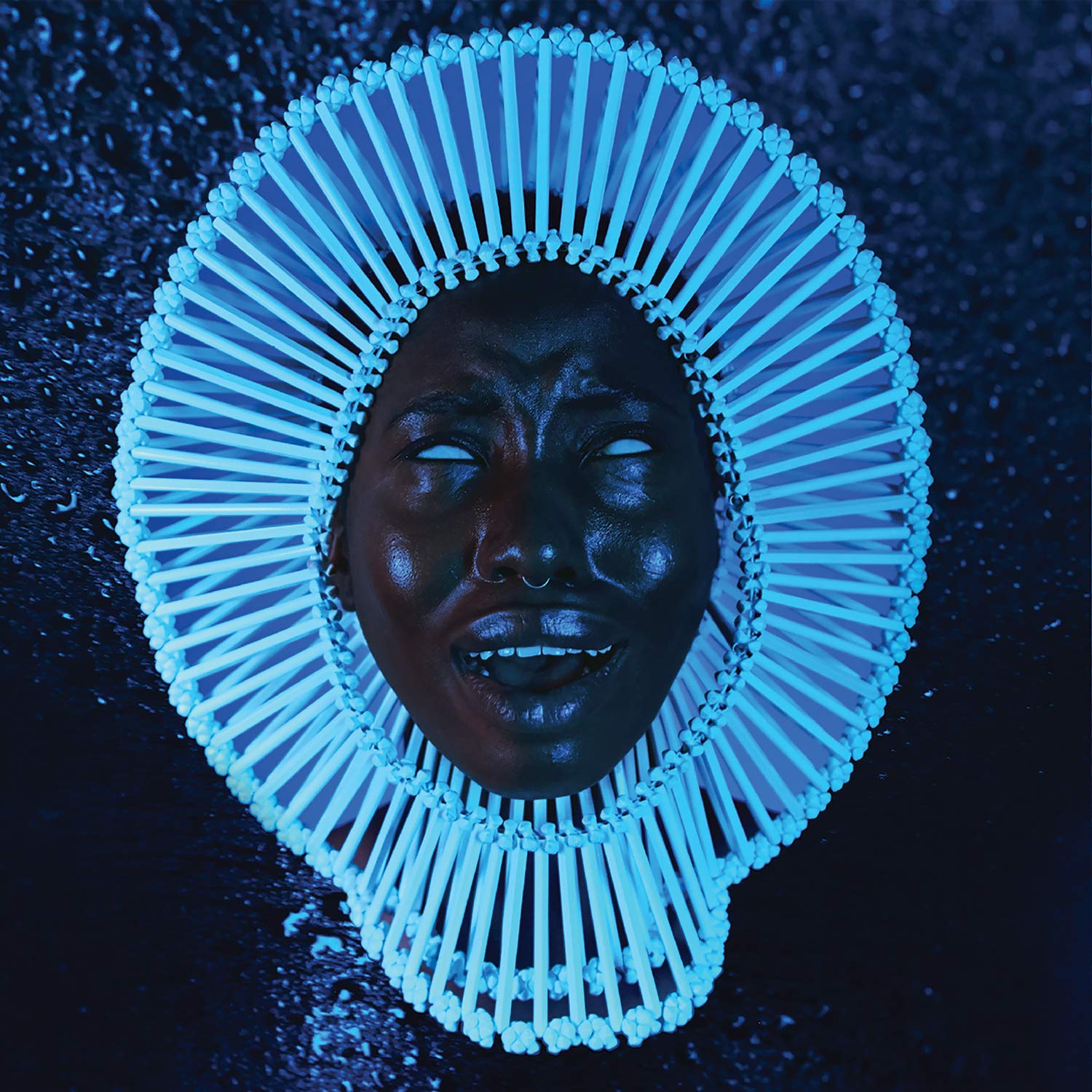
And then everything changed.
The Awaken My Love cover is the most visually striking of his career and an image that is a nod to Maggot Brain by Funkadelic. A disembodied Afrocentric head, eyes rolled back, mouth slightly open, an orb circling its crown. Dark, mystical, beautiful and slightly unsettling all at once.
Glover first revealed the artwork by tweeting a hi-res version of the image alongside the album title. Fans quickly connected it to a picture briefly visible in episode nine of Atlanta, hidden in plain sight in a scene set during a Juneteenth party, hanging on the wall of a bourgeois character's study.
The image was in the TV show before it was on the album cover. A secret hidden in plain sight. Very Donald Glover.
The Afrocentric cover confirmed that Awaken My Love! was a departure from straightforward rap; more singing, more funk, more soul, more blues. Reports from Glover's secret Pharos festival performance described the music as "a voyage through funk, soul, blues, and hip-hop."
This Is America (2018)
This Is America was not an album. It was a standalone single. But no visual retrospective of Childish Gambino's career can skip it because it is one of the most significant pieces of music video art of the 21st century. I just had to include this. You must watch it.
The four minute clip, directed by Hiro Murai, follows a shirtless Glover as he dances through a large concrete warehouse, assassinates a folk singer, dances with schoolchildren, guns down a Black gospel choir, passes riot police and a burning car, all while maintaining an exuberant smile.
What the video boils down to, Murai explained, is "a really crazy confluence of tone changes. That's the premise of the whole video and the song, in a way." Their mandate was surprising "media savvy" viewers "delivering something that people don't know that they want to see."
The video has been widely interpreted as addressing gun violence, police brutality and the way American entertainment culture distracts from systemic racism. Glover himself refuses to explain it. Whenever asked, he says it's not for him to say, it's for the people.
It debuted at number one on the Billboard Hot 100 and won four Grammy Awards including Record of the Year and Song of the Year, the first hip hop song ever to win in both categories.
What does This Is America look like as an album cover? It doesn't have one. The single artwork is deliberately bare. Glover's name, the song title, nothing else. The music video is the cover. The four minutes of dancing and violence and chaos and joy is the image. It doesn't need anything else.
3.15.20 (2020) / Atavista (2024)

3.15.20 was released as a surprise drop on March 15 2020, the early days of the COVID-19 pandemic. The album initially streamed on his website for 12 hours before disappearing. When it resurfaced on streaming platforms, the album cover was nothing but a white square.
A white square. We've seen this before. Kanye West released Yeezus with a clear case and a piece of red tape. Glover released 3.15.20 with a white square. Two of the most critically celebrated artists of their generation both stripping the album cover back to nothing. Both making the same statement that the music should exist without visual context.
Only two of the songs have a proper title. The rest are labelled only by their timestamp within the full album. All of these choices signal that this album is designed to be consumed and judged based purely on the music itself.
In 2024, Glover reworked and reissued the album as Atavista. The finished version, with proper song titles, refined production and new collaborators. It was released alongside Bando Stone and the New World, announced as his final album as Childish Gambino.
The boy who put his name into a Wu-Tang generator at a college party and couldn't stop laughing, until he could. The man who sat in a Hawaiian shirt and stared at a camera. The artist who hid his album cover in an episode of his own TV show. The performer who danced and smiled while everything burned behind him.
The name generator wasn't joking. It never was.