The Man On Fire
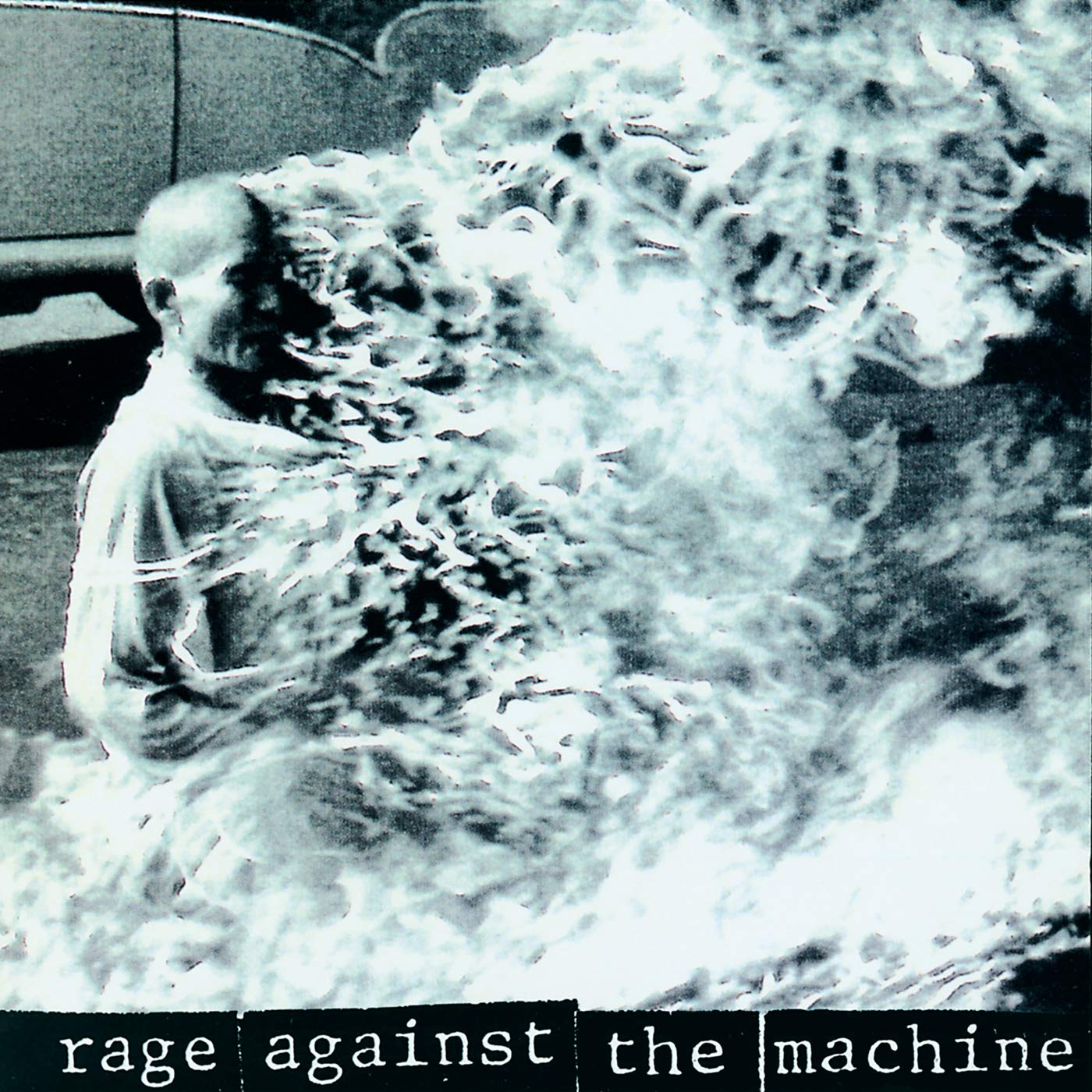
Rage Against the Machine by Rage Against the Machine - The stillness of this cover. A man on fire. No screams. Completely still.
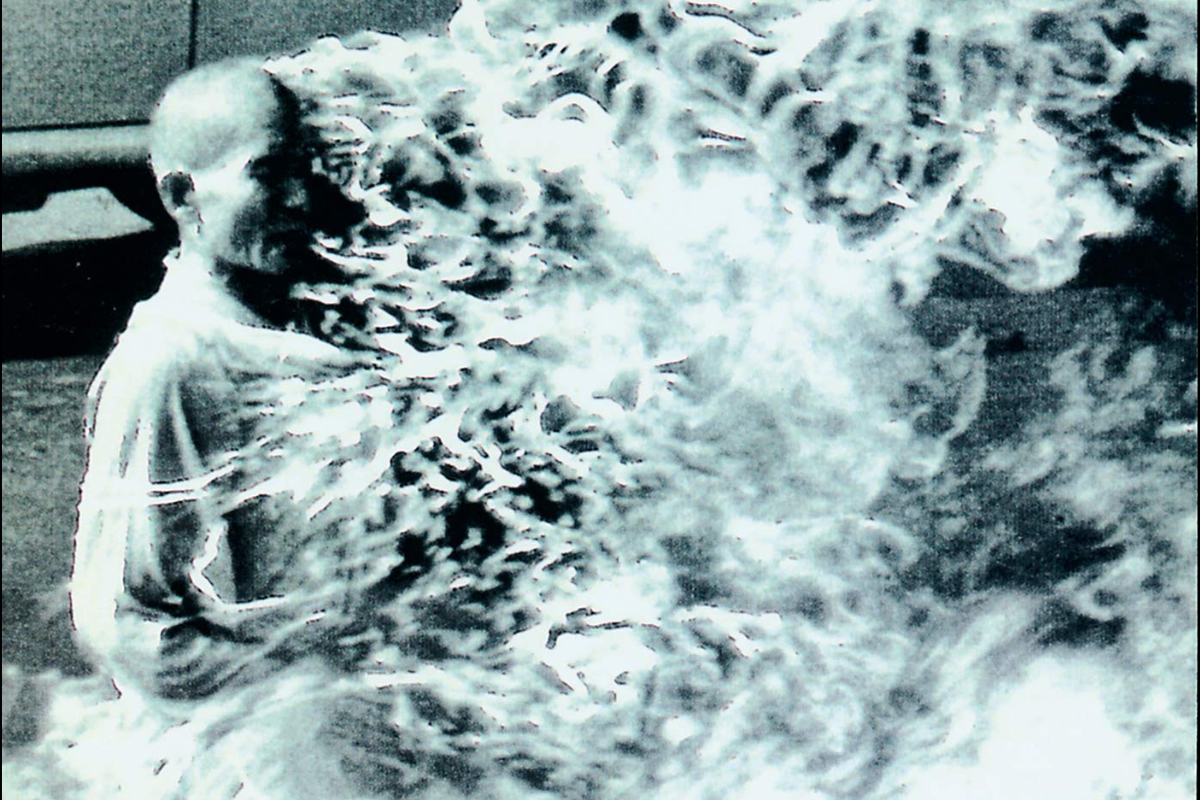

I own this album. I've owned it for years. And the thing that has always stopped me, before the music played, before Killing in the Name, before any of it, is the stillness.
A man on fire. And he is completely still.
No contortion. No panic. No visible sign of the unimaginable pain that must have been present. Just a man, sitting in the lotus position, burning. The cars stopped around him. The people watching. And in the centre of it all; stillness.
That stillness is not accidental. It was chosen. It was practised. It was the point. And the story of why and how that image ended up on one of the most important debut albums in rock history is one that Art Before Noise has been building toward.
Album Anatomy
| Album | Rage Against the Machine |
| Artist | Rage Against the Machine |
| Released | November 3, 1992 |
| Label | Epic Records |
| Genre | Alternative |
| On the cover | A 1963 photograph of Buddhist monk Thích Quảng Đức's self-immolation in Saigon, taken in protest against the persecution of Buddhists in South Vietnam |
| Format | Photograph |
| Design | Photography by Malcolm Browne (Associated Press) |
| Decade | 1990s |
| Buy It | Amazon |
June 11, 1963. Saigon.
The cover image is a crop of Malcolm Browne's most iconic photograph featuring Thích Quảng Đức, a Vietnamese Buddhist monk, enacting self-immolation.
Thích Quảng Đức was 66 years old. He had spent his life in devotion; studying, teaching, building pagodas across Vietnam. He was, by every account, a man of profound gentleness and deep spiritual conviction.
The South Vietnamese President Ngô Đình Diệm, under the support of the US government, had supported some truly oppressive policies against the Buddhist religion in the early 1960s, which led to a period of civil unrest and protest in South Vietnam.
Thích Quảng Đức had written letters. Had petitioned. Had watched peaceful protests met with violence. And then he made a decision that would change history.
His last words were: "I respectfully plead to President Ngô Đình Diệm to take a mind of compassion towards the people of the nation and implement religious equality to maintain the strength of the homeland eternally."
On the morning of June 11, 1963 he was driven to a busy Saigon intersection. He sat down in the lotus position. A fellow monk poured petrol over him. And Thích Quảng Đức struck a match.
He did not move. He did not cry out. He sat in the lotus position and burned, for nearly ten minutes, until his body fell.
The stillness was not a coincidence. Buddhist monks train for years to control the body and the mind under extreme conditions. What you see in the photograph is not the absence of pain. It is the presence of absolute conviction, a man who had made his decision and committed to it completely.
The Photograph
Malcolm Browne's photograph won a Pulitzer Prize. It was distributed by the Associated Press and appeared on front pages around the world within hours.
The photo was so powerful it actually led John F. Kennedy to withdraw support for the Dinh Diem administration. Kennedy, shown the photograph, reportedly said: "No news picture in history has generated so much emotion around the world as that one."
A photograph. Taken by one man. Of another man's act of protest. And it helped end a government's relationship with the most powerful nation on earth.
Outside of Howard Beale from the classic film Network, nothing in popular culture's consciousness conveys "I'm mad as hell, and I'm not going to take this anymore" like the photo of Thích Quảng Đức.
It is one of the most powerful images of the twentieth century. And in 1992, a rock band from Los Angeles put it on their debut album cover.

Why Rage Against the Machine Chose It
The band's use of the iconic photograph goes to show their unapologetic defiance of authority. Thích Quảng Đức was raging against the machine of the South Vietnamese government in the 1960s, and the band were raging against authority in the 1990s, albeit with less severity.
The connection is not subtle. It was never meant to be. The brutality of the image matches the power and politically driven lyrical content inside. Killing in the Name. Bombtrack. Wake Up. These are not songs about personal relationships or suburban anxiety. They are songs about systemic racism, police brutality and institutional power. They needed a cover that matched that energy. Something that said, before a single note was played, that this band meant every word.
The liner notes of the record give thanks to political activists including Bobby Sands, the IRA hunger striker who died in prison, and Huey P. Newton, founder of the Black Panther Party. Two men who made their bodies the instrument of political protest. Thích Quảng Đức did the same. The cover and the liner notes are the same statement made in different languages.
They needed an image that would convey the multitude of emotions that the album delivered. The picture they chose would do the trick, ultimately cementing the album as one of the most important ever released.
The Controversy
Not everyone agreed.
Some argued that using the image of a man's death, however powerful, however historically significant, on a rock album was exploitation. That Thích Quảng Đức deserved better than to become a piece of rock and roll packaging. That the band was borrowing someone else's suffering to sell records.
Others argued the opposite, that using the image was an act of respect. That bringing it to a new generation of listeners was itself a political act. That a photograph of this significance should be seen, should be uncomfortable, should make people ask questions before the music even starts.
Rage weren't Buddhists, but they knew that this photograph might make their already-long band name worth at least a thousand words.
The debate has never been fully resolved. It probably never will be. What is clear is that the band's intention was not shock for the sake of shock; it was the same intention that drove every song on the album. To make you angry. To make you think. To make you ask who has power and how they use it.
What The Cover Actually Says
A man who chose to make his body a political statement. Who sat in the lotus position and burned. Who did not move because he had decided that this was the most important thing he would ever do and he was going to do it completely.
Over 30 years since its original release, the eponymous debut by Rage Against the Machine remains as fearless and defiant as it ever was.
The cover was never just a cover. It was a declaration. Before the needle hit the groove, before Tom Morello played a single note, the band had already told you everything you needed to know about who they were and what they stood for.
Thích Quảng Đức sat still and changed history.
Rage Against the Machine put that stillness on a record sleeve and asked a new generation to look at it.
I think that was the right thing to do.
Art Before Noise acknowledges the life and sacrifice of Thích Quảng Đức (1897-1963). His act of protest and the photograph that captured it remain among the most significant moments of the twentieth century.