How does Spencer Elden feel about being the Nevermind baby?
The answer, it turns out, is complicated. And it changed dramatically over thirty years. And it ended up in a federal court in California. But we'll get to that.
First, the cover itself. Because before it became a legal battleground, it was just a brilliant idea that came from a very unlikely place.
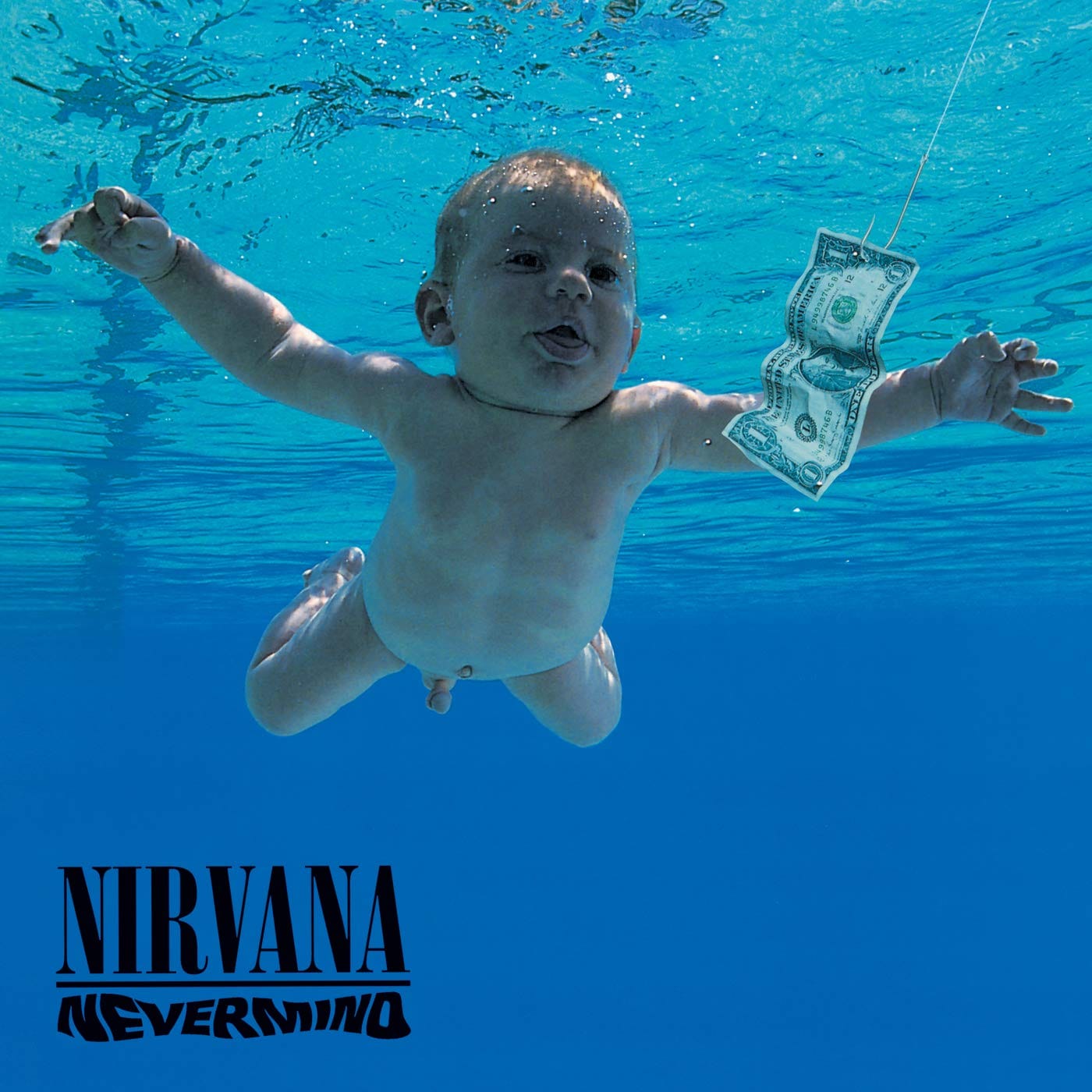
Kurt Cobain, Water Births and a Fishhook
The concept came from Kurt Cobain, who had been watching a television documentary about water births and became fascinated by the image of infants suspended in fluid, floating between one world and the next.
Cobain took the idea to Geffen Records art director Robert Fisher. Fisher loved it immediately but the stock footage of underwater births he found was too graphic for the record company. The stock photo of a swimming baby they eventually settled on wanted $7,500 a year for its use. Fisher decided to shoot his own.
But a baby underwater wasn't quite enough. "We thought; OK, we've got to make it more than just a baby underwater. So Kurt came up with the idea of adding a fishhook to make it more menacing. We spent the afternoon sitting around thinking of all the funny things we could put on the fishhook. One idea was a piece of meat, like a big raw steak. Another was a CD. We went to lunch and we were like, how about a burrito? Oh there's a dog, what about a dog? It just went on for hours. I don't remember who said dollar bill but everyone was like, that's pretty good. And that's what it ended up being."
A burrito on a fishhook. History nearly looked very different.
The Shoot
Fisher found his photographer in a work catalogue. The tagline read: specialises in submerged humans. That was Kirk Weddle, and he was their guy.
Fisher hired several parents with newborns to come to the Pasadena Aquatic Center in return for $200. A doll was initially used for some test shots, then the actual babies were passed underwater by their parents and Weddle snapped away.
There were about fifty shots. Only one, according to Fisher, was right: "The positioning, the look on the baby's face, the way that his arms were stretched out like he was reaching for something, everything about it was just perfect."
That baby was four month old Spencer Elden. The shoot lasted around fifteen seconds. The dollar bill on the fishhook was added later in post production and was never in the water with him.
Geffen was concerned that the infant's penis, visible in the photo, would cause offence, and prepared an alternate cover without it. They relented when Cobain said the only compromise he would accept would be a sticker covering the penis reading: "If you're offended by this, you must be a closet paedophile."
The sticker was never used.
What The Cover Actually Means
Cobain added the fishhook and dollar bill to transform a birth image into a commentary on the corruption of innocence by American capitalism. A baby; pure, naked, new to the world, swimming instinctively toward money on a hook. Unable to resist. Unable to see the danger.
It is, in other words, a commentary on all of us. And it landed at exactly the right cultural moment, 1991. It was the tail end of the Reagan era, a generation that had been sold the American dream and was starting to wonder if the hook was showing.
The cover now features in the Museum of Modern Art's collection and is regarded as a design classic. A fifteen second underwater shoot of a four month old baby produced one of the most significant pieces of graphic design of the twentieth century.
Spencer Elden - The Long and Complicated Story
For most of his life, Spencer Elden embraced being the Nevermind baby. He was paid to recreate the photo multiple times in adulthood, sold autographs on posters and memorabilia, referred to himself as the Nirvana baby, tattooed Nevermind on his chest, and sent photographer Kirk Weddle a thank you postcard featuring a hand drawn illustration of the album cover.
And then, in August 2021, he sued.
Elden's lawsuit named Cobain's estate, former bandmates Dave Grohl and Krist Novoselic, photographer Kirk Weddle, Universal Music, Geffen Records, Warner Records and MCA Music. It sought at least $150,000 in damages from each defendant.
Elden claimed that the use of his likeness on the album cover was made without his consent or that of his legal guardians, that it violated federal child pornography statutes, and that it resulted in lifelong damages.
Did lawyers get in his ear? Possibly. But his own words from years earlier told a different story. "I got a little upset for a bit," he said in 2016. "I was trying to reach out to these people. I never met anybody. I didn't get a call or email. I just woke up already being a part of this huge project. It's pretty difficult, you feel like you're famous for nothing, but you didn't really do anything but their album."
There is something genuinely sad in that. A man defined for his entire life by fifteen seconds in a swimming pool at four months old. Whether the lawsuit was legally justified or not, the feeling behind it is understandable.
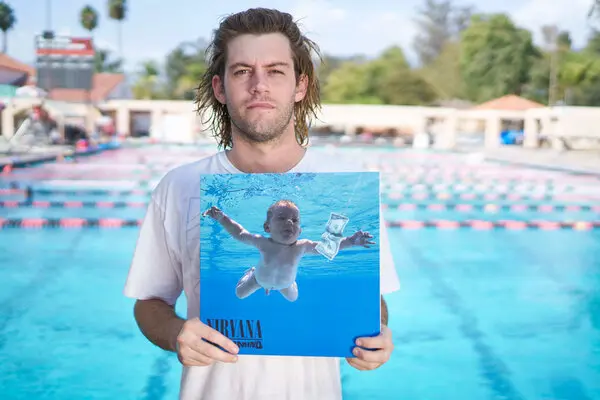
The Court's Decision
The judge was not sympathetic.
Judge Fernando Olguin ruled that the Nevermind cover featured "neither the pose, focal point, setting, nor overall context suggesting the album cover features sexually explicit conduct." He also noted that Elden had previously "embraced and financially benefitted from being featured on the album cover."
The court entered final judgment dismissing the case with prejudice on September 30, 2025. Thirty years after the album's release, the baby on the cover lost his case against the band that made him famous.
What It All Means
The Nevermind cover is controversial not because of what it shows, a baby swimming in a pool, but because of what it means, what it symbolises, and what it did to the person in it.
Spencer Elden didn't choose to be on that cover. His parents signed the release for $200. He spent thirty years being recognised in the street, being asked to recreate the photo, signing posters of his own infant nudity. And then he sued, lost, and watched the album carry on selling.
Meanwhile Kurt Cobain, who came up with the idea watching a documentary about water births and spent an afternoon debating whether to put a burrito on a fishhook, died in 1994 at 27, never knowing what the cover would eventually cost the baby in it.
The dollar is still on the hook. Spencer Elden is still swimming toward it.