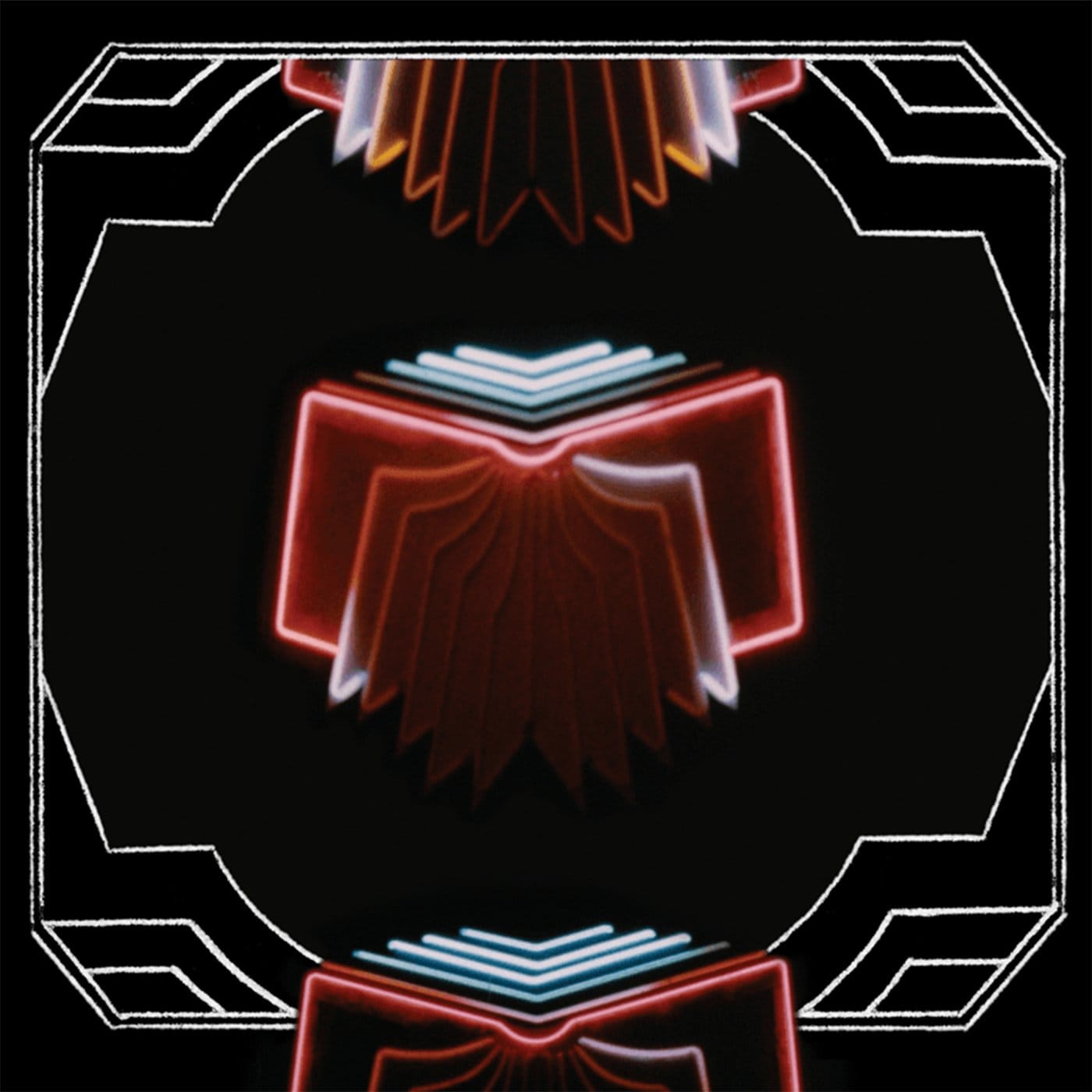
The cover of Neon Bible by Arcade Fire is not the most immediately arresting image I've written about on this blog. A neon sign in the shape of an open Bible, photographed against a black background. A rough wooden frame around the edges. Some pink and orange light catching the darkness.
It looks, at first glance, like something you'd walk past in a record shop without stopping.
Look again. Because there is considerably more going on here than first appears.
Album Anatomy
| Album | Neon Bible |
| Artist | Arcade Fire |
| Released | 5 March 2007 |
| Label | Merge Records / Rough Trade Records |
| On the cover | A six-foot neon sign in the shape of an open Bible, caught mid-flicker against a black background, framed in rough wood |
| Design | Art direction by Tracy Maurice |
| Decade | 2000s |
A Sixteen Year Old's Novel
Before we talk about the cover we need to talk about the name. Because the title Neon Bible did not originate with Arcade Fire.
When John Kennedy Toole wrote his first novel The Neon Bible in 1954 at the age of sixteen, the notion of a glowing scripture was particularly provocative. There was the juxtaposition of ancient text and modern design, but something else too. Neon was the stuff of diners and motels, not churches. With three little words, Toole brought into focus an image of religion as vapid, crass commercialism.
Toole would go on to write A Confederacy of Dunces, one of the great American comic novels, published posthumously after his suicide in 1969. The Neon Bible was his teenage work, dark and Southern Gothic and soaked in the particular anxiety of growing up religious in the American South.
Arcade Fire's Win Butler read Toole's novel, though in an interview he dismissed the replication of the book's title for the band's second album as "kind of a coincidence." He immediately clarified: "I just jotted it down in my notebook and kept coming back to it. The song was very much off-the-cuff, written in one night and recorded the next day. Lyrically, there's a lot of stuff dealing with religion and culture, which I'm really interested in."
Kind of a coincidence. The kind of coincidence that connects a teenage Southern Gothic novel from 1954 to a Canadian indie rock band's second album in 2007. Sometimes the right title just finds you.
The Church They Bought
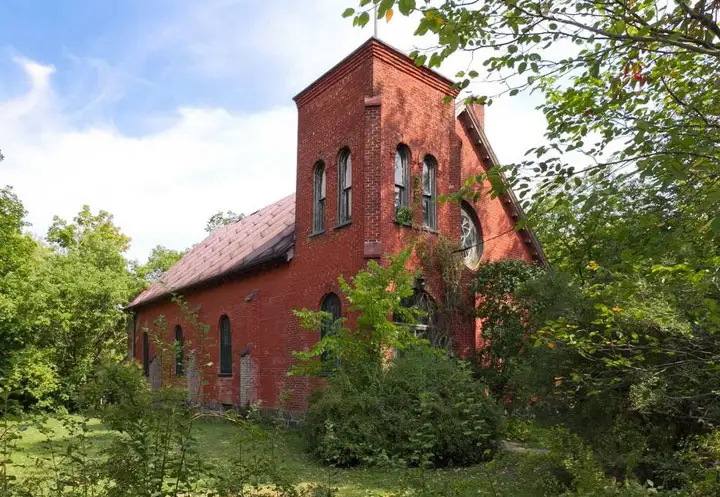
The majority of Neon Bible was recorded at a church the band bought and renovated in Farnham, Quebec. Not rented. Bought. Arcade Fire purchased a church, converted it into a recording studio and made their second album inside it.
The decision to record in a church was not incidental. The album is deeply concerned with organised religion; its power, its corruption, its hold on the American psyche. Arcade Fire on Neon Bible were angry, embittered and paranoid, targeting the government, the church, the military, the entertainment industry and even the basest instincts of the common man.
Recording those songs inside the walls of an actual church, with its acoustics, its history, its physical presence, was a creative decision that shaped every song on the album. The church didn't just provide a space. It provided a feeling.
The Sign
Sorry. I got a little side-tracked there. Now, the cover.
The six foot neon sign was commissioned specifically for use on the tour. Not for the album. For the tour. The cover image came from a prop; a physical object built to be seen in concert halls and arenas, repurposed as the album's visual identity.
The cover catches the sign mid-flicker, creating the illusion of movement. The cool light blue and intense pink and orange create a striking contrast against the black background. There are multiple Bibles visible that appear to continue up and down beyond the frame, strengthening the concept of endlessly flashing Bibles.
Mid-flicker. That detail matters more than it seems. A neon sign that is fully lit is just a sign. A neon sign caught in the moment between on and off, between presence and absence, between illumination and darkness, is something more interesting. Something that suggests instability. Something that asks whether the light is coming on or going out.
The framing element, rough wood around the edges, is reminiscent of the ornate frames used in religious imagery. Perhaps the rough appearance of the frame is a reminder that humans were its creator, much like they are of the themes of the album: war, religion, corruption. The neon Bible's modern appearance contrasts with the frame that contains it. The play between the ancient icon of the Bible and the tackiness of neon signs is the point.
Ancient and tacky. Sacred and commercial. The Bible as a neon sign, the most honest visual metaphor for the American religious experience that anyone had put on an album cover in years.
What The Cover Actually Says
Here is what the Neon Bible cover is actually saying, and why it is considerably more interesting than it first appears.
Neon was the stuff of diners and motels, not churches. When you put the Bible in neon, when you give the most sacred text in Western culture the visual language of a roadside diner or a Las Vegas casino, you are saying something very specific about what organised religion has become. Not a spiritual practice. A brand. A neon sign on the highway, flashing on and off, asking you to come inside.
Before Neon Bible, Arcade Fire's visual identity had a strong human element; hand-rendered illustrations, vintage photograph texture, hand lettering. This cover highlights the very mechanical nature of a neon sign. The warmth of their debut Funeral replaced by something colder, more commercial, more unsettling.
Arcade Fire explored Americana themes, including Bible Belt religion, on Neon Bible, the follow up to their breakthrough debut. The corresponding cover captures that perfectly.
It doesn't look like much. A sign in the dark. Pink and orange and blue against black. Something you'd walk past in a record shop without stopping.
But it's telling you exactly what's inside. And exactly what Arcade Fire thought about the world in 2007.
Sometimes a neon sign is just a neon sign. And sometimes it's a comment on the state of Western civilisation.
This one is both.