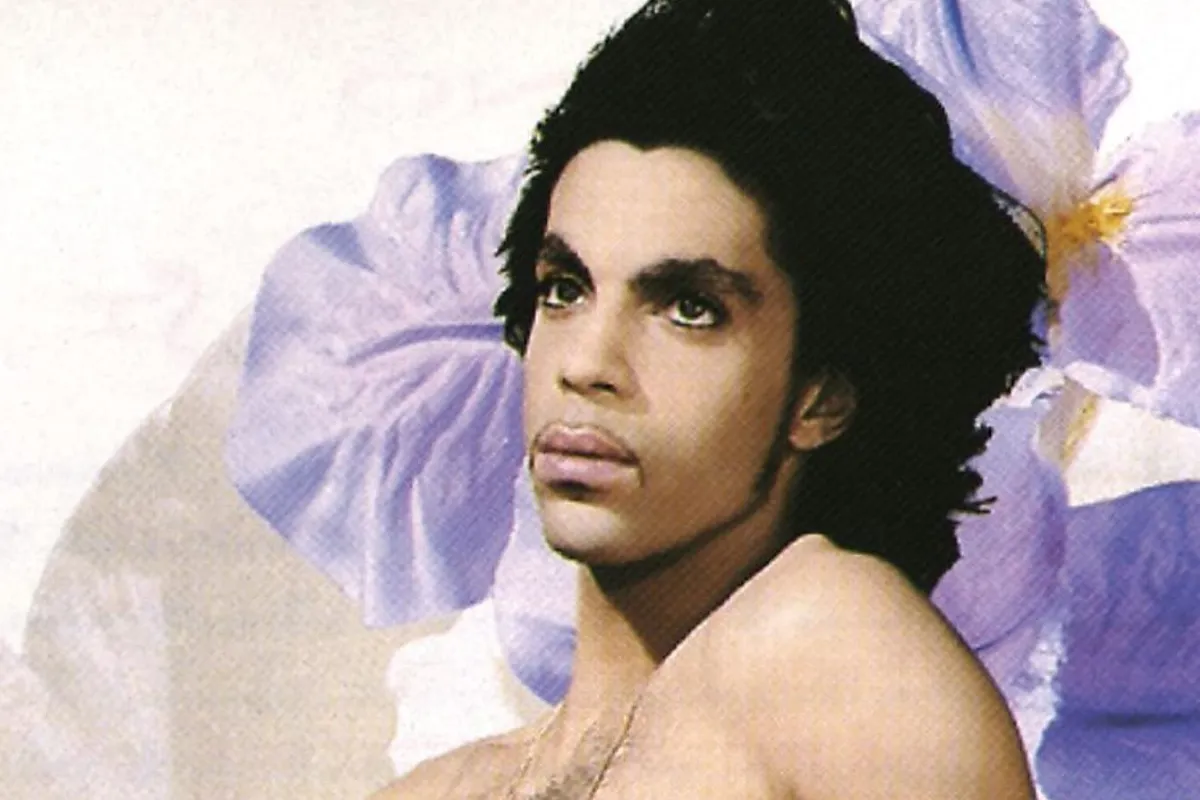
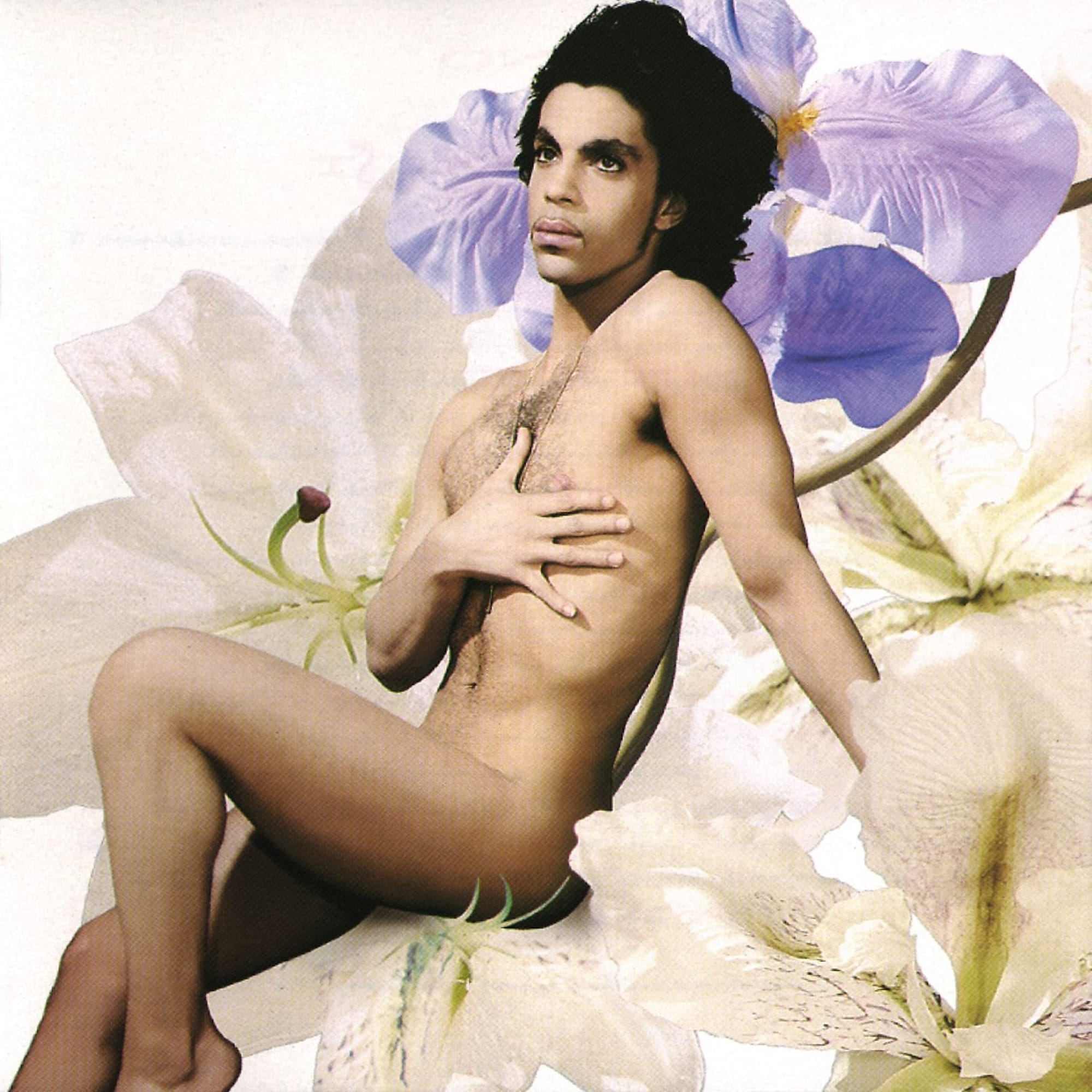
When most people look at the cover of Lovesexy, Prince, naked, reclining on a white lily, gazing upward with a soft and entirely unbothered expression, they call it audacious. A provocative stunt. A deliberate attempt to shock.
I don't see it that way. What I see is confidence. Way more confidence than I have.
There is a difference between an artist who takes their clothes off to get attention and an artist who takes their clothes off because they simply don't need your permission. Prince was always the latter. He never asked. He never explained. He just did exactly what he wanted, exactly when he wanted, and waited for the world to catch up.
The cover of Lovesexy is one of the purest expressions of that quality in his entire career.
The Album That Almost Wasn't
To understand Lovesexy you first need to understand what came before it. Because the story of this cover begins not with a flower or a photographer, but with a decision that shocked the entire music industry.
In what was described as one of the most enjoyable and peculiar moves of the 1980s, Prince announced he would follow up the critically revered Sign o' the Times with The Black Album a.k.a. Spooky Electric (read: Satan). A raw, dark, funk heavy collection recorded in 1987.
But then, a mere week before its scheduled release, he scrapped his plans and demanded that Warner Bros. destroy all copies of the album. Only one of the songs from that album, When 2 R in Love, would be saved, and within seven weeks Prince had recorded an entirely new collection of songs to join it.
Why? Deep conversations with Ingrid Chavez revealed how scary it is not knowing who you are. If Spooky Electric (read: Satan) could get Prince to question his identity and only trust his feelings, he could get him to question anything. Rooting his identity in Lovesexy doesn't mean he won't struggle; it means he will have power in his struggle.
The Black Album was the sound of Prince at his darkest. Lovesexy was his response to that darkness, an album about spirituality, positivity, love and God, recorded in seven weeks at his newly opened Paisley Park Studios in Minneapolis. It is consequently one of the fastest albums turned around from conception to retail in music history.
And for an album about light overcoming darkness, he needed a cover that said something equally bold.
Jean-Baptiste Mondino and The Birth of Venus
Prince's first choice to direct his film Under the Cherry Moon had been Jean-Baptiste Mondino, a French fashion photographer and music video director whose work sat at the intersection of fine art and popular culture. Mondino had been unavailable for the film. For Lovesexy, he was available. And Prince called him.
The cover is a montage combining close up flower photography with a nude portrait of the artist, who sits on the unfolding petals of a white lily, leaning back. Prince's gaze is lifted up and off to the left with a soft, thoughtful expression. The background of lilies and iris evoke the post-war religious iconography which Mondino cites as a source of inspiration.
Mimicking The Birth of Venus by Botticelli, the cover shows Prince reclined naked with a lily stamen suggestively positioned above his groin.
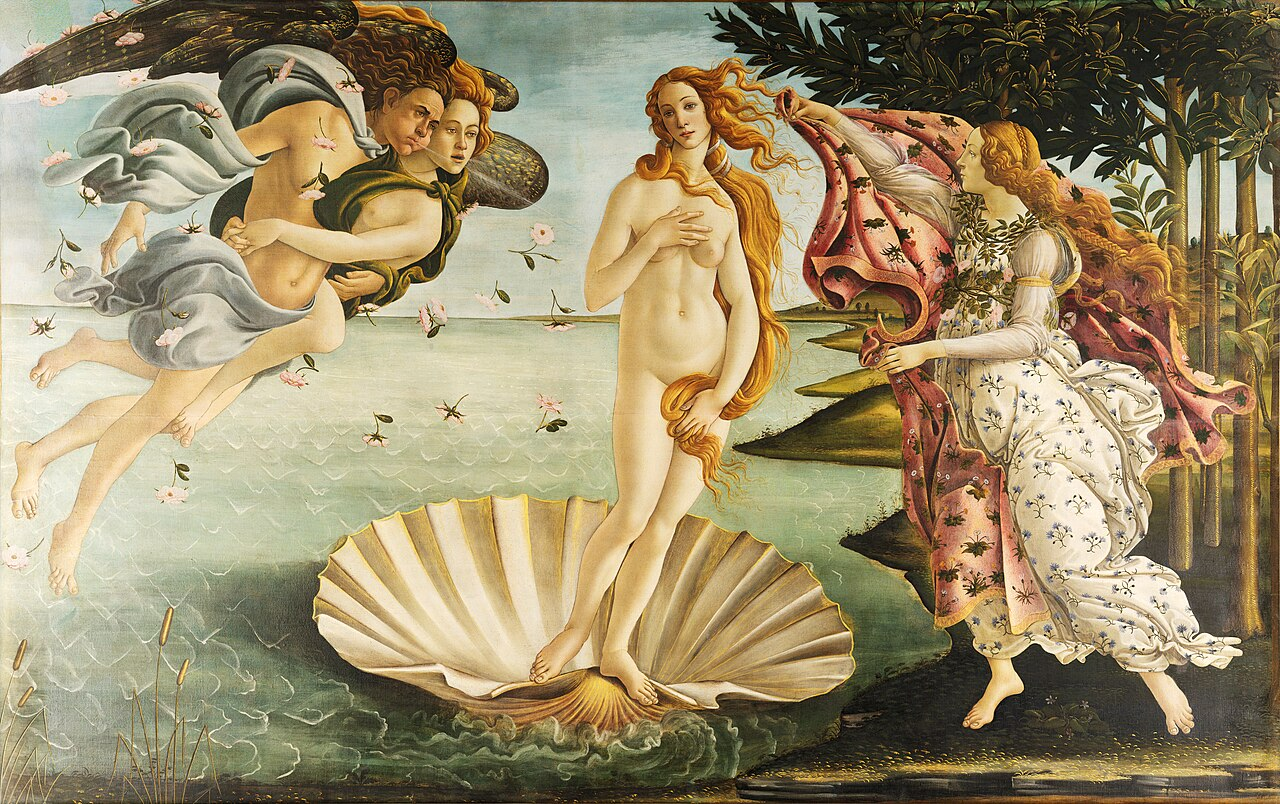
The Botticelli reference is not accidental. The Birth of Venus, painted around 1484-1486, depicts the goddess Venus emerging from the sea, naked and entirely unashamed. It is one of the most celebrated images in Western art history. It hangs in the Uffizi Gallery in Florence. Nobody wraps it in black plastic.
Prince knew exactly what he was doing. A naked figure on a flower, gazing upward toward something divine, is not pornography. It is iconography. The cover of Lovesexy belongs in the same visual tradition as Botticelli, and Prince made sure you couldn't miss the connection.
Prince had even denied Warner's management sight of the cover prior to the album's retail release.
Warner Bros. found out about the cover the same way everyone else did. That tells you everything about Prince's relationship with his own creative vision.
The Black Irony
The cover caused exactly the reaction Prince knew it would. The image was deemed far too risqué for 1988 and prompted many retailers to conceal the artwork under black plastic wrapping, with Walmart refusing to stock it at all.
The album that replaced The Black Album was sold in black wrapping. Prince's response to his own darkness was covered in the very colour he had tried to escape.
The singles Alphabet St. and Glam Slam were issued without artwork, their transparent sleeves labelled with a sticker, because Mondino's cover was the sole promotional image shot for the album, with no alternative shots available.
One photograph. No alternatives. No backup plan. That was the cover and that was that.
One Continuous Track
The cover controversy was only one of the ways Lovesexy defied convention. Instead of letting fans skip to their favourite songs, Prince wanted them to press play and enjoy the ride. Warner Bros. had to format the entire project as a 45 minute track.
LP pressings split the album in two side-long tracks, without visual bands to indicate individual songs. Similarly, early CD copies have the entire album in sequence as a single track.
An album you couldn't skip. A cover you couldn't display. An artist you couldn't second guess.

What The Cover Actually Says
The retailers who wrapped the Lovesexy cover in black plastic were responding to the nudity. They saw a naked man and reached for the packaging.
But the nudity was never the point. Prince sitting atop an open flower while naked and apparently opening himself up to God is comparatively pretty wholesome when you think about it. This is an album about spirituality. About love as a divine force. About the battle between darkness and light. The naked figure on the flower is not provocative; it is vulnerable. Open. Reaching upward toward something greater than itself. It is an image that captures the album's essence of spirituality perfectly.
The retailers covered it in black. Walmart refused to stock it. And Lovesexy reached number one in the UK, the Netherlands, Sweden, Switzerland and New Zealand. In April 2022 Lovesexy was exhibited at The Photographers' Gallery in London, staged in celebration of the art of iconic album designs.
A cover that was hidden behind black plastic in 1988 ended up in a photography gallery in 2022. Thirty four years later, the world finally caught up with Prince.
He was always going to be right. He always knew it. That's not audacity.
That's confidence. Sexy confidence.