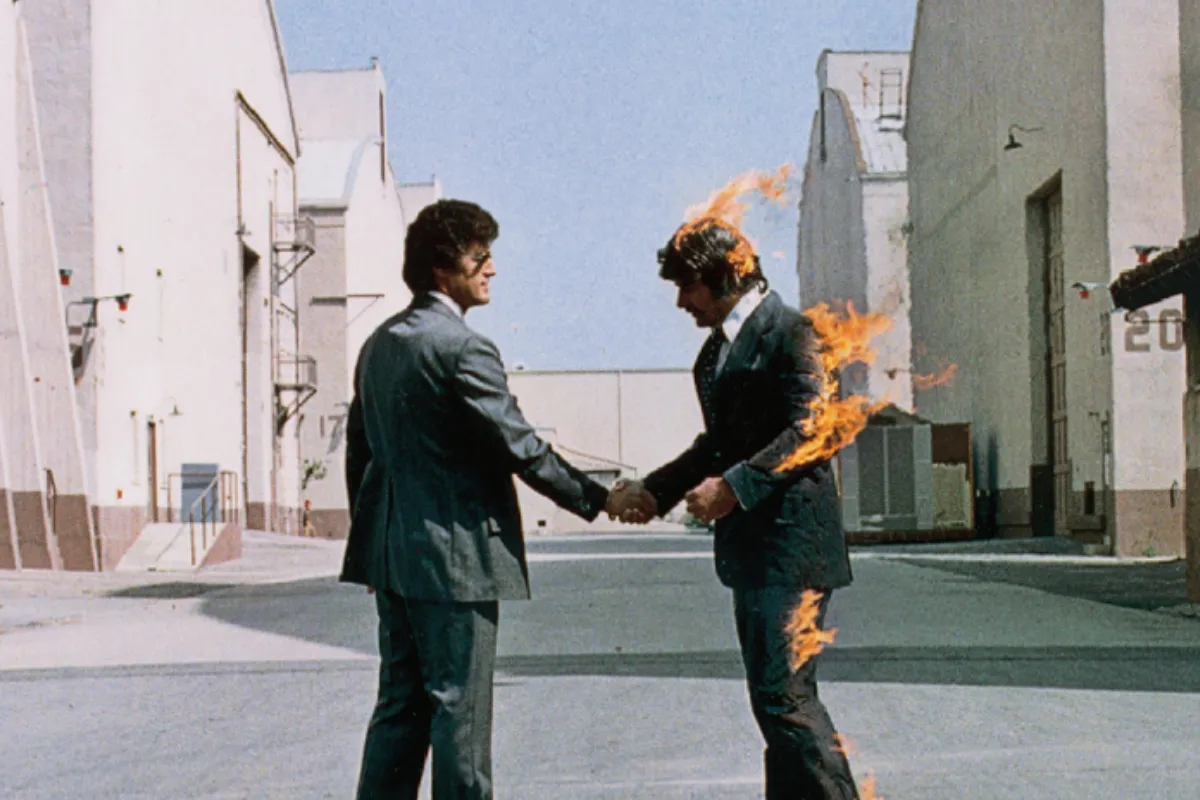
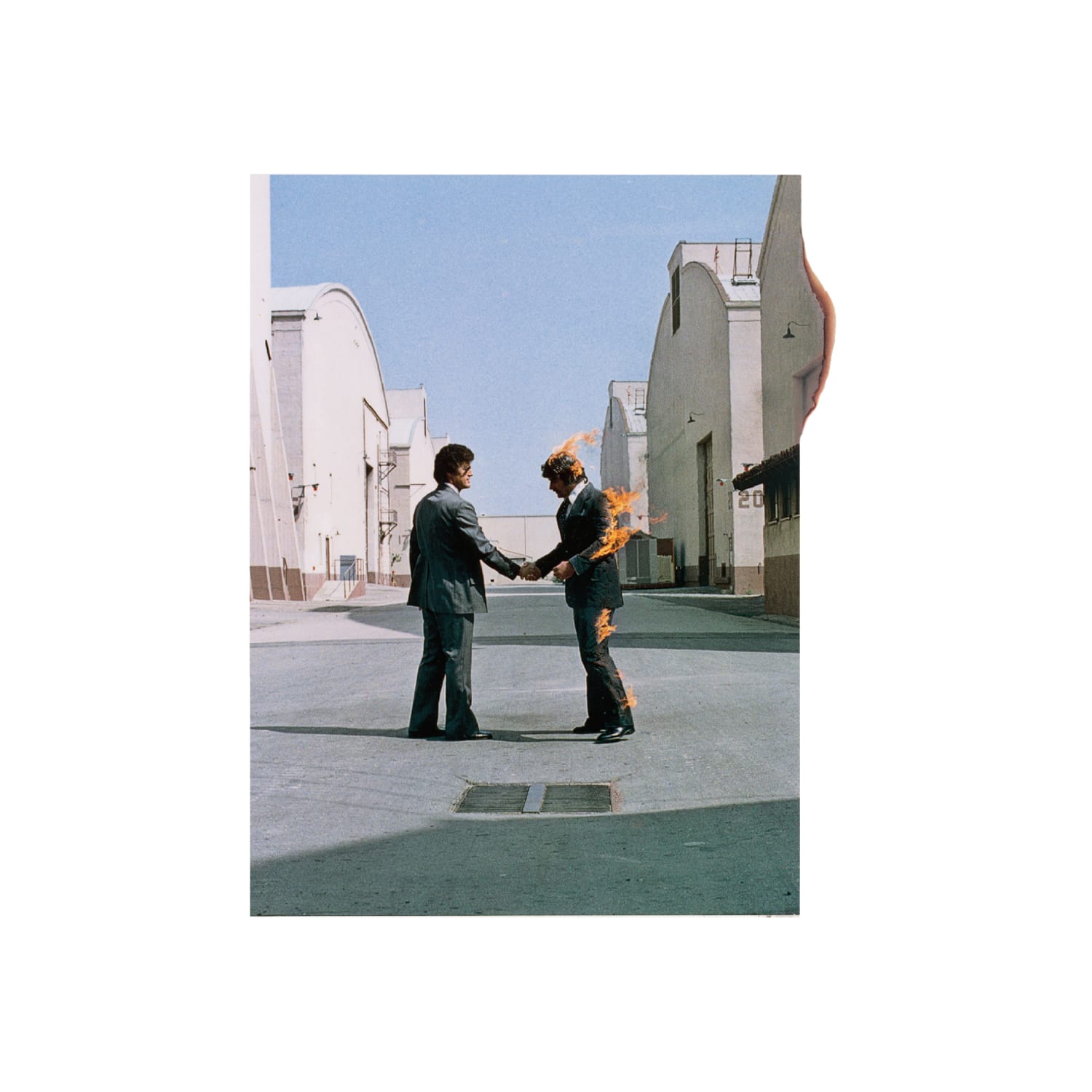
You know the cover. Two men in suits shaking hands. One of them on fire. Against a bright California sky.
I always assumed I understood it. Two businessmen. A deal being done. Someone getting burned. Fine. Move on.
I didn't understand it at all. And I definitely didn't know about the invisible man.
One Word
Storm Thorgerson, co-founder of Hipgnosis, explained his process simply: "We just sit in a very ordinary room, listen to Floyd music, and talk. We discuss what the music feels like to us. Or the intention of the lyrics. Or what the album may really be about, even if the Floyd haven't said it, or don't yet know it."
After lengthy discussions with the band and repeated exposure to the haunting brilliance of Shine On You Crazy Diamond, Thorgerson arrived at a single word that would define everything about the cover of Wish You Were Here.
Absence.
One word. The entire visual concept of one of the most celebrated album covers in rock history distilled into a single syllable. Once you know that word, everything on this cover and everything surrounding it snaps into focus.
The Ghost in the Room
Before we talk about the burning man, we need to talk about why the album exists at all.
Wish You Were Here is, at its heart, about Syd Barrett, the brilliant, troubled co-founder of Pink Floyd who had descended into mental illness in the late 1960s and effectively disappeared from the band's life. By 1975 he was a ghost. Present in the music, in the memories, in the guilt, but physically absent from everything.
On 5 June 1975, on the eve of the second North American leg of their Wish You Were Here Tour, the band were completing the mix of Shine On You Crazy Diamond when an overweight man with shaven head and eyebrows entered, carrying a plastic bag. Waters did not recognise him. Gilmour presumed he was an EMI staff member. Wright presumed he was a friend of Waters. Mason also failed to recognise him. It was Barrett.
Mason recalled Barrett's conversation as "desultory and not entirely sensible." Storm Thorgerson would later reflect: "Two or three people cried. He sat round and talked for a bit but he wasn't really there." According to Gilmour, Barrett "came two or three days and then he didn't come any more."
The man the album was written for walked into the studio while they were finishing it, unrecognised by the people who loved him most. And then he left. And they never saw him again.
That is what absence means on this album. That is what the cover is carrying.
Burning a Man for Real
The central image was inspired by the idea that people often hide their real emotions out of fear of vulnerability, afraid of getting burned if they reveal too much. The two businessmen were inspired by the song Have a Cigar, a slight at industry heads who had lost sight of the big picture in favour of making a quick buck. A handshake, often an empty gesture, between two men, one of whom is literally on fire. Getting burned, in the music industry, is slang for being exploited by a bad deal. Hipgnosis took the metaphor and made it literal.
But how do you photograph a man on fire?
Powell remembered asking the question to Storm. He replied: "I guess you're going to have to burn a man for real."
The photograph was taken at Warner Bros. Studios in California. Two stuntmen were used; Ronnie Rondell Jr. and Danny Rogers. Rondell was dressed in a fireproof suit covered by a business suit, with a hood beneath a fireproof wig and fire resistant gel applied to him.
After fourteen successful takes, the wind changed direction on the fifteenth, singed Rondell's moustache and he threw himself to the ground. His team smothered him with extinguishers and blankets. He said: "No more." That was enough. The iconic shot had been immortalised.
The shoot took place at Warner Bros. Studios, the land of make believe, where nothing is real and all is absent. Thorgerson chose the location deliberately. Even the backdrop was a lie.
The Invisible Man
Now, the invisible man. The detail I didn't know about. The detail most people don't know about.
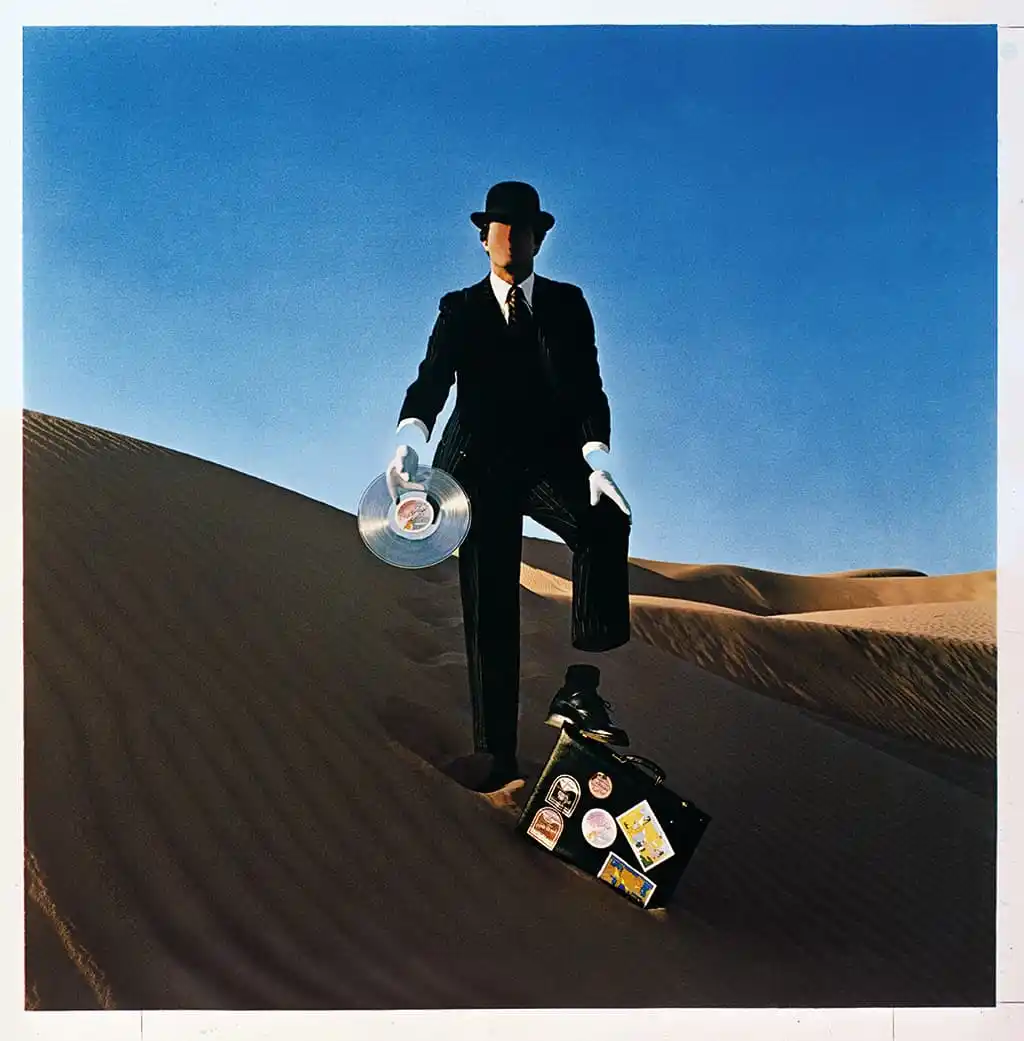
On the back cover there is an image of a man in a suit, only the man's body, facial features and limbs are invisible. It's just an empty business suit.
A Floyd salesman, Thorgerson called him. Selling his soul in the desert. The absence of wrists and ankles signifies his presence as an empty suit.
No face. No hands. No feet. Just a suit standing in the Yuma Desert in California, holding a transparent record. A man so consumed by the music industry that he has ceased to exist as a human being. Only the suit remains.
That is the invisible man. Not a ghost. Not a trick of the light. A deliberate, carefully constructed image of total human absence; the logical endpoint of selling your soul to the machine.
The Album You Couldn't See
And then Thorgerson did something that no record company wanted and every record buyer found deeply unsettling.
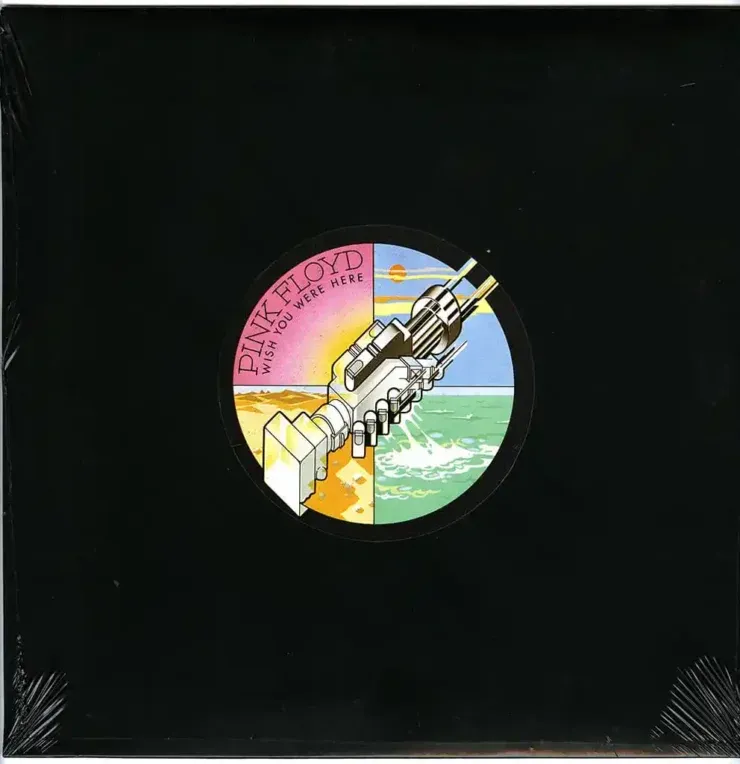
He concealed the artwork for Wish You Were Here in a black coloured shrink wrap, making the album art absent. A sticker of two mechanical hands engaged in a handshake was placed on the opaque sleeve.
Pink Floyd fans rushed into stores on September 12 1975 to get their copies of Wish You Were Here. They found a mysterious package wrapped in a black plastic shrink cover, with only a round label featuring a robotic handshake. Some, too eager to get to the music, sadly ripped it off.
Columbia Records in America rejected the idea completely. But they were overruled. The artists' choice prevailed.
Nick Mason summed it up perfectly: "I suspect we probably enjoyed the shrink-wrapping more for the trouble it caused in the boardroom than its artistic excellence."
The Four Elements
Here is one final detail that most people never notice.
The sticker on the shrink wrap represented a mechanical handshake over a background representing the four elements; a teaser for the cover inside. The flaming man handshake represents Fire. The faceless man in the desert: Earth. The Mono Lake still diver: Water. And the floating red scarf: Air.
Four elements. Four images. One word, absence, running through all of them. A diver entering water without making a splash. A veil floating in the wind over nothing. A faceless man in the desert. A burning man shaking hands with someone who doesn't flinch.
Storm Thorgerson built an entire visual universe around a single word. And then he hid it inside a black plastic bag and let you find it yourself.
What It Actually Means
I thought I understood this cover. Two businessmen. Someone getting burned. Fine.
But the cover of Wish You Were Here is about absence in every possible sense. The absence of Syd Barrett, the absence of genuine human connection, the absence of honesty in the music industry, the absence of the self when the machine has finished with you.
The invisible man on the back cover is the most honest image on the whole sleeve. No face. No hands. No feet. Just a suit in the desert.
Storm Thorgerson once explained the cover's haunting power: "What's the worst thing you can say to someone? Wish you were here."
Three words. One album. One word that explains everything.