The Disco Ball Horse
Renaissance by Beyoncé - A woman on a horse. A silver bodysuit. The whole thing glowing and otherworldly.
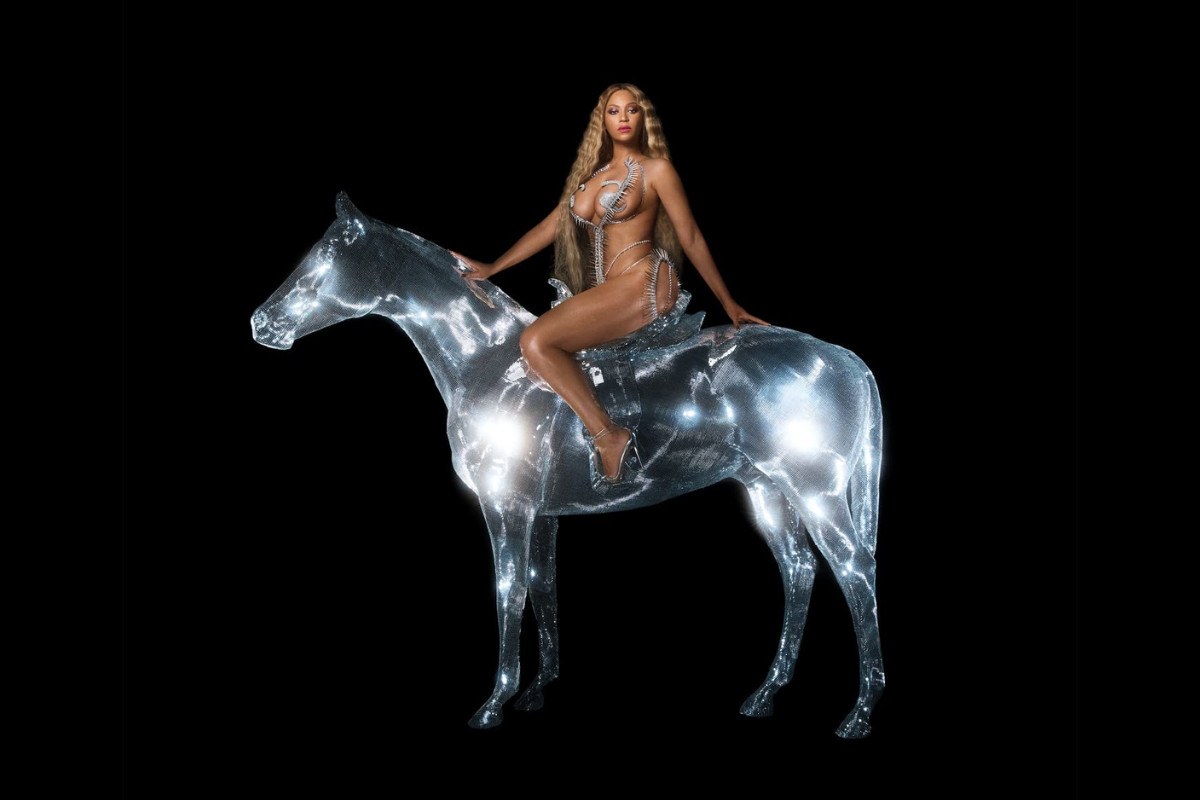

When I first saw the cover of Renaissance on the internets in the summer of 2022 and my first thought was: well, this is different. A woman on a horse. A silver bodysuit. The whole thing glowing and otherworldly. I didn't quite know what to make of it. And then I asked myself a question that felt more interesting than the cover itself.
What was I expecting?
I couldn't answer that. Which told me something. It told me that Beyoncé had done exactly what the best album covers always do; she had made me stop. Made me look. Made me wonder. And made me ask questions I hadn't thought to ask before.
It is covers like this one that made me want to create Art Before Noise. You can thank Beyoncé.
| Album | Renaissance |
| Artist | Beyoncé |
| Released | July 29, 2022 |
| Label | Parkwood Entertainment / Columbia Records |
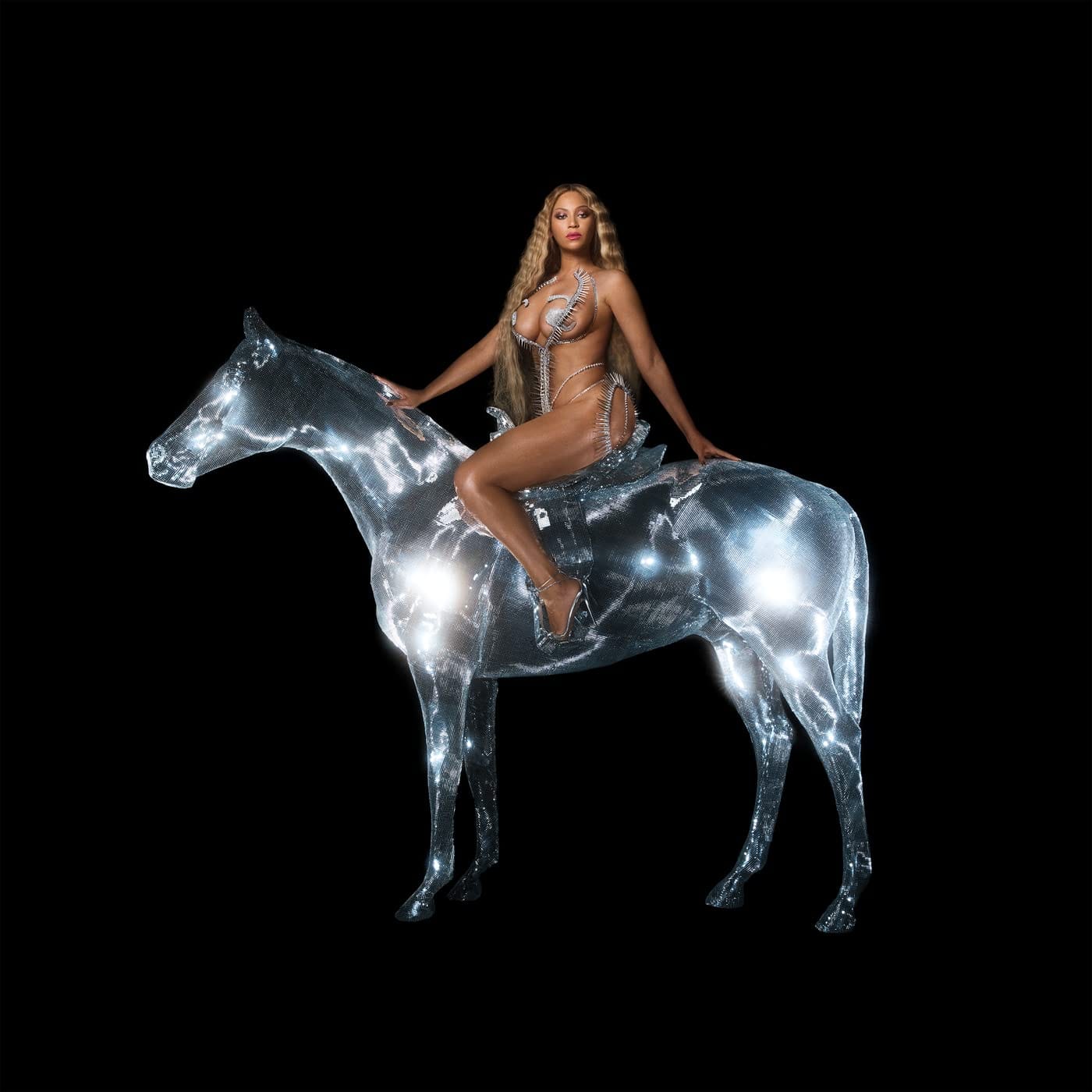
| On the cover | Beyoncé seated on a mirrored disco ball horse, wearing a 3D-printed silver bodysuit |
| B-Side | A mirrored horse called Reneigh, and a pose that echoes an 11th-century tax protest. |
| Design | Bodysuit by Nusi Quero |
| Photography | Carlijn Jacobs |
| Genre | Pop |
| Decade | 2020s |
| Buy It | Amazon |
The Horse
Let's start with the horse. Because the horse is the thing everyone probably notices first. Maybe.
Shot by Dutch photographer Carlijn Jacobs, the image depicts Beyoncé seated atop a mirrored disco ball horse, dubbed "Reneigh" by fans, while wearing a 3D printed silver bodysuit designed by Nusi Quero. The helix shaped piece is adorned with spikes and embellished with crystals.
The horse is not real. It is a sculptural object. A holographic, crystalline, mirrored creation that sits somewhere between a fairground ride and a fine art installation. On June 30th, 2022 Beyoncé took to her social media accounts and revealed the captivating album art which featured a radiant, holographic crystal horse with herself seated atop it donning an outlandish futuristic bikini.
The immediate reaction online was (predictably) a mixture of awe, confusion and delight. And then someone noticed something.
Lady Godiva and Studio 54
Fans immediately noted on social media that the cover resembles a famous 19th century painting. The cover, which features a scantily clad Beyoncé astride a silvery horse, is strikingly similar to John Collier's 1880 painting Lady Godiva, which depicts a naked woman from Anglo-Saxon mythology.
According to legend, Lady Godiva rode a horse naked in the 11th century to protest her husband Leofric's plans to impose a harsh tax on the citizens of Coventry, England. A woman on a horse as an act of defiance. A woman on a horse as a statement of power. The parallel is hard to ignore.
But there is a second reference, closer to home and closer to the album's themes. Critics postulated that the equestrian pose was likely inspired by images of Bianca Jagger riding into Studio 54 on a white stallion.
Studio 54. The legendary New York nightclub that opened in 1977 and became the epicentre of disco culture. A place where Black artists, queer communities, and the cultural avant-garde came together on a dancefloor and created something that changed popular music forever.
That reference is not accidental. Nothing about Renaissance is accidental.
What The Album Is Actually About
To understand the cover of Renaissance you need to understand what the album itself is doing. Because the two are inseparable.
Beyoncé conceived and recorded Renaissance during the COVID-19 pandemic, intending to inspire joy and escapism in listeners after a period of collective isolation. The album celebrates the club culture that served as a refuge for Black and queer communities, and pays homage to the pioneers who shaped those spaces. Arranged like a continuous DJ mix, Renaissance incorporates post-1970s Black dance music styles, such as disco, house, and funk, and pays homage to the overlooked contributions of the pioneers who shaped those genres.
In Beyoncé's own words: "Creating this album allowed me a place to dream and to find escape during a scary time for the world. It allowed me to feel free and adventurous in a time when little else was moving. My intention was to create a safe place, a place without judgment. A place to be free of perfectionism and overthinking. A place to scream, release, feel freedom."
The cover, then, is not just an image. It is a visual manifesto. A woman on a horse; powerful, otherworldly, unapologetically present, announcing an album that is fundamentally about freedom. About dancing. About joy as an act of resistance.
The glittering disco ball horse makes complete sense once you understand that.
The Photographer
Carlijn Jacobs is a Dutch photographer whose work sits at the intersection of fashion, fine art and surrealism. She has shot campaigns for Dior, Prada and Valentino and her editorial work has appeared in Vogue, W Magazine and i-D.
Her aesthetic; bold, sculptural, slightly otherworldly, is a perfect fit for what Renaissance required. This was not a cover that needed naturalism or intimacy. It needed grandeur. It needed something that felt like it existed in a slightly different universe from the one we inhabit.
Jacobs delivered exactly that. The lighting, the angle, the way Beyoncé's bodysuit catches and reflects the crystalline surface of the horse; every element of the image feels considered and precise. This is not a happy accident. This is a photograph that knew exactly what it was doing.

The Bodysuit
The silver bodysuit deserves its own moment. Designed by Nusi Quero, a Los Angeles based designer known for his sculptural, body conscious work, the helix shaped piece is adorned with spikes and embellished with crystals.
It is 3D printed. In 2022. On the cover of one of the most anticipated albums in years. The future of fashion and the history of disco, occupying the same image simultaneously.
Quero has spoken about the design as an extension of Beyoncé's body rather than something placed on top of it; a second skin that transforms rather than conceals. The spikes are not aggressive. They are armour. Protection. Power.
A woman in armour on a disco ball horse. Referencing Lady Godiva and Bianca Jagger in the same breath. Making an album about Black queer club culture during a global pandemic.
Once you see all of that, the cover looks completely different from your first glance.
What The Cover Actually Says
Here is the thing about the Renaissance cover. My first reaction was: well, this is different. And I couldn't tell you what I was expecting instead.
Now I think that was the point.
Beyoncé has spent her entire career defying expectations. Shifting from R&B to pop to country to disco without ever losing the thread of what makes her singular. The Renaissance cover doesn't explain itself. It doesn't meet you halfway. It sits there on its disco ball horse, in its crystalline armour, and it waits for you to catch up.
The Lady Godiva reference tells you this is about power. The Studio 54 reference tells you this is about joy. The disco ball horse tells you this is about dancing your way through the difficult parts. And the 3D printed bodysuit tells you this is about the future; built from the past, worn on the body, pointed forward.
I didn't know what I was expecting when I first saw this cover.
I know now. I was expecting something ordinary. And Beyoncé has never done ordinary.