In 2010 I was listening to a lot of rap. My Beautiful Dark Twisted Fantasy was in the rotation. I knew the songs. I knew the album. But if you'd asked me then what was actually happening on that cover; who made it, why it looked the way it did, why some versions of it were pixelated beyond recognition, I couldn't have told you.
I just thought it was Kanye being Kanye.
Which is both entirely correct and completely insufficient as an explanation.
Album Anatomy
| Album | My Beautiful Dark Twisted Fantasy |
| Artist | Kanye West |
| Released | 22 November 2010 |
| Label | Roc-A-Fella Records / Def Jam Records |
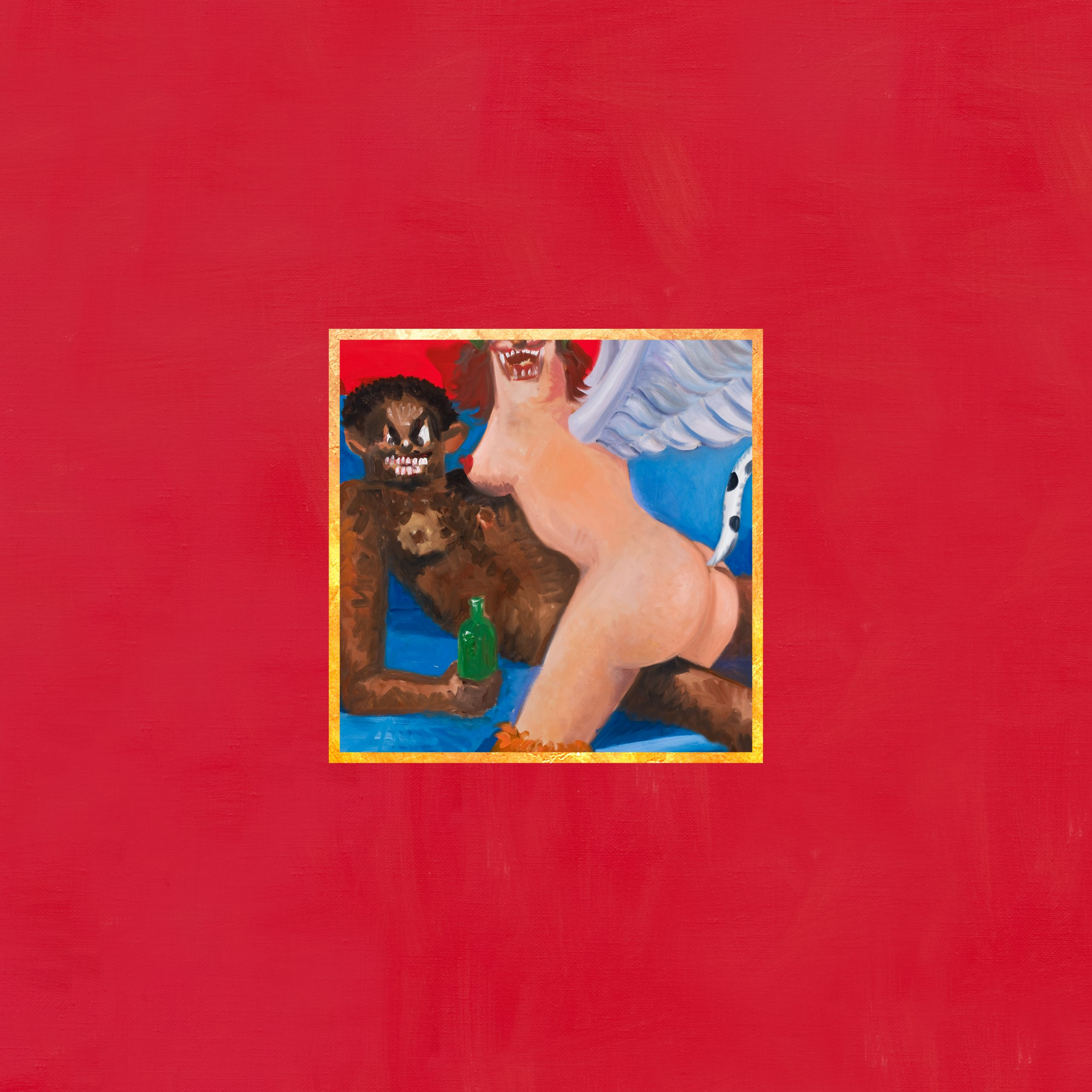
| On the cover | A painting of West being straddled on a couch by an armless, winged, tailed female figure; part sphinx, part phoenix, part harpy. Both figures nude, West holding a beer |
| Design | Painting by George Condo |
| Decade | 2010s |
Hawaii, Exile and a Backhanded Apology
Before we talk about the cover, we need to briefly talk about where this album came from. Because the context matters.
Retreating to a self-imposed exile in Hawaii after a period of controversy in 2009 following his interruption of Taylor Swift at the MTV Video Music Awards, West recorded at Honolulu's Avex Recording Studio in a communal environment with numerous musicians.
West said that My Beautiful Dark Twisted Fantasy served as a backhanded apology after his VMAs outburst, detailing that he used the music to become accepted again. In his own words to The New York Times in 2013: "Dark Fantasy was my long, backhanded apology. You know how people give a backhanded compliment? It was a backhanded apology. It was like, all these raps, all these sonic acrobatics. I was like: 'Let me show you guys what I can do, and please accept me back.'"
An artist in exile, making the album of his life, as a form of apology. That energy runs through every element of MBDTF, including the cover.
Enter George Condo
For the album artwork, West turned to George Condo; an American contemporary artist whose work sits at the intersection of Abstract Expressionism, Cubism and what he himself calls psychological Cubism. Condo had shown at major galleries worldwide and was represented by some of the most prestigious dealers in the art world. He was not, in other words, a commercial illustrator hired to do a job. He was a serious fine artist brought in to make something serious.
West came to Condo's studio between eight and ten times over the course of the summer. The artwork was done at Condo's studio, after West visited for several hours and they listened to tapes of his music. Over the next few days, the painter designed eight or nine paintings for the album.
Not one. Eight or nine. A body of work built around a single album. That level of artistic investment was incredible and it showed in the results.
The Cover Itself
The album's artwork shows West being straddled on a couch by an armless winged female, who has fearsome features and a long, spotted tail. Both are nude, with West shown holding a beer.
Condo's own description of what he painted is one of the great pieces of art criticism ever written about a piece of art criticism: "She's a kind of fragment, between a sphinx, a phoenix, a haunting ghost, a harpy. And then Kanye is also in some sort of strange 1970s burned-out back room of a Chicago blues club having a beer, so far away from the real Kanye West that it's just a scream."
In painting Kanye in such an outrageous situation, Condo says: "I was challenging him with the imagery as well. He said, 'I'm shocked, but I like it, and I gotta go with my gut feeling.'"
Shocked but going with his gut. That is, in four words, the creative philosophy of My Beautiful Dark Twisted Fantasy in its entirety.
The Ballerina
Before we get to the ban, there is another cover worth knowing about. Because the main cover, the phoenix, the harpy, the beer, was not the only option on the table.
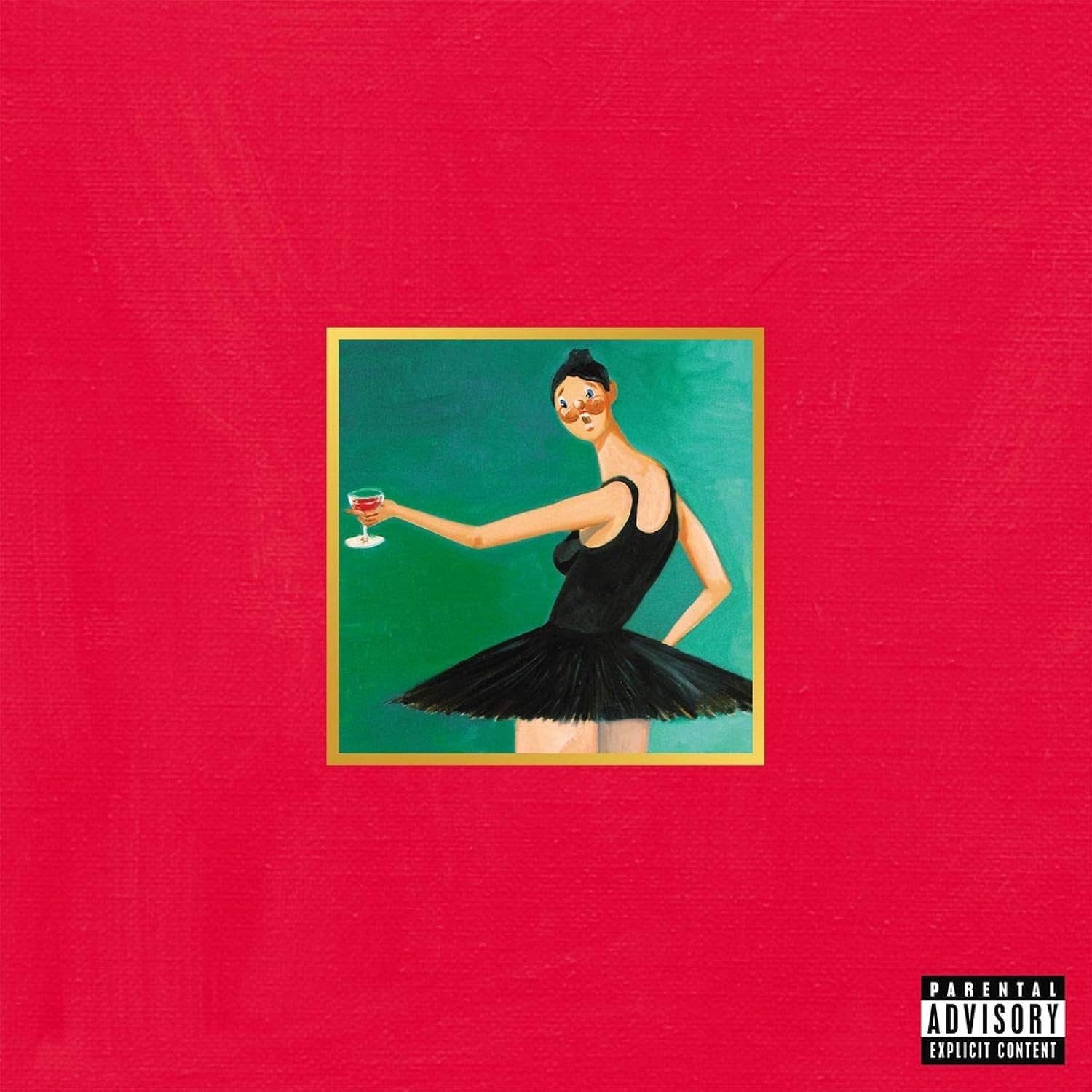
The ballerina concept came from one of those studio visits. "We were hanging around one night, and we were listening to that tune 'Runaway,'" Condo recalls, when his wife Anna showed West a shot of French dancer Sylvie Guillem moving in slow motion. "And somehow Kanye grabbed onto that idea of the ballerina," Condo explains. "He just said, 'Hey man, I'd like to have a great ballerina painting.' I thought of a ballerina toasting. You know, 'let's toast to the scumbags.'"
The ballerina painting became one of the alternate covers. It also worked its way into the Runaway short film and West's performance at the VMAs. An image born from a slow motion clip of a French dancer watched late at night in a New York studio ended up defining the entire visual language of the album's promotional campaign.
The Ban
According to Condo, West requested the original cover image to be provocative enough to be banned by retailers, as a publicity stunt. Again, Kanye being Kanye.
Yep, he commissioned a cover specifically designed to get banned. And then when it got banned, he took to Twitter: "Yoooo they banned my album cover!!!!! Banned in the USA!!! They don't want me chilling on the couch with my Phoenix!"
West also cited the case of Nirvana's 1991 album Nevermind, which featured a photo of a naked baby, questioning why the band are allowed to have someone nude on their cover, but he "can't have a PAINTING of a monster with no arms and a polka dot tail and wings".
The Nirvana comparison is an interesting one. A painted mythological creature is arguably less confronting than a photograph of a real naked infant. The ban was, as Condo himself suggested, more about perception than genuine offence.
Condo's response to the ban was characteristically blunt: "The superimposition of people's perceptions on a cartoon is shocking. What's happening in their minds should be banned."
The Pixels
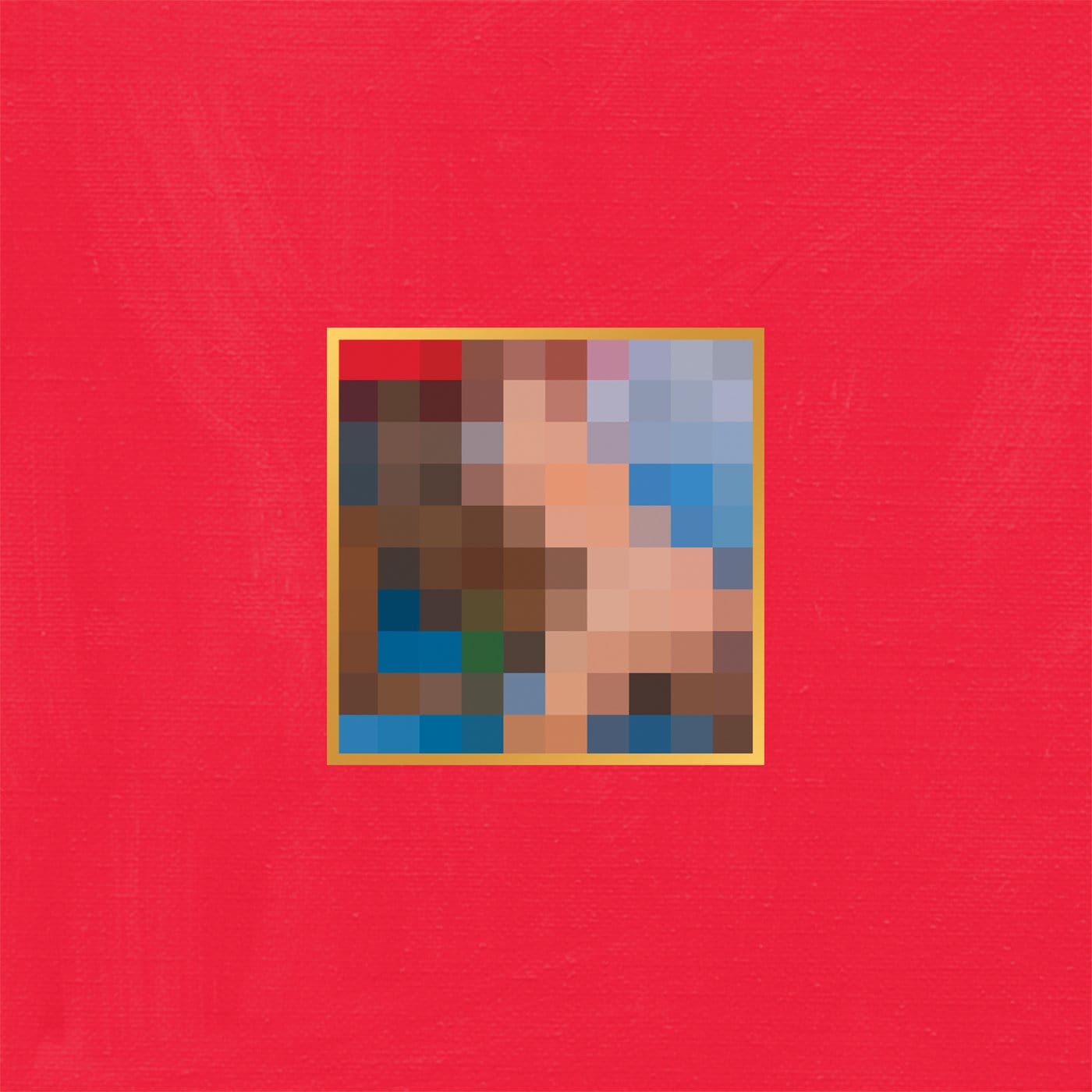
The response to the album was clear: it was banned from the shelves of Walmart and comically pixelated on iTunes to protect us from the cover's erotic allure.
The pixelation was applied to streaming and digital versions of the album, blurring the central figures into abstraction while leaving the painting's fiery red background and overall composition intact. The result is something that looks like a glitch. A deliberate corruption. An image that has been censored so aggressively it becomes more interesting than the original.
Which is exactly what Kanye wanted. A cover that gets banned generates more attention than a cover that doesn't. A pixelated image makes you want to see the unpixelated version immediately. The censorship became part of the art before the noise.
What The Cover Actually Says
Here is what I think about the MBDTF cover now, as someone who was listening to this album in 2010 without knowing any of this.
It is a cover made by a serious fine artist working with a serious musical artist at the peak of his powers, designed to say something uncomfortable about fame, mythology, power and the price of public life. The harpy straddling Kanye on a couch is not just a provocative image. It is a visual metaphor for what fame does to a person; consuming, overwhelming, and impossible to escape.
The cover was banned. Pixelated. Debated. And the album underneath it was called the best of the decade by multiple publications. Several publications, including Pitchfork and Rolling Stone, have ranked it as the best album of the 2010s and among the greatest of all time.
I thought it was just Kanye being Kanye.
It was. But Kanye being Kanye producing one of the most ambitious and deliberate album covers of the 21st century.