The 1970s was a decade that asked female artists a very specific question. How much of yourself are you willing to show?
Some answered with paintings; Joni Mitchell put her own art on her covers and kept herself at arm's length. Some answered with intimacy; Carole King sat barefoot in her own home and invited you in for coffee. And some answered with something more complicated; a controlled provocation that was neither submission nor withdrawal.
Carly Simon answered differently every time. And across six albums in the 1970s, she produced one of the most visually interesting (and occasionally most debated) bodies of cover art of the decade.
Here are six of them.
Carly Simon (1971)
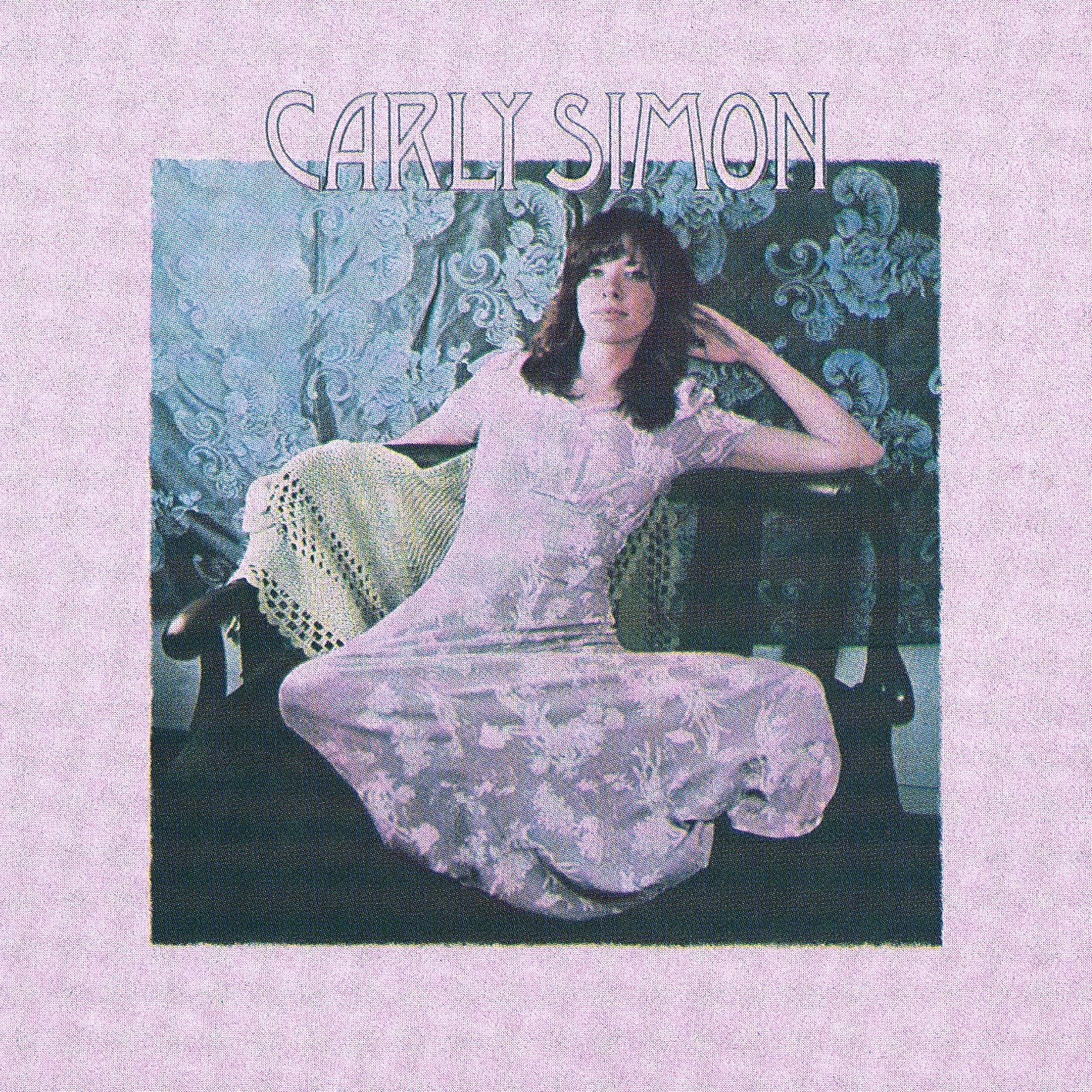
The debut. A young woman photographed in warm tones, her dark hair loose, her expression open and direct. Nothing remarkable about it by the standards of 1971; a singer-songwriter portrait that did exactly what was expected of it.
But look more carefully. The directness of the gaze. The absence of any styling that distances her from the camera. This is not a performer presenting herself. This is a person, looking at you, asking you to look back.
It established the template for everything that followed; Carly Simon on her own terms, presenting herself without artifice. The covers that came after pushed that template in increasingly interesting directions.
Anticipation (1971)
Two albums in one year. And this one is a significant step forward.
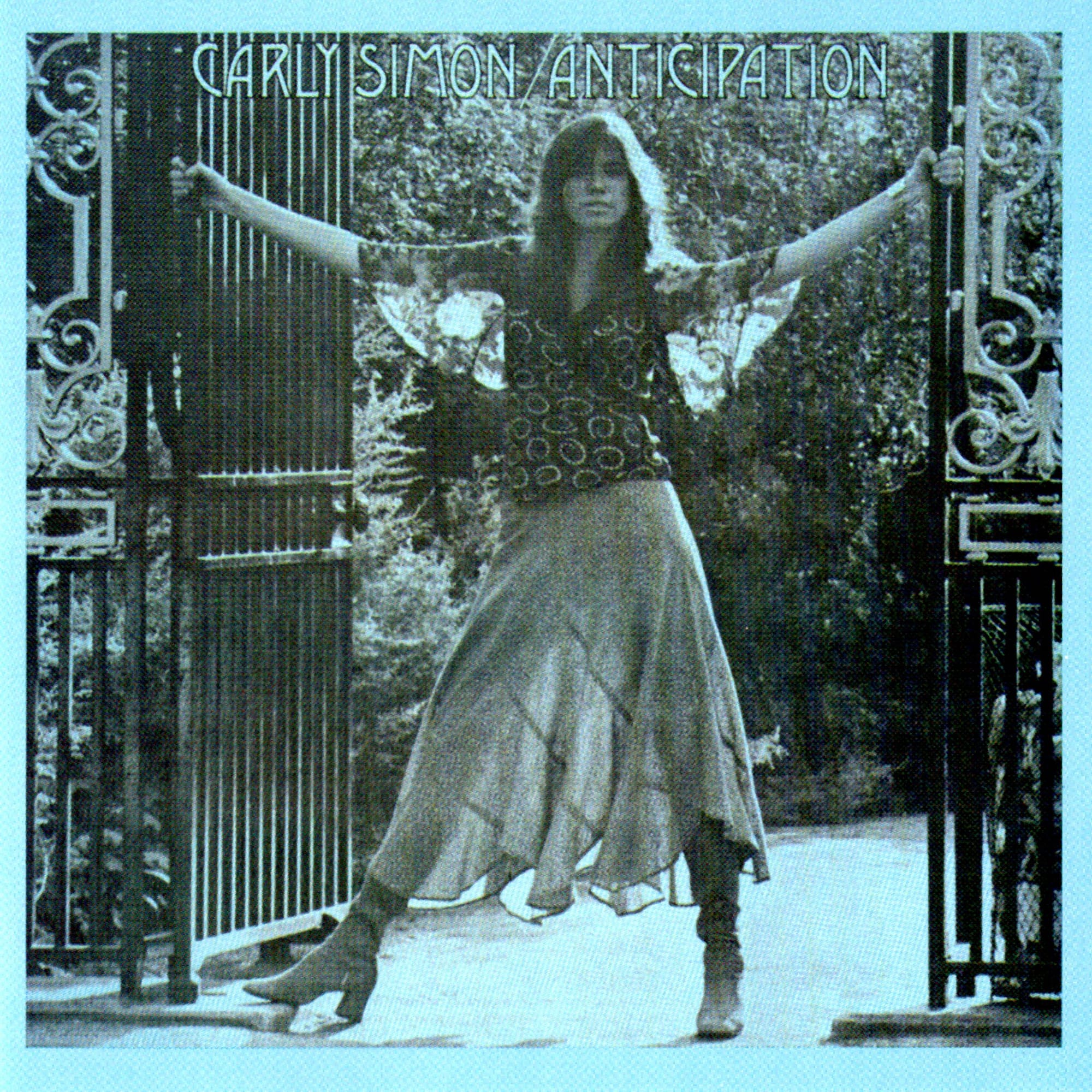
The green-coloured photograph was taken in London, England at the gates of Queen Mary's Garden in Regent's Park. That pose became one of the most popular photographs of the early 1970s. Peter Simon was responsible for taking the photograph.
A woman grasping at iron gates, slightly tousled, the green tint of the image giving the whole thing a dreamy, slightly otherworldly quality. It looks like a moment caught rather than a moment staged. It's the kind of photograph you take when someone isn't quite ready and the result is better than anything they could have posed for.
Late in the summer of 1971, Carly Simon went to London to record Anticipation. It was there, at the gates to Queen Mary's Gardens. She was twenty six years old and had two albums out in the same year. The open gates behind her, slightly imposing, slightly romantic, feel like a metaphor for everything that was about to open up.
No Secrets (1972)
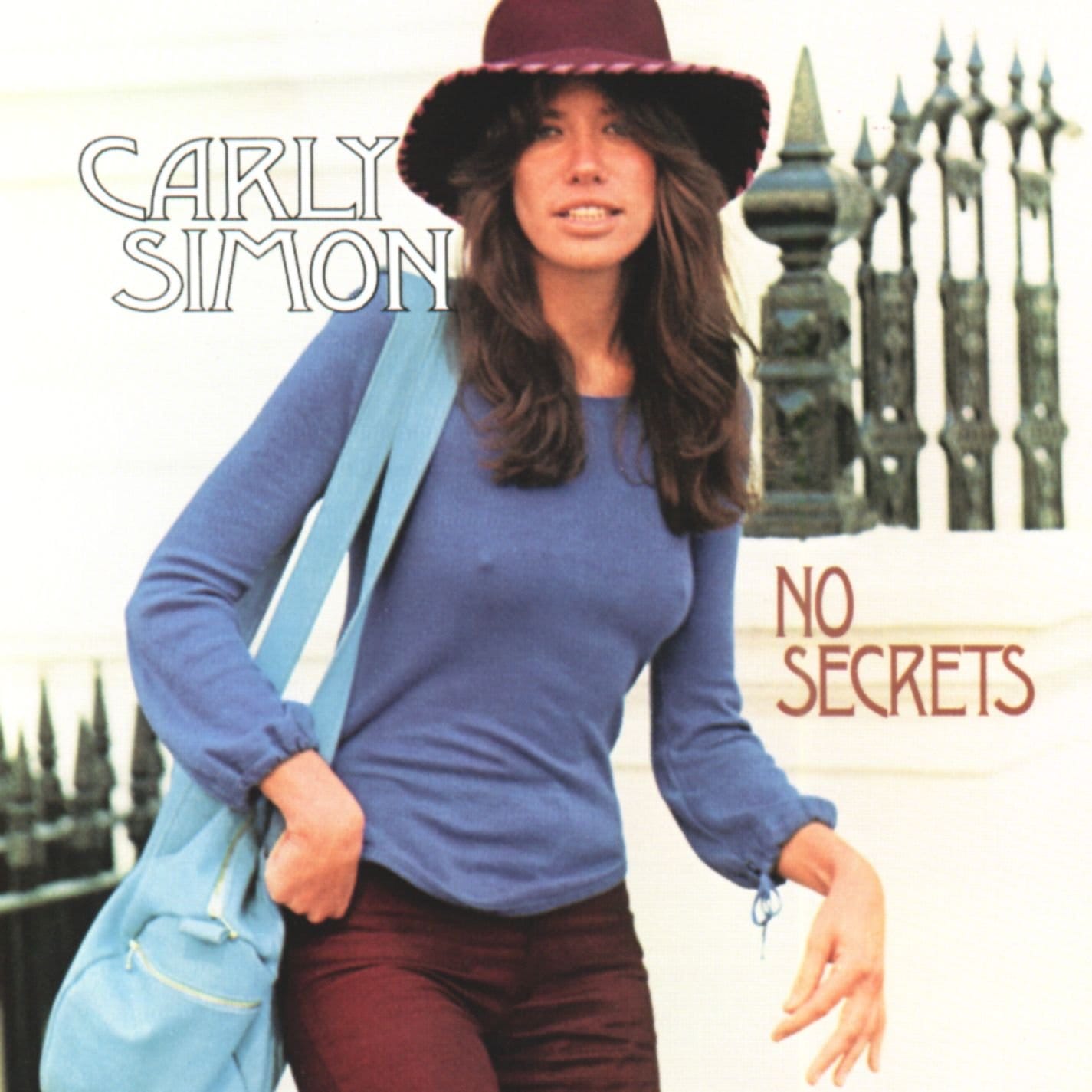
The album that contained "You're So Vain". The album that made Carly Simon a genuine superstar and spent five weeks at number one on the Billboard chart. And the cover: not a portrait but a snapshot. Carly in a floppy maroon hat and a blue top, a pale blue bag slung over one shoulder, in front of a white townhouse with black iron railings behind her. Nothing staged, nothing hidden.
That's the story, really. Photographer Ed Caraeff took it more or less on the fly outside the Portobello Hotel in London's Notting Hill, as she was leaving and about to climb into a cab. She wasn't wearing a bra, and it shows. There was some talk of airbrushing that out. She decided she was comfortable with it, and it stayed. Suddenly the album title reads as both a wink and a dare.
The "You're So Vain" mystery has never been fully solved either. Mick Jagger sang backing vocals. In 2015 Simon confirmed that the second verse is about Warren Beatty, who by her account thinks the whole song is about him. She has said it covers three men and has never named the other two. The cover gives nothing away and hides nothing. Just Carly Simon, looking straight down the lens, knowing exactly what she knows and not telling you any of it.
Hotcakes (1974)
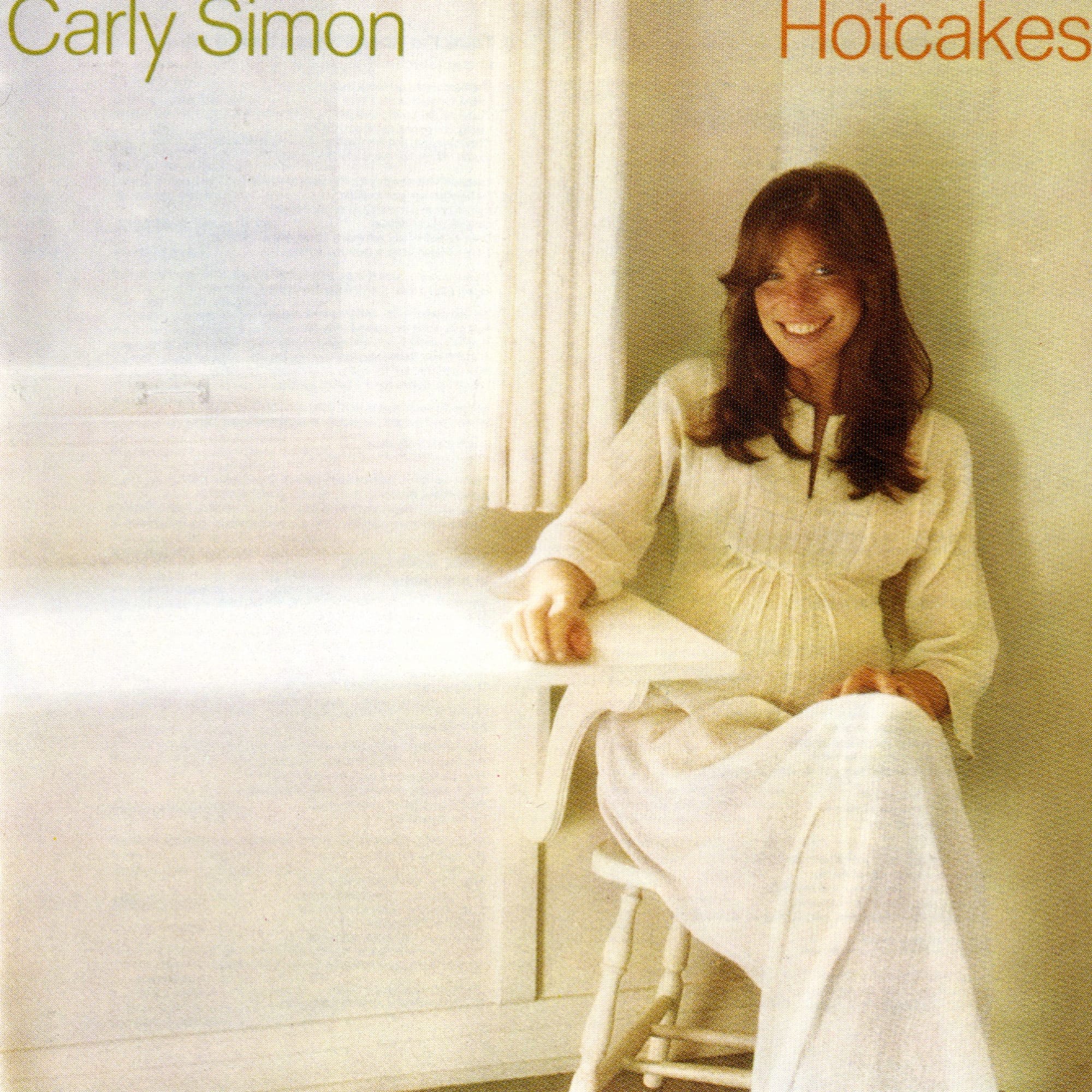
And then she did something that almost nobody in mainstream pop had done before.
She put herself on the cover of her album of Hotcakes while visibly, unmistakably pregnant. It would have been so business as usual to cover up the pregnancy on the album cover, but once again Carly comes out with a cover that says here I am world.
In 1974, pregnancy was not something female artists put on album covers. It was hidden, worked around, airbrushed out of the public image. Carly Simon did the opposite; a warm, smiling portrait of a pregnant woman, completely comfortable in her own body, completely unbothered by anyone's expectations of what a pop star should look like.
It remains one of the most quietly radical album covers of its era. Her glowing smile alone is a manifesto.
Playing Possum (1975)
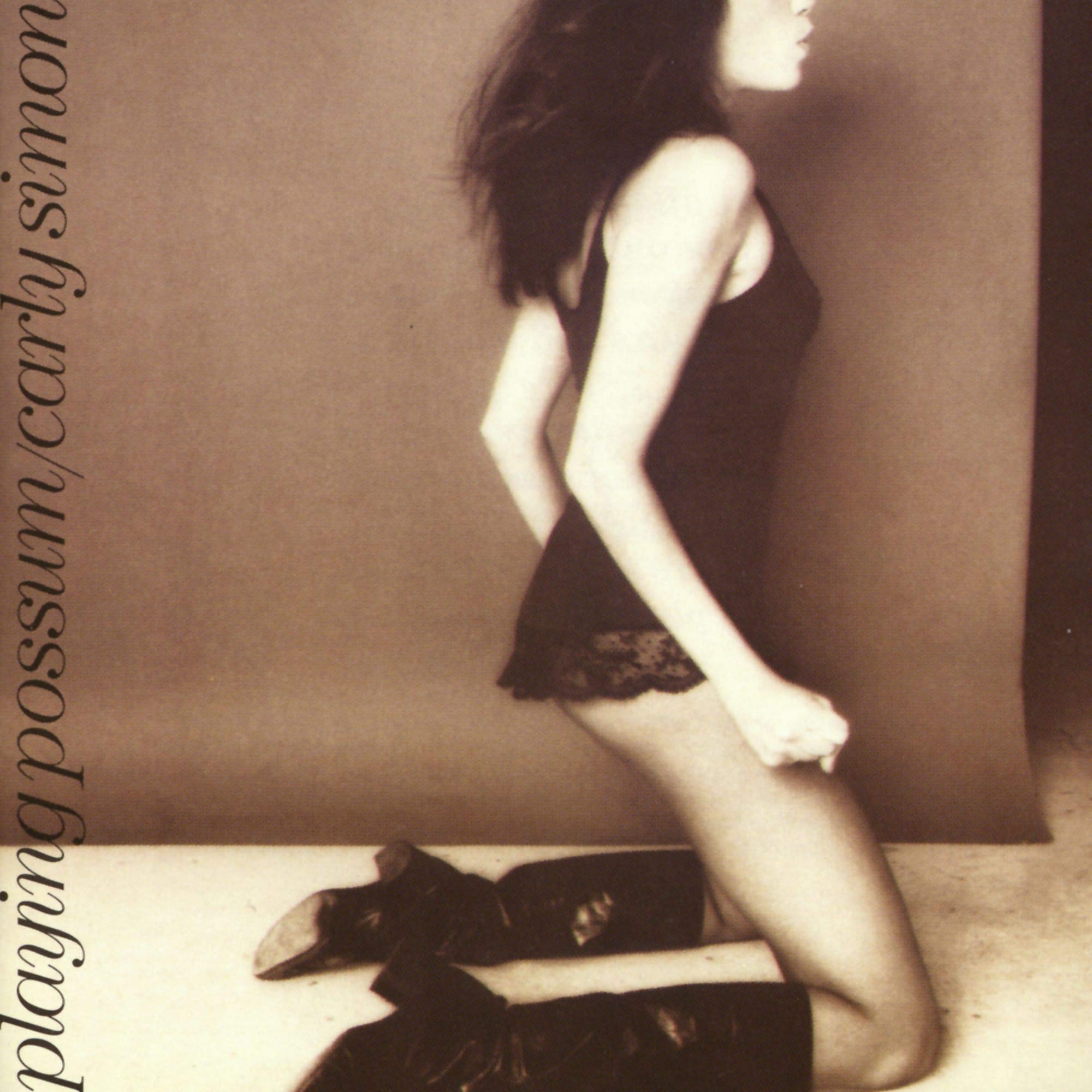
And then, Playing Possum.
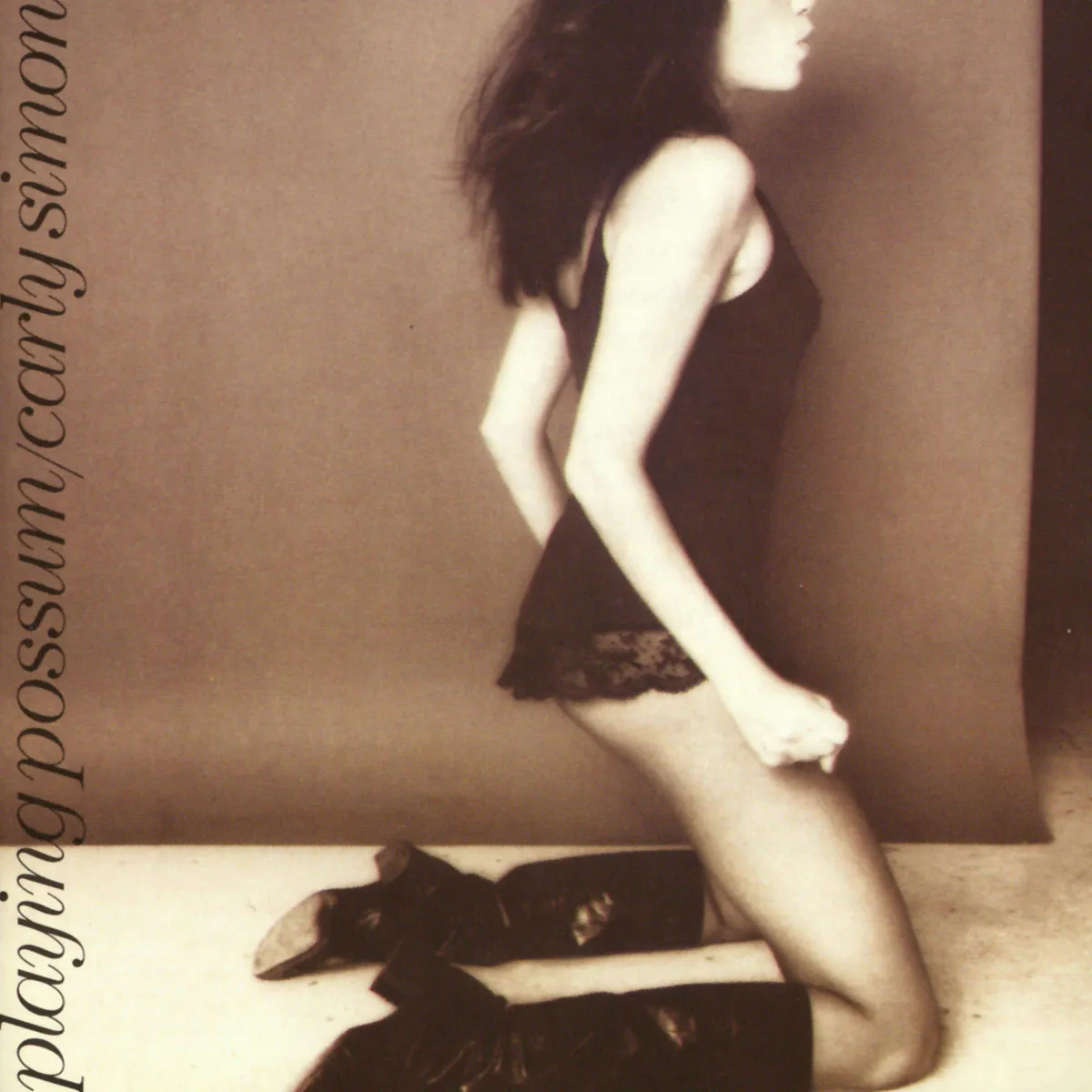
The most provocative aspect was its black and white cover photo. Simon, on her knees, looking fierce and mysterious in a black negligee and black boots, fists clenched, face partly hidden, mouth slightly open.
The polar opposite of the warm, pregnant Hotcakes cover. Everything contained. Everything controlled. Everything slightly dangerous.
The negligee has a story. Simon recalls how her daughter grabbed at the black lingerie and pulled it into the carrier with her while she was looking through racks of undergarments in a department store in New York. The cover that defined her most provocative moment started with a toddler grabbing at lingerie in a shop.
Photographer Norman Seeff shot the session. Simon admitted that there were much wilder shots from her session with Seeff. That clenched fist suggests she is holding back rather than giving all, and her dance to the edge of the studio backdrop also indicates a border that will not be passed. This is an image of her own controlled abandon and strength.
It's not cheesecake, it's power. It's not a pose, it's a provocation.
Boys in the Trees (1978)
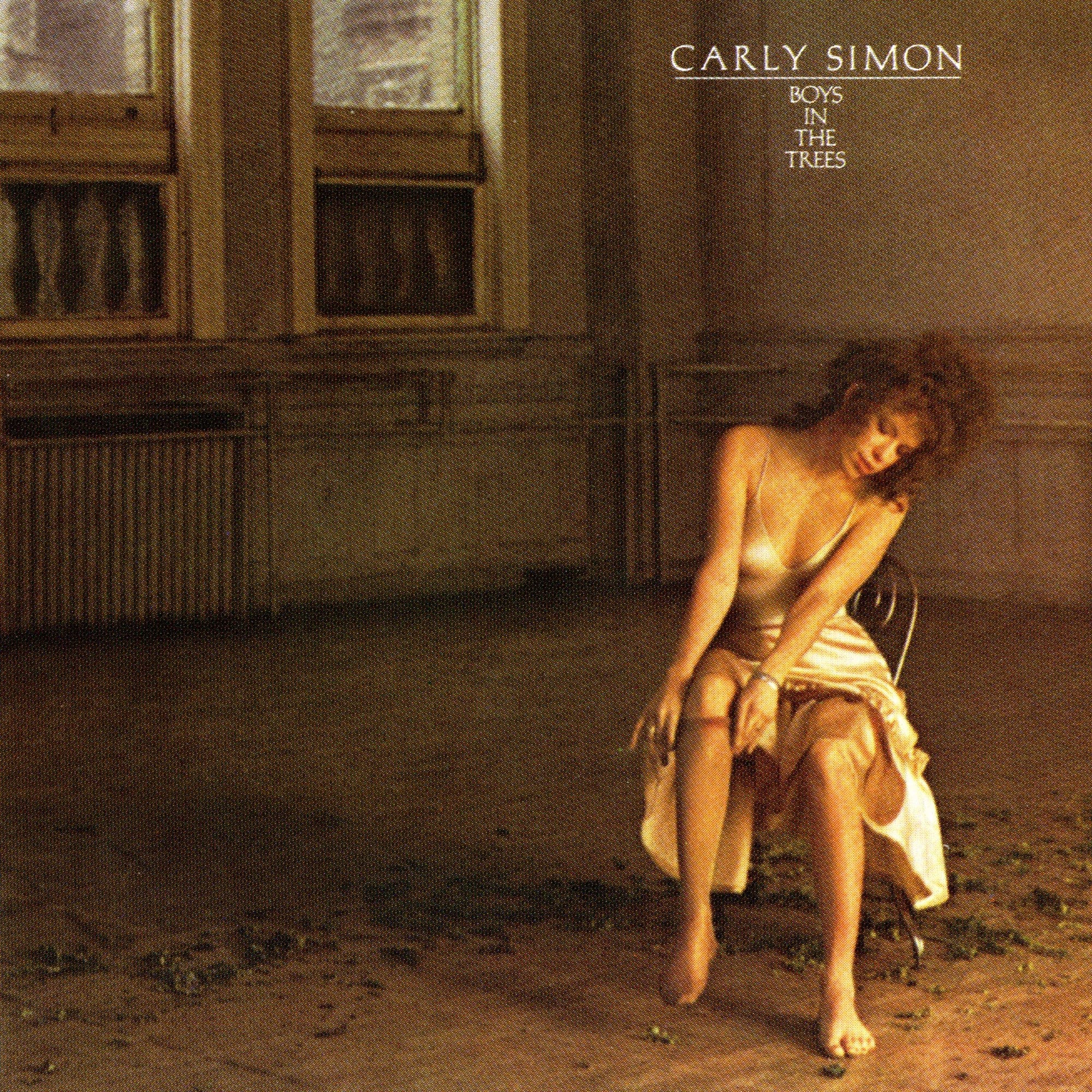
The decade closer, or near enough. A quieter, more melancholy image, and a long way from the woman striding down a London street on No Secrets. Carly sits barefoot on a metal chair in a big, empty room, head bowed, hands adjusting her stockings, the light turning everything amber. Peeling walls, tall windows, a radiator, leaves and dirt across the floorboards. It's quieter than Playing Possum and a lot more vulnerable.
Boys In The Trees came out in April 1978. The cover was Simon's own idea, built around the title song. She'd imagined being photographed in a child-sized bed with huge, threatening trees outside. The photographer, Deborah Turbeville, came up with the more surreal setting, a ballet studio. By this point Simon had navigated a decade of shifting expectations, from debut singer-songwriter to superstar to provocateur to mother. To my eye, the cover doesn't show someone who has come out the other side so much as someone still working it out.
The 1970s began with a woman at a gate, waiting. They ended with a woman alone in an empty room, thinking it over.
What The Carly Simon Covers Actually Say
Look across these six covers and you see a decade of deliberate self-presentation. A female artist who understood that the cover was a statement before the music was a statement, and who made a different statement every time.
Pregnant. Provocative. Intimate. Controlled. Dreaming. Remembering.
Carly Simon never answered the decade's question the same way twice. And that, more than any individual cover, is what makes her 1970s visual catalogue one of the most interesting in popular music.