I didn't get into Daft Punk through a cool mate's mixtape or a rave flyer. I got into them because of a dog. Specifically, a dog-headed bloke in a hoodie, hobbling around New York on crutches with a boombox blasting a bassline unlike anything else on the radio at the time. That was the video for "Da Funk," and it probably did more work on me than the track alone would have. What I didn't clock until much later is that the two guys who made that record barely appeared in it at all. Turns out that wasn't an accident and it started well before either of them ever put on a helmet.
Album Anatomy
| Album | Homework |
| Artist | Daft Punk |
| Released | 20 January 1997 |
| Label | Virgin Records |
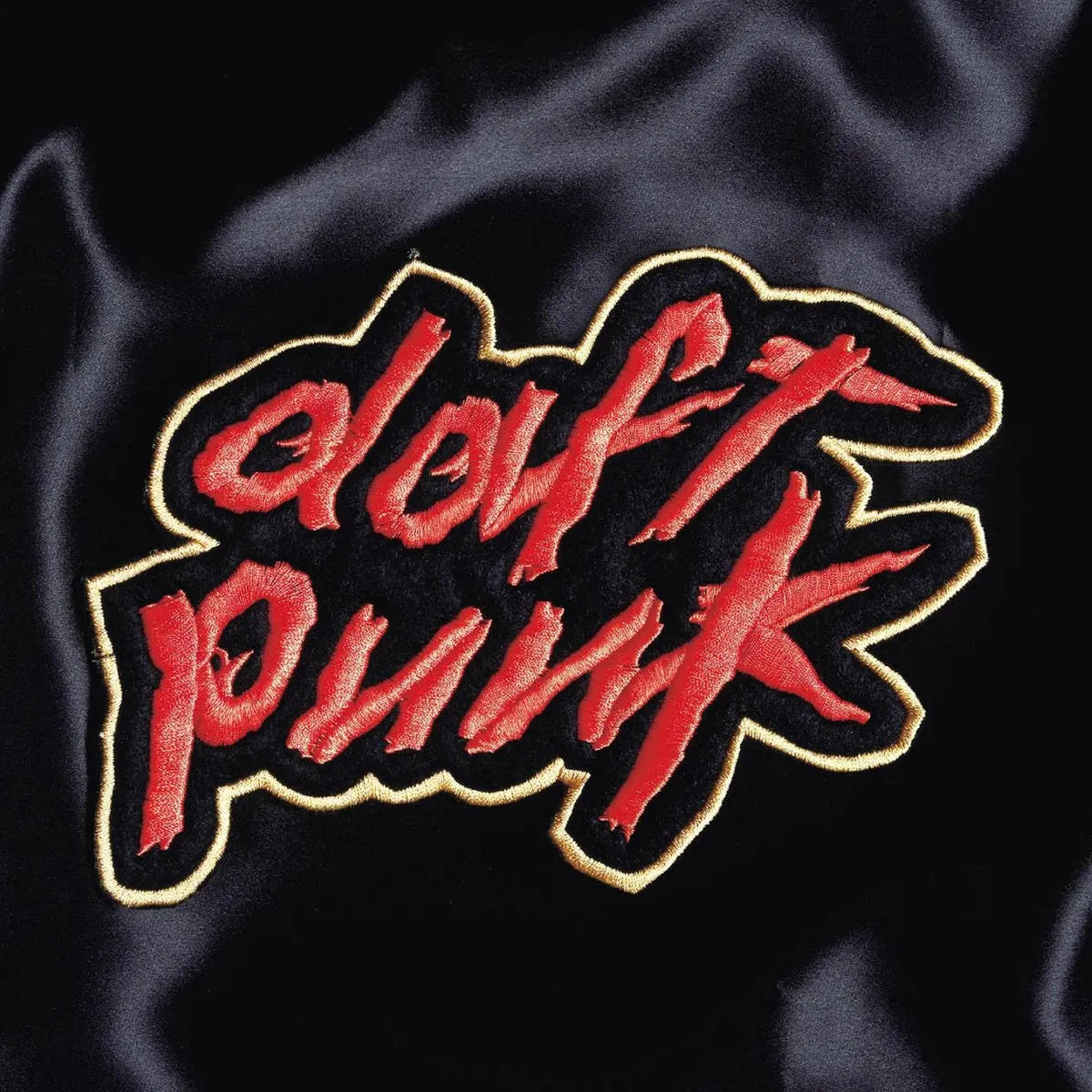
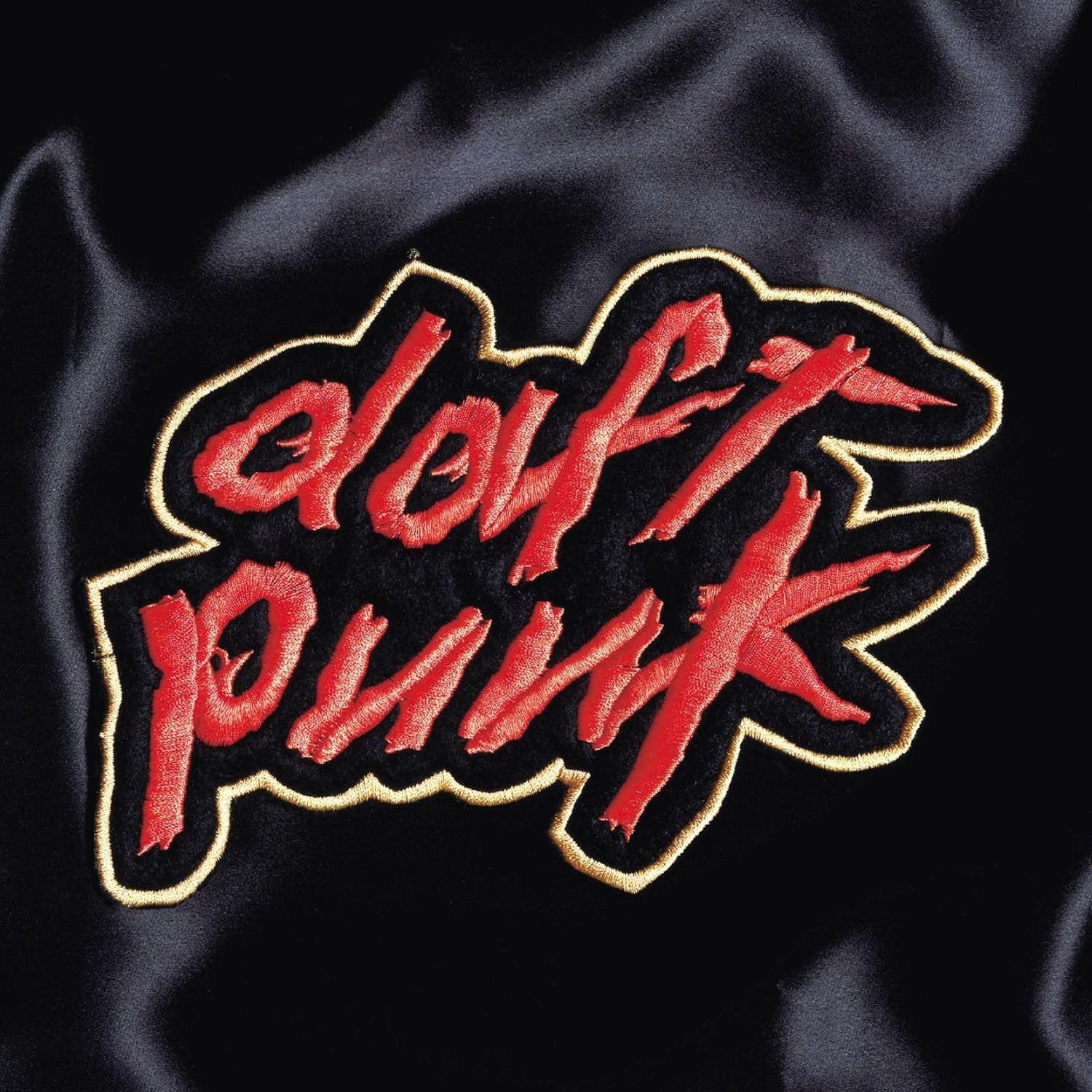
| On the cover | Black satin fabric with the Daft Punk logo embossed in gold, and a smaller vintage-style photographic detail at centre |
| Design | Guy-Manuel de Homem-Christo & Thomas Bangalter (sleeve concept & art direction); Nicolas Hidiroglou (photography) |
| Genre | Electronic |
| Decade | 1990s |
| Buy | Amazon / eBay |
Two guys, one bedroom, no grand plan
Homework is Daft Punk's debut, released in January 1997, and the title is about as literal as album titles get. Thomas Bangalter and Guy-Manuel de Homem-Christo had been putting tracks together in a home studio in Paris, cheaply and quickly, without much of a master plan behind it. They'd already built a following through singles on the Scottish label Soma, "Da Funk" among them, before Virgin signed them and what was meant to be a run of singles turned into an album almost by accident. Nobody set out to make a landmark record. It just became one.
It worked, too. Homework eventually charted in fourteen countries, reaching number three in France, number eight in the UK, and cracking the US Billboard 200. A genuinely good outcome for a record with no grand design behind it, and one that still reads a little like beginner's luck even now.
Testing the satin
By the time it came to actually package the thing, the pair had a far clearer idea of what they wanted than most acts their age. That's according to Nicolas Hidiroglou, the photographer brought in to shoot the cover and inner sleeve after a friend suggested he check out a new act putting an album together. He'd already been trusted with cover work for Virgin and had shot for The Face, so this wasn't unfamiliar territory. What was unfamiliar was the certainty. Nothing quite prepared him for how deliberate these two teenagers were about their own image, this early, with almost no reputation yet to protect.
The brief was simple on paper; a black cover. They tested several fabrics before landing on the one that made the final cut: black satin, embossed with the Daft Punk logo Guy-Manuel had designed himself. "We spent a lot of time making everything perfect," Hidiroglou later said of the shoot. For a duo who'd supposedly just knocked a record together at home, a serious amount of care went into how that record looked doing it.
The Desk Upstairs
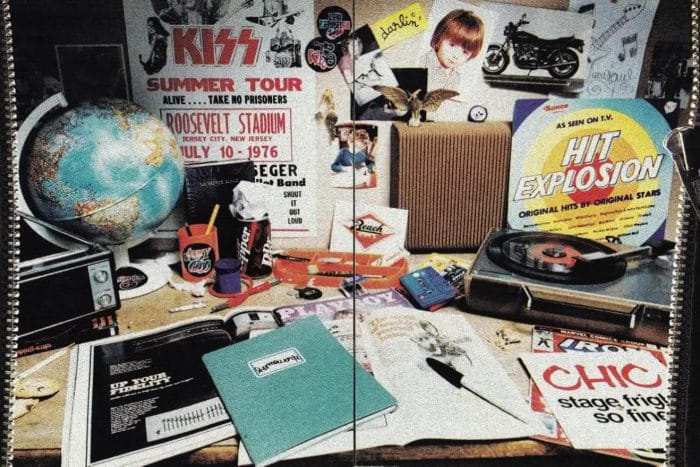
The inner sleeve of Homework, all those scattered little references to the album's tracks, isn't a set built for the shoot. It's Thomas Bangalter's actual desk, in his actual childhood bedroom, arranged exactly as it sat when Hidiroglou turned up to photograph it. They spent about a week getting it right.
It's a strange thing to picture now. A major-label debut where the packaging effort went not into a photoshoot of the artists, but into carefully recreating an ordinary teenager's desk down to the last detail. No stylist, no props brought in from outside. Just what was already there, shot properly.
Hidiroglou was invited into the family home for that shoot, and while he was there, he met Bangalter's father, introduced simply as someone who'd had a serious career in music production. That's a fair understatement. The father in question is Daniel Vangarde, the French producer and songwriter behind Ottawan's "D.I.S.C.O." and a run of other disco records through the '70s and '80s. He was a man who'd helped shape one dancefloor era while his son, in the room upstairs, was about to define the next one. Bangalter has always kept some distance from the comparison: "I never had any intention to do what my father was doing," he once said. Fair enough, house and disco aren't the same thing. But the lineage is hard to ignore once you know it's there, and it makes that desk a lot more interesting than a pile of teenage clutter.
Before The Robots
Around the same period, Hidiroglou was called back to shoot promotional pictures of the pair near Sacré-Cœur, in the basement of a small shop he ran at the time. Bangalter sprayed some "Daft Punk" graffiti tags on the wall for a backdrop, and the two of them tried out different ways of obscuring their faces for the camera: masks, objects held up, whatever was on hand. None of it looked anything like a robot yet. It looked more like two guys mucking about with an idea they hadn't fully worked out.
But the instinct was already there. Long before the helmets existed, they were testing masks and objects, anything to avoid becoming recognisable in the way most young bands were desperate to be. When fame did arrive, plenty of people read that as arrogance; two guys too precious to show their faces. Hidiroglou's take, having actually been in the room for it, was different: less ego, more two people trying something nobody else in music was doing yet.
Which is worth sitting with, because it means the anonymity Daft Punk became famous for wasn't a marketing decision bolted on once they'd made it big. It was there from the very first shoot, attached to a record named after doing your homework at home.
The Quiet Version of the Mythology
By the time Discovery and later Random Access Memories rolled around, the whole aesthetic had ballooned. Chrome helmets, arena-scale visuals, a mythology thick enough to hang a documentary on. I'll admit RAM never quite landed for me the way I wanted it to; I think I'd hyped it up too much in my own head before I ever heard it. Anyway, going back to Homework, there's something almost funny about how modest the actual object is: black satin, a teenage bedroom, a photographer testing fabric samples for a week. No helmets yet. No mythology yet. Just two mates who already knew, somehow, that they didn't want to be seen, and a cover that quietly got that instinct right from the start.
When the album was reissued for its 25th anniversary in 2022, complete with a fresh run of remixes, the packaging stayed faithful to that original satin-and-restraint look rather than dressing it up in the visual language of the later records. Which feels right. The cover was never trying to predict the helmets. It was just two guys and a photographer, taking a week to get a fabric sample exactly right.
Which brings me back to the dog. A dog-headed man in a hoodie is a strange thing to fall for a band over, but he turns out to be in good company. Daft Punk had been disappearing behind things since before I even knew their names. The helmets, when they finally came, weren't really a new idea. They were just the most expensive version of an old one.