Is that Mick Jagger?
The answer is; nobody knows for certain. And Andy Warhol made sure of that deliberately. Warhol's inner circle from the time revealed that Jagger was never photographed for the LP. In fact, it is claimed by numerous contemporaries that Warhol shot a variety of models and never revealed who made the final cut.
There exist the usual suspects but no definitive answer has ever been found. In the lineup are Jed Johnson, Warhol's lover at the time, who even denied it was him, and his twin brother Jay. Others from the scene name Factory makeup artist and designer Corey Tippin as the likeliest candidate. He is also convinced it's him. Others include Warhol superstars Joe Dallesandro and Jackie Curtis.
Warhol took the secret to his grave. Which, knowing Warhol, was the point.
Album Anatomy
| Album | Sticky Fingers |
| Artist | The Rolling Stones |
| Released | 23 April 1971 |
| Label | Rolling Stones Records |
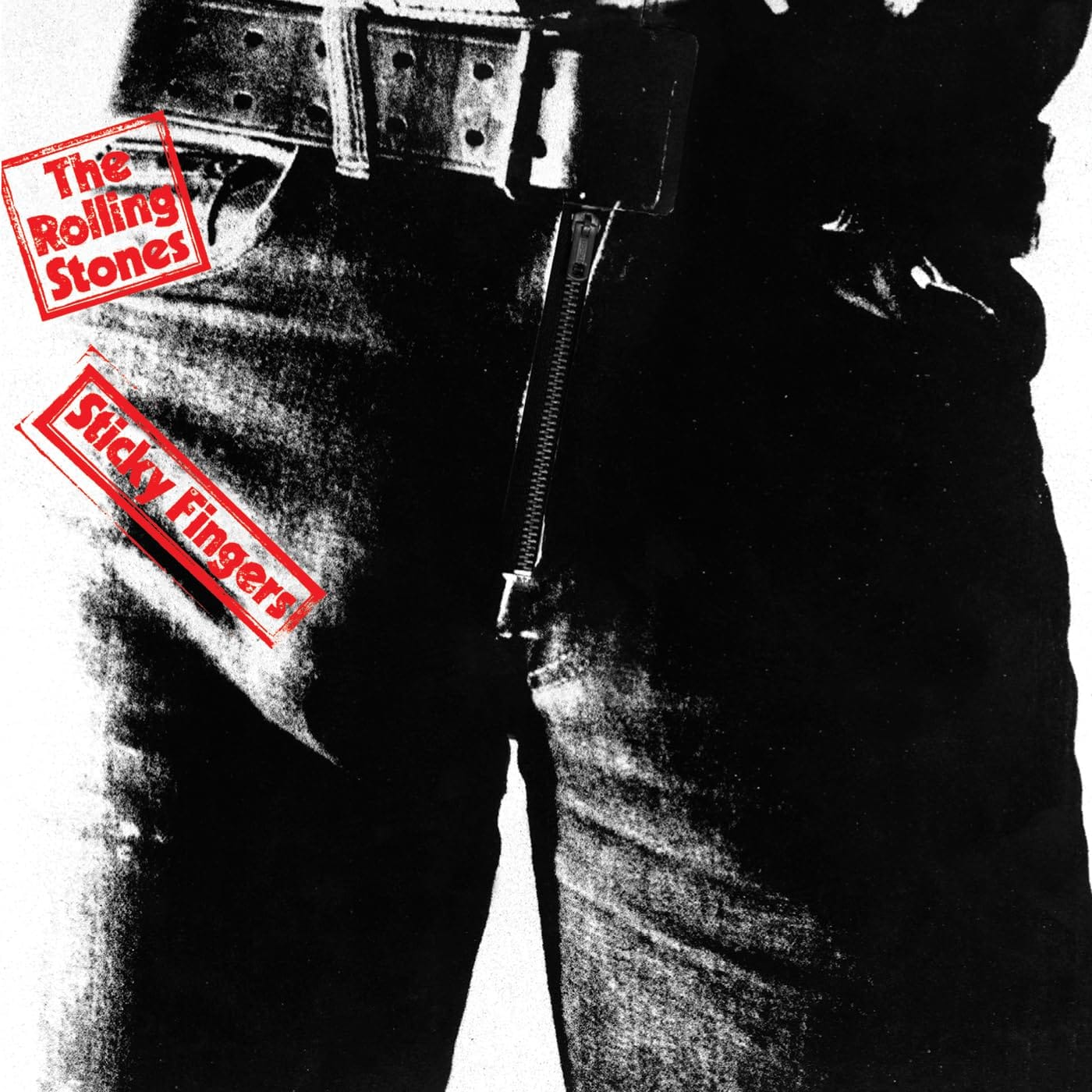
| On the cover | A close-up of a man's crotch in tight jeans, with a real, working zipper that unzips to reveal cotton briefs beneath — the model's identity never confirmed |
| Design | Concept by Andy Warhol; design by Craig Braun |
| Decade | 1970s |
A Party, A Zip, and A Big Idea
The story of the Sticky Fingers cover begins at a party in 1970. Warhol met Stones singer Mick Jagger and suggested the idea of a real zipper on an album cover. The idea appealed to Jagger immediately.
By 1971 the Rolling Stones were finally free of their long and fractious relationship with Decca Records and had set up their own label; Rolling Stones Records. Sticky Fingers would be the first album released on it. Being on their own label meant they could pretty much do whatever they wished. And what they wished was to put a working zip on the front of their album over a close up photograph of a man's crotch in tight jeans.
The Rolling Stones paid Warhol £15,000 for the cover, a considerable amount of money in 1971. Warhol sent designer Craig Braun Polaroid photographs of the model and Braun got to work turning the concept into reality.
It was, as Braun later recalled, considerably harder than it sounds.
The Zip That Destroyed Records
The working zip on the Sticky Fingers cover was not just a provocative design choice. It was an engineering nightmare. Why? Well, the zipper damaged the grooves of the vinyl. Not really beneficial if you're a record fan. Braun decided that an extra cardboard sleeve should be added. This became an image of writer Glenn O'Brien's underpants, who also used to frequent the Factory.
But the problems didn't stop there. It turned out that the record covers were dented by the zipper during distribution. Braun's solution? The zipper had to be pulled down enabling the tab of the zipper to fall into the centre hole of the vinyl.
So the working zip on your copy of Sticky Fingers (if you have an original pressing) needed to be partially unzipped before the record could be safely stored. A cover that required active participation before you could even put it on the shelf. Warhol would have loved that.
And that's before you get into the sheer number of different zips that ended up on this cover. UK pressings alone came with at least three different pull tags; the standard small pull, a rarer larger one stamped "PAN," and a third with a "STAR" tag, you can see them all at the Serial Records website. Once you look past the UK and US editions, it gets stranger still. New Zealand got a genuine gatefold version with a printed (not working) zipper laminated onto the cover. Taiwan released the album under the title Brown Sugar, complete with a zipper that was simply hand-drawn onto the sleeve rather than photographed. Even the audiophile Mobile Fidelity Sound Lab reissue got in on it, swapping the metal zip for a purely decorative gold one moulded into the cover in relief.


The different zippers - source: https://www.serial-records.de/category/?title=Zipper-%28Sticky-Fingers%29
The album was eventually released as a limited edition with the real zipper and later replaced by a faded photo of the jeans without a real zipper (boring!).
General Franco vs The Rolling Stones
Here is where the story gets interesting.
The jean cover was pressed everywhere from Venezuela to West Germany. Everywhere, in fact, apart from Spain. Spain was still under the reign of fascist dictator Francisco Franco, all cultural imports into Francoist Spain were subject to censorship. Franco could veto the crotch-centric cover of Sticky Fingers.
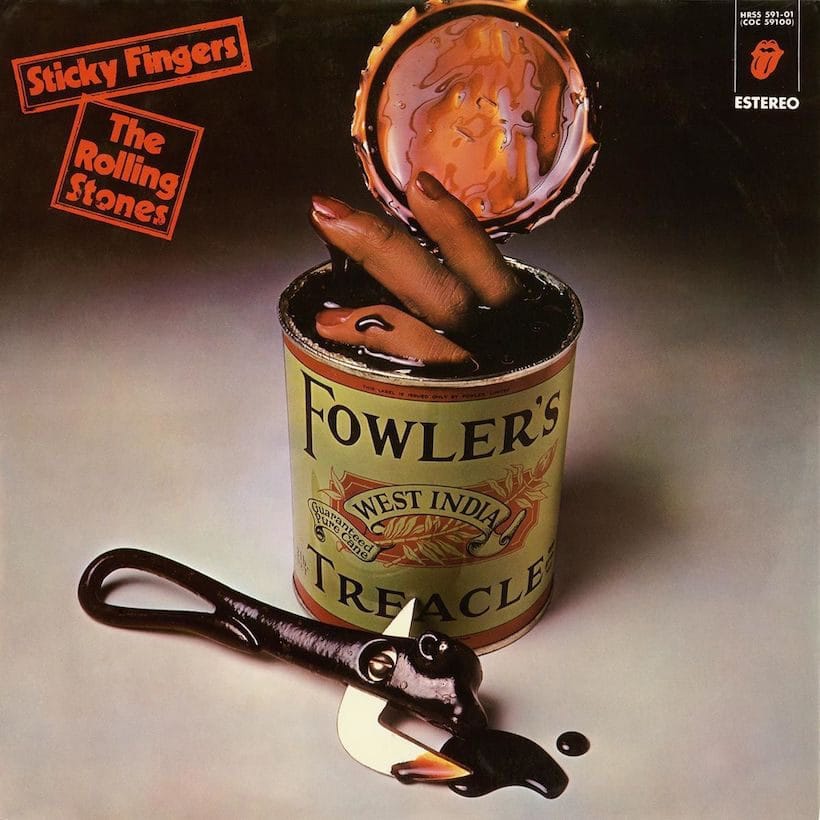
The replacement cover was something that needs to be seen to be believed. The new sleeve featured a bizarre image of a lady's dismembered hands emerging from a can of treacle-covered fingers, designed by John Pasche, who also designed the first tongue logo, and Phil Jude. Relating to the album title, just not in the way the band intended.
Not content with changing the image, the regime also insisted that Sister Morphine was dropped from the album, replaced by a live version of Chuck Berry's Let It Rock.
General Franco versus the Rolling Stones. In a battle of cultural significance, it is safe to say that only one of them is still talked about.
The Lawsuit Nobody Talks About
There is one final chapter to the Sticky Fingers cover story that rarely gets mentioned.
Photographer Peter Webb was surprised to see that Warhol had made the cover for Sticky Fingers and that only one of his photos had been used as an insert. That wasn't the deal, according to Webb, and he filed a claim against the Rolling Stones. It took him thirty years before he was proven right and he eventually earned some money from the album.
Thirty years. For a photograph used without proper agreement on one of the best selling albums in history. A quiet footnote to one of the most famous covers ever made.
What Makes It Controversial
In isolation, it is a close up photograph of a pair of jeans. That is all. There is no nudity. There is no explicit content. There is a zip.
And yet in 1971, displaying a close-up of a male crotch on a major-label album was genuinely transgressive, and several countries initially refused to distribute the sleeve.
What Warhol understood (and what made him a genius) was that suggestion is always more powerful than explicitness. The zip doesn't reveal anything shocking. What it suggests is far more interesting than anything it could actually show.
VH1 named it the number one greatest album cover of all time in 2003. A close up of a pair of jeans with a working zip. Conceived at a party. Photographed by persons unknown. Destroyed records during distribution. Banned by a fascist dictator.
And we still don't know whose jeans they are.